


Mimic rocky slopes
Plant into a shallow, fast-draining mound or rock garden pocket, mixing in coarse gravel on the upper 5–8 cm, to mimic its native rocky banks and reduce crown rot risk when growing San Diego thorn-mint.

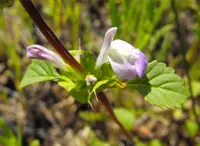
San Diego thorn-mint (Acanthomintha ilicifolia) is a small, aromatic annual herb in the mint family, with a compact, mounded habit. Its leaves are sharply toothed and spiny, and it produces pale white to pink tubular flowers that attract pollinators.
This species is native to southern California and northwestern Baja California, where it grows on open, often rocky clay soils in coastal scrub and chaparral. It is adapted to dry, Mediterranean-type climates and can be challenging outside similar conditions.
Understanding how to care for San Diego thorn-mint starts with mimicking its natural habitat: full sun, sharply draining soil, and careful watering that avoids prolonged moisture around the roots.

Care Difficulty
Hard Care

Light Preference
Full Sun

Water Requirements
Low Water

Temperature Preference
Warm Climate

Hardiness Zone
9–11

Soil Texture
Sandy, Rocky, Loamy

Soil pH
Slightly acidic (6.5–7.0), Slightly alkaline (7.0–7.5)

Soil Drainage
Well-drained

Fertilization
Minimal (feed rarely)
Scan your plant to receive care tips personalized for your specific plant
Available on iOS and Android
This coastal mint prefers bright, open conditions that mimic its native scrub and chaparral slopes.
This species is drought-adapted and needs infrequent, carefully controlled watering once established.
This plant is adapted to mild, Mediterranean-type climates with cool, wet winters and warm, dry summers.
This species prefers dry air and does not need elevated humidity.
Soil must be fast-draining and lean to mimic its native, exposed habitats.
This species can be grown in containers if drainage and root conditions imitate rocky, exposed ground.
This dry-climate native needs very little feeding and often performs best in lean soil when caring for San Diego thorn-mint.
Light, careful pruning of Acanthomintha ilicifolia helps maintain a compact shape and healthy flowering stems.
This species is usually grown in the ground, so focus on gentle transplanting rather than frequent repotting.
Propagation of Acanthomintha ilicifolia is typically done from seed under controlled conditions.
This Mediterranean-type perennial is moderately tolerant of mild, dry winters and usually needs minimal intervention.

Plant Health Check
Not sure what's wrong with your plant? Check your plant's health inside the app.
This species is federally listed as threatened in the United States and grows naturally only in a small region spanning coastal San Diego County and adjacent northern Baja California, restricted mainly to a few fragmented populations.
The leaves and calyces carry dense glandular hairs that release a strong minty scent when touched, a trait that likely helps deter herbivores and may reduce water loss in its dry, exposed habitat.
Despite belonging to the mint family (Lamiaceae), it has thick, sharply toothed leaves that resemble miniature holly leaves, an adaptation that may reduce grazing pressure in its native scrub and chaparral communities.

This species is considered a strict soil specialist, occurring almost exclusively on shallow, often gabbro- or metavolcanic-derived clay and clay-loam soils that create seasonally wet but summer‑hard conditions many competing plants cannot tolerate, which helps define its very narrow ecological niche.
This species is a short-lived perennial subshrub, often behaving like a long-season annual in cultivation. Individual plants may persist 2–3 years, but stands usually depend on regular seed set and natural reseeding to continue.
Keep your plants happy and healthy with plant identification, disease detection, and easy care guidance.

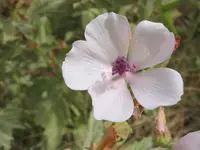
Marshmallow
Althaea officinalis
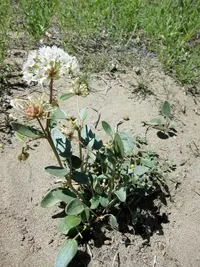
fragrant white sand verbena
Abronia elliptica
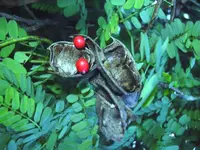
rosarypea
Abrus precatorius
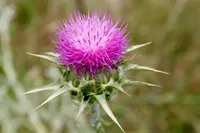
milk thistle
Silybum marianum

Giant Leopard Plant
Farfugium japonicum var. giganteum
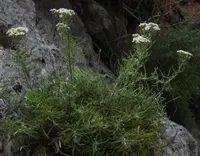
Chamomile-leaved Lavender-cotton
Achillea cretica
Java waterdropwort
Oenanthe javanica
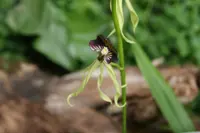
clamshell orchid
Prosthechea cochleata