Stake Flower Spikes
Insert thin, unobtrusive stakes and loosely tie the flowering stems before they reach full height to prevent wind damage and snapping in bloom-heavy clumps.

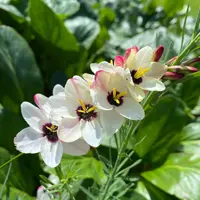
Corn lily Ixia 'Spotlight' is a small, corm-forming perennial grown mainly for its bright, star-shaped spring flowers. It belongs to the iris family and is often treated as a summer-bedding bulb in cooler climates.
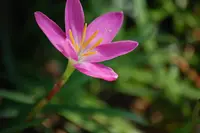
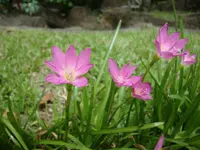
Plants form slender, upright stems with narrow, sword-like leaves and loose spikes of white to soft-pink blooms marked with a darker eye. Native to South Africa’s winter-rainfall regions, it prefers mild conditions and good light.
Its need for well-drained soil and protection from hard frost makes it slightly more demanding than common beginner bulbs. Learning how to care for Corn Lily mainly involves managing drainage, watering, and seasonal lifting in colder areas.

Care Difficulty
Moderate Care

Light Preference
Full Sun

Water Requirements
Moderate Water

Temperature Preference
Tropical / Frost Sensitive

Hardiness Zone
8–10

Soil Texture
Sandy, Loamy, Organic-rich

Soil pH
Acidic (5.5–6.5), Slightly acidic (6.5–7.0)

Soil Drainage
Well-drained

Fertilization
Light (every 4–6 weeks)
Scan your plant to receive care tips personalized for your specific plant
Available on iOS and Android
Ixia 'Spotlight' thrives in bright, open positions with strong, direct sun during the growing season.
Ixia 'Spotlight' prefers evenly moist but not saturated soil during active growth and flowering.
This bulb needs mild, dry conditions for dormancy and moderate warmth for strong growth and flowering.
Ixia 'Spotlight' handles typical indoor humidity well and rarely needs special humidity control.
Ixia 'Spotlight' prefers light, sharply drained soil that dries quickly after watering.
This bulb is well suited to container growing in sunny, sheltered spots.
Ixia 'Spotlight' benefits from light, targeted feeding during active growth but not during dormancy.
Ixia 'Spotlight' needs only light pruning focused on spent flowers and declining foliage.
Corms of this plant are usually lifted and reset rather than frequently repotted.
This plant is most often propagated by dividing corms rather than from seed.
This plant needs protection from hard frost, especially in cooler regions or in containers.

Plant Health Check
Not sure what's wrong with your plant? Check your plant's health inside the app.
Each flower has a pale cream to white background with a sharply defined dark maroon to almost black center, a strong color contrast that is characteristic of this cultivar and makes the star-shaped blooms very visible in bright sun.
This plant produces slender, wiry stems that carry a loose spike of several flowers opening in succession, so a single corm can display multiple blooms over several days during its spring flowering period.
The plant survives as a corm, a swollen underground storage organ, and responds to dry summer rest by going dormant, then resprouting foliage and flower stems when moisture and cooler temperatures return.
Lack of flowers usually comes from bulbs getting too warm or dry during dormancy, overcrowded clumps, or nutrient imbalance. Allow a cool, dry rest, divide congested bulbs, and avoid high-nitrogen fertilizer to restore flowering.
Keep your plants happy and healthy with plant identification, disease detection, and easy care guidance.