Drymonia turrialvae Care

Drymonia turrialvae

About Drymonia turrialvae

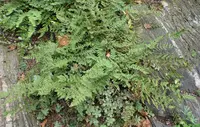
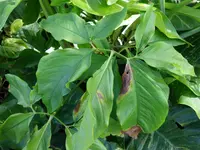
Drymonia turrialvae is a tropical flowering plant in the Gesneriaceae family, often grown as an ornamental foliage plant indoors or in warm greenhouses. It forms trailing or arching stems with softly textured, often patterned leaves that create a lush, compact display.

In the wild, it occurs in humid forests of Central America, where it grows as an understory plant in shaded, consistently moist conditions. It is considered moderately easy to grow if its need for stable warmth, high humidity, and gentle, indirect light is respected.

For those learning how to care for Drymonia turrialvae, the key is avoiding extremes: no harsh sun, no cold drafts, and no waterlogged or completely dry soil for long periods.

Main Plant Requirements

Care Difficulty

Moderate Care

Light Preference

Bright Indirect Light

Water Requirements

Keep Soil Moist

Temperature Preference

Tropical / Frost Sensitive

Hardiness Zone

11–12

Soil Texture

Loamy, Peaty, Organic-rich

Soil pH

Acidic (5.5–6.5), Slightly acidic (6.5–7.0)

Soil Drainage

Moist but well-drained

Fertilization

Light (every 4–6 weeks)

Get Personalized Care Plan

Scan your plant to receive care tips personalized for your specific plant

Available on iOS and Android

How to Care for the Drymonia turrialvae

This cloud-forest gesneriad prefers bright, filtered light that mimics a high-canopy understory.

  • Provide 6–8 hours of bright, indirect light each day, such as near an east or north window or under light tree shade outdoors.
  • Tolerates partial shade, but if light is too low new growth becomes sparse, internodes stretch, and flowering decreases in Drymonia turrialvae.
  • Avoid direct midday and strong afternoon sun, which can cause leaf scorch and dulling of the silvery patterns; use sheer curtains or dappled shade, especially in summer.

This species prefers consistently lightly moist conditions without staying waterlogged.

  • Water when the top 2–3 cm of soil feels dry, using enough water to moisten the root zone, then let excess drain away completely.
  • Reduce frequency in cooler months, allowing the top 3–4 cm to dry, while in warm active growth check moisture more often instead of following a fixed schedule.
  • Watch for yellowing, mushy leaves as a sign of overwatering and crispy, drooping foliage as a sign of underwatering; use a loose, well-draining mix with added perlite or fine bark.

This plant comes from warm, humid forests and dislikes temperature extremes.

  • Aim for 65–80°F (18–27°C) for steady growth, which suits most homes and sheltered outdoor spots in mild climates.
  • Protect from cold; growth slows below about 60°F (16°C), and damage occurs near 50°F (10°C), so avoid drafts, unheated porches, and sudden night chills.
  • This species handles brief warm spells up to about 85°F (29°C) if humidity and watering are adequate, but it is not frost-tolerant and should never be exposed to freezing temperatures.

This species benefits from elevated humidity to maintain healthy foliage and steady growth.

  • Aim for 60–80% humidity; it tolerates brief dips to 40–50% but may slow growth.
  • Crisping leaf edges, curling tips, and stalled new growth indicate air is too dry.
  • Use grouped plants, a fine-mist humidifier, or a pebble tray near Drymonia turrialvae to raise local humidity.

This plant prefers a light, airy, organic-rich mix that drains quickly yet stays slightly moist.

  • Use a mixture of 40% peat or coco coir, 30% fine orchid bark, 20% perlite, and 10% compost for structure and nutrients.
  • Aim for slightly acidic pH around 5.5–6.5, which supports nutrient uptake and healthy root activity.
  • Ensure the mix feels springy and porous so roots receive both moisture and air, preventing suffocation.
  • Avoid dense garden soil or mixes that stay wet for more than 2–3 days, as these encourage rot in Drymonia turrialvae.

This species is very suitable for container growing due to its compact, trailing habit.

  • Choose a wide, shallow pot so roots can spread laterally and stems can trail without becoming crowded at the base.
  • Select slightly porous materials such as unglazed clay to reduce waterlogging while still holding moderate moisture.
  • Stabilize the container with a heavier base or decorative cachepot to prevent tipping as vines extend over the rim.

Light, consistent feeding supports compact growth and flowering for Drymonia turrialvae in containers.

  • Use a balanced liquid fertilizer (such as 10-10-10 or 20-20-20) diluted to 1/4–1/2 strength for active growth.
  • Apply every 2–4 weeks during spring–summer, on already moist soil to reduce root burn risk.
  • Pause feeding in winter or very low light, or give a weak solution once every 6–8 weeks.
  • Organic growers can use a thin layer of fine compost or a mild slow-release fertilizer at the start of the growing season.

Thoughtful pruning helps maintain shape and encourages denser foliage on Drymonia turrialvae.

  • Time any structural pruning for late winter or early spring before strong new growth starts.
  • Remove dead, yellowing, or damaged stems first, then thin crowded shoots to improve light and airflow.
  • Tip back excessively long vines with clean scissors to keep a compact, branching habit and encourage more flowering nodes.
  • Use sharp, disinfected tools and make cuts just above a leaf node to reduce disease entry and promote new shoots.

Container-grown plants benefit from occasional repotting to maintain healthy roots and consistent moisture.

  • Check for roots circling the pot, emerging from drainage holes, or unexplained slow growth as signals to repot.
  • Plan to repot every 1–2 years in spring, moving Drymonia turrialvae into a container 2–5 cm wider with fresh, airy mix.
  • Gently loosen circling roots, trim dead or mushy portions, and keep as much healthy root mass intact as possible.
  • Water thoroughly after repotting, keep in bright but indirect light, and maintain slightly higher humidity for 1–2 weeks to reduce stress.

Vegetative propagation is the most reliable way to increase plants while preserving identical traits.

  • Take 7–10 cm softwood stem cuttings with 2–3 nodes from healthy Drymonia turrialvae in late spring or summer.
  • Remove lower leaves, optionally dip the cut end in rooting hormone, and place in moist, very well-drained medium.
  • Maintain 70–80°F, high humidity, and bright, indirect light to support fast root initiation and reduce wilting.
  • Once roots are 2–3 cm long and new growth appears, pot each cutting individually and transition gradually to normal conditions.

This tropical species is frost tender and needs warm, stable indoor conditions in winter.

  • Move any outdoor containers indoors before temperatures drop below 55°F and avoid exposure to frost.
  • Keep room temperatures around 65–75°F and away from cold drafts, single-pane windows, or heater blasts.
  • Water less frequently but do not allow the root ball to dry completely; reduce fertilizer during this period.
  • If air is dry, raise humidity to around 50–60% with trays of water or a humidifier to limit leaf edge browning.

Care Tips

Encourage Bushy Growth

Pinch back soft stem tips once they reach 10–15 cm to promote branching and a fuller, cascading plant rather than a few long, bare vines when caring for Drymonia turrialvae.

Use Vertical Support

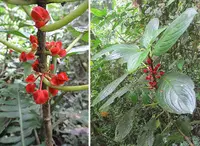
Provide a small trellis, hoop, or mesh panel in the pot so stems can be gently clipped or tied, which helps display the foliage and keeps the plant from tangling or shading itself.

Rotate For Even Form

Rotate the pot 1/4 turn every 1–2 weeks so all sides receive similar light exposure and the plant develops a balanced, symmetrical shape without leaning strongly in one direction.

Check Hidden Stems

Inspect inner and lower stems every few weeks for mealybugs or spider mites, since the dense foliage can hide early infestations; wipe leaves and stems with a damp cloth or cotton swab if pests appear.

Refresh Aging Stems

If older, woody stems become sparse at the tips, take 1–2 healthy tip cuttings, root them, and replant into the same pot to rejuvenate the plant and maintain a dense, attractive specimen.

Common Pests and Diseases

Mealybugs

This pest feeds on leaf and stem sap, often hiding in the soft, hairy stems and leaf bases of Drymonia turrialvae. Symptoms include white cottony clusters, sticky honeydew, and gradual leaf yellowing or distortion.

Solution

Remove visible clusters with a cotton swab dipped in 70% isopropyl alcohol, then wash the plant gently with lukewarm water and mild soap. Improve air movement, avoid overfertilizing with high-nitrogen products, and repeat alcohol or insecticidal soap treatments weekly until no new insects appear.

Cyclamen mites

These insects are microscopic sap-feeding mites that thrive in the humid, warm conditions preferred by this species. Symptoms include twisted, hardened, or stunted new leaves and deformed growth at shoot tips without obvious visible pests.

Solution

Isolate the plant, remove and discard heavily distorted new growth, and increase air circulation while keeping foliage dry. Use a targeted miticide labeled for cyclamen mites or repeated applications of horticultural oil on leaf undersides and growing tips, ensuring the plant is kept out of direct sun during treatments.

Leaf spot (fungal/bacterial)

This disease causes small, water-soaked or dark brown spots that can expand and merge, especially on soft, velvety leaves. Symptoms include yellow halos around spots and premature leaf drop in persistently wet conditions.

Solution

Remove and discard affected leaves, then reduce overhead watering and avoid wetting the foliage. Provide stronger air circulation, space the plant away from crowded groupings, and if spots continue spreading, apply a copper-based or broad-spectrum fungicide according to label directions, focusing on the upper and lower leaf surfaces.

Botrytis blight

This disease develops under cool, stagnant, humid air and affects the soft stems and flowers of the plant. Symptoms include gray fuzzy mold, mushy patches on leaves or stems, and collapse of flowers or young shoots.

Solution

Cut away all infected tissue back to healthy, firm growth and discard it in the trash, not compost. Improve airflow, lower humidity slightly, keep spent flowers and debris off the soil surface, and if conditions remain cool and damp, use a labeled fungicide for botrytis, applied after the foliage has dried from any watering.

Spider mites

These insects favor dry indoor air and can colonize the undersides of the soft leaves. Symptoms include fine speckling, dull or bronzed foliage, and very fine webbing between leaves and stems.

Solution

Rinse the plant thoroughly under a gentle shower to remove mites, then follow with regular applications of insecticidal soap or horticultural oil, focusing on leaf undersides. Increase ambient humidity, keep the plant out of hot, direct sun, and inspect weekly as part of routine Drymonia turrialvae care instructions.

Interesting Facts

Cloud-forest epiphyte

This species naturally grows as an epiphyte on tree trunks and branches in Central American cloud forests, rooting into moss and organic debris rather than soil. Its native habitat is cool to mild, humid, and shaded under dense forest canopy.

Velvety variegated foliage

The leaves are softly pubescent (covered in fine hairs) and often display pale to silvery veins against a dark green background, which helps diffuse light and may reduce water loss on exposed surfaces in the canopy.

Bat-associated pollination

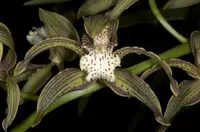
In its native range, the tubular, orange to reddish flowers are thought to be visited by nectar-feeding bats and possibly hummingbirds, which can access the nectar deep inside the corolla and transfer pollen between plants.

FAQs about Drymonia turrialvae

Lack of blooms usually comes from insufficient light, very cool temperatures, or low humidity. Older, exhausted stems also flower poorly. Provide bright, indirect light, stable warmth, higher humidity, and regularly prune older growth to stimulate new flowering shoots.

Grow Healthy Plants with Botan Care

Keep your plants happy and healthy with plant identification, disease detection, and easy care guidance.


Botan plant care app — identify plants on mobile

Explore More Plants