Mounting strategy
Use a cork slab or hardwood mount with a thin pad of sphagnum moss around the roots to promote rapid drying and strong root attachment, then secure the plant with soft ties that can be loosened as pseudobulbs expand.

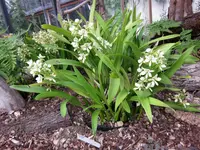
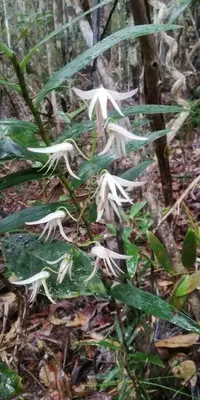
Prosthechea radiata is a small to medium epiphytic orchid that typically grows on trees, forming clumps of slender pseudobulbs and narrow, upright leaves. It produces starry, pale flowers with a distinctive, sweet fragrance. Native to Mexico and Central America, it is usually found in warm to intermediate forests where light is filtered and humidity is moderate to high. The plant is considered moderately easy for growers who already have some orchid experience, mainly because it dislikes stale air and extreme drying. Those learning how to care for Prosthechea radiata should note that it prefers bright, indirect light, regular moisture around the roots, and a free-draining orchid substrate.

Care Difficulty
Moderate Care

Light Preference
Bright Indirect Light

Water Requirements
Moderate Water

Temperature Preference
Tropical / Frost Sensitive

Hardiness Zone
Unknown

Soil Texture
Sandy, Peaty, Organic-rich

Soil pH
Acidic (5.5–6.5)

Soil Drainage
Well-drained

Fertilization
Moderate (every 2–4 weeks)
Scan your plant to receive care tips personalized for your specific plant
Available on iOS and Android
This orchid prefers bright, filtered light with gentle direct sun rather than harsh exposure.
Watering should keep the roots moist but never stagnant or waterlogged.
This species prefers intermediate to warm temperatures with modest day–night variation.
This orchid prefers consistently humid air to maintain healthy foliage and roots.
This species grows best mounted or in a very airy, bark-based orchid mix rather than standard potting soil.
This orchid adapts well to container culture when planted in a shallow pot or basket with strong aeration.
This orchid benefits from light, consistent feeding during active growth for reliable flowering.
Pruning needs for this orchid are minimal and focus on hygiene rather than shaping.
This species prefers snug conditions but benefits from periodic repotting to refresh the orchid mix.
Division is the standard method for Prosthechea radiata and is usually done during repotting.
This orchid is frost-sensitive and must be kept above freezing during winter.

Plant Health Check
Not sure what's wrong with your plant? Check your plant's health inside the app.
This species produces white and green striped flowers with a strong, sweet fragrance that intensifies at night, likely to attract moth pollinators in its native range.
It forms clustered, spindle-shaped pseudobulbs that store water and nutrients, allowing the plant to withstand short dry periods typical of seasonally variable tropical forests.
In the wild, it occurs from lowland tropical forests up into cooler montane areas in Mexico and Central America, showing notable adaptability to different temperature regimes.
Lack of blooms usually comes from insufficient light, no slight winter temperature drop, or skipping a drier rest after flowering. Overfeeding high-nitrogen fertilizer and keeping the plant pot-bound without occasional division can also limit flower production.
Keep your plants happy and healthy with plant identification, disease detection, and easy care guidance.