showy ticktrefoil Care (Desmodium canadense)

Also known as: Canada tickclover, Canadian tick-trefoil, Canada tick-trefoil
showy ticktrefoil

About showy ticktrefoil

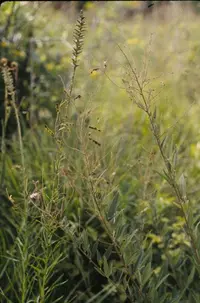
Showy ticktrefoil (Desmodium canadense) is a perennial wildflower in the legume family, valued for its pink to purple flower spikes and upright habit. It typically grows in clumps and develops many small, flat seed pods that cling to fur and clothing.

This species is native to prairies, open woods, and roadsides across eastern and central North America. It attracts bees and butterflies, and also helps enrich soil by fixing nitrogen.

Gardeners who care for showy ticktrefoil usually find it durable once established, though it resents waterlogged soil. It prefers full sun, moderately moist to slightly dry conditions, and well-drained, average soil.

Main Plant Requirements

Care Difficulty

Easy Care

Light Preference

Full Sun

Water Requirements

Regular Water

Temperature Preference

Cold Hardy

Hardiness Zone

3–8

Soil Texture

Sandy, Loamy, Clay

Soil pH

Acidic (5.5–6.5), Slightly acidic (6.5–7.0)

Soil Drainage

Moist but well-drained

Fertilization

Minimal (feed rarely)

Get Personalized Care Plan

Scan your plant to receive care tips personalized for your specific plant

Available on iOS and Android

How to Care for the showy ticktrefoil

Desmodium canadense thrives in open, bright conditions typical of sunny meadows and roadsides.

  • Provide full sun for 6–8 hours daily; 4–6 hours plus bright, open sky is usually enough for strong flowering in showy ticktrefoil.
  • Tolerates light partial shade, especially with morning sun and light afternoon shade, but dense shade leads to weak, floppy growth and fewer blooms.
  • In hot summers, protect from intense late-afternoon sun with nearby taller plants; ensure at least spring and early-summer sun exposure for best vigor.

This prairie legume prefers moist but not saturated soil and develops good drought tolerance once established.

  • Water in-ground plants when the top 3–5 cm of soil feels dry, using a deep soak rather than light sprinkling to encourage deep roots.
  • During the first growing season, monitor after hot, dry, or windy days; leaves that droop by midday and stay limp in evening signal underwatering.
  • Yellowing lower leaves, soft stems, or a sour smell from the soil suggest overwatering; ensure free-draining soil so excess rain can move through easily for Desmodium canadense.

This hardy perennial is adapted to continental climates with cold winters and warm summers.

  • Active growth and flowering are strongest at 70–85°F (21–29°C), with good performance in typical summer conditions if soil moisture is adequate.
  • Mature plants survive winter freezes down to about -20 to -30°F (-29 to -34°C) when roots are in the ground and soil drains well.
  • Heat above 90°F (32°C) is tolerated if the soil does not dry out completely; new shoots are more sensitive to late frosts in spring and may blacken if exposed.

This North American perennial tolerates a wide humidity range, so humidity management is rarely critical.

This species prefers moderately moist, deep, loamy soil with steady drainage.

  • Use a loam or loam-sand mix enriched with 20–30% compost to support tall growth and nitrogen-fixing roots.
  • Ensure drainage is consistent but not fast-draining gravelly soil, which dries too quickly for summer performance.
  • Aim for slightly acidic to neutral pH, around 6.0–7.0, where Desmodium canadense establishes most reliably.
  • Improve aeration and structure in heavy clay by incorporating coarse sand or fine pine bark, avoiding waterlogged pockets.

This species can grow in containers but performs best in large, deep outdoor pots.

  • Choose a container at least 30–40 cm deep to accommodate the long taproot and reduce tipping in wind.
  • Select a heavy, wide-based pot to stabilize the tall, leafy stems and prevent blow-over in exposed sites.
  • Use a fast-draining outdoor mix and elevate the pot on feet so drainage holes release water freely after storms.

Desmodium canadense usually needs minimal feeding in average to rich garden soil.

  • For showy ticktrefoil in poor or sandy soils, apply a light layer of compost in early spring.
  • Use a balanced, slow-release fertilizer (around 10-10-10) at half strength once in spring if growth is weak.
  • Avoid summer overfeeding; as a legume, it fixes nitrogen and can become floppy if oversupplied.
  • Do not fertilize in late fall or winter, when the plant is dormant.

Pruning Desmodium canadense is mainly for tidiness and to support upright, flowering growth.

  • Cut back dead, broken, or winter-damaged stems in early spring using clean hand pruners.
  • After flowering, lightly trim spent flower stalks to encourage a neater clump and reduce self-seeding.
  • Remove crowded or crossing stems at the base to improve air flow and reduce foliar disease risk.
  • Avoid cutting into green growth midseason unless stems are lodging, then shorten by up to one-third.

Desmodium canadense is usually grown in the ground, so focus on careful transplanting rather than frequent repotting.

  • Transplant in early spring or early fall, when temperatures are mild and soil is moist but not waterlogged.
  • Move plants only every few years, watching for overcrowding, decline in flowering, or roots circling a nursery pot.
  • Dig a wide hole, keep as much root ball intact as possible, and replant at the same depth to limit stress.
  • Water deeply after transplanting, then keep soil evenly moist for 2–3 weeks until new growth resumes.

This species is most often propagated from seed, with some potential for careful division of established clumps.

  • Collect mature seed in late summer to early fall and store cool and dry until sowing.
  • For best germination, scarify seeds lightly and provide a brief cold, moist stratification period of 4–6 weeks.
  • Sow seeds in spring in a free-draining, low-fertility mix, keeping them just covered and consistently moist.
  • Divide robust, multi-stem clumps in early spring, replanting divisions promptly and watering thoroughly.

Desmodium canadense is a cold-hardy perennial that usually requires little special winter care in its native range.

  • In late fall, allow stems to die back naturally; cut down to a few inches in late winter or early spring.
  • Apply a light mulch layer (5–7 cm) over the root zone in colder climates to moderate freeze–thaw cycles.
  • Container-grown plants in regions colder than the local hardiness range benefit from being overwintered in an unheated, sheltered space.

Care Tips

Sturdy stem support

Install low, unobtrusive stakes or a short wire fence early in the season to keep the tall, flexible stems upright and prevent lodging during wind or heavy rain.

Thoughtful companion planting

Plant beside taller, deep-rooted natives like little bluestem or switchgrass to provide light wind protection and shared habitat without shading out the foliage.

Seed pod management

Cut back or bag seed heads as they mature if self-seeding is not desired, since the sticky pods cling to clothing and animals and can spread well beyond the planting area.

Targeted wildlife protection

Use temporary fencing or individual stem guards in spring if deer or rabbits are common, removing protection once stems have toughened and reached 30–45 cm.

Soil health rotation

In meadow or restoration plantings, rotate or interplant with diverse native forbs and grasses every few years to reduce disease buildup and maintain balanced soil biology while growing showy ticktrefoil.

Common Pests and Diseases

Soybean aphids

This pest feeds on young stems and undersides of leaves, sucking sap and causing curling, yellowing, and sticky honeydew that can lead to sooty mold.

Solution

Spray strong jets of water to dislodge colonies, then use insecticidal soap or a light horticultural oil, ensuring full coverage of leaf undersides; encourage or protect natural predators like lady beetles by avoiding broad-spectrum insecticides nearby.

Leaf beetles

These insects chew small to medium holes in foliage, sometimes skeletonizing leaves on young plants and seedlings in prairie plantings.

Solution

Hand-pick adults and larvae where practical, reduce nearby weed hosts that harbor beetles, and, if damage is severe on young stands, use a targeted foliar treatment such as spinosad in the evening to limit impact on pollinators.

Japanese beetles

This pest feeds on flowers and upper foliage, often leaving a lacy, skeletonized appearance and reducing flowering on established clumps.

Solution

Hand-pick beetles in early morning into soapy water, avoid beetle-attracting traps near the planting, and protect heavily used pollinator patches by covering with fine mesh during peak feeding while beetle numbers are high.

Powdery mildew

This disease appears as white to gray powdery patches on upper leaf surfaces, which can lead to premature leaf yellowing and reduced vigor in humid or crowded stands.

Solution

Thin or divide dense patches to improve air circulation, avoid overhead irrigation late in the day, remove and discard heavily affected foliage, and apply a sulfur or potassium bicarbonate fungicide early when the first spots appear if the problem recurs yearly.

Fusarium wilt

Symptoms include gradual wilting, yellowing, and dieback of stems, often starting on one side of the plant, with browning of internal stem or root tissues.

Solution

Remove and destroy affected plants including roots, avoid replanting legumes in the same spot for several years, improve drainage and avoid overwatering, and source clean seed or nursery stock to reduce introduction of the pathogen into new plantings when working on Desmodium canadense care instructions.

Interesting Facts

Tick-carrying seed pods

The seed pods bear hooked hairs that readily cling to animal fur and clothing, a dispersal strategy that helps this species spread across prairies and roadsides.

Nitrogen-fixing prairie legume

As a member of the legume family, it forms root nodules with Rhizobium bacteria that convert atmospheric nitrogen into a form usable by plants, enriching poor or disturbed soils in tallgrass prairie ecosystems.

Specialist pollinator support

Its summer-blooming pink to purple flowers provide an important nectar and pollen source for native bees, including several specialist solitary bees that prefer or depend on this species and closely related ticktrefoils.

Botan icon

Did you know?

This species is one of the characteristic legumes of remnant and restored tallgrass prairies in eastern North America, and its presence is often used by ecologists as an indicator that prairie plant community structure and soil function are recovering or relatively intact.

FAQs about showy ticktrefoil

This species is highly attractive to native bees, bumblebees, and many butterflies, including skippers. Its summer flower spikes provide nectar and pollen, making it a strong choice for supporting local pollinator populations in meadow or prairie-style plantings.

Grow Healthy Plants with Botan Care

Keep your plants happy and healthy with plant identification, disease detection, and easy care guidance.


Botan plant care app — identify plants on mobile

Explore More Plants