


Mounting strategy
Use a cork slab or hardwood mount wrapped with a thin layer of long-fiber sphagnum so roots can dry quickly yet still anchor well, and secure new growths gently with soft ties until the plant attaches by itself.

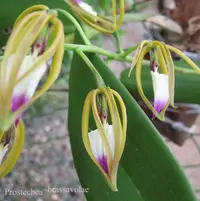
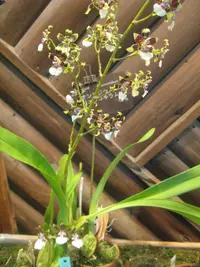
Prosthechea brassavolae is an epiphytic orchid, usually growing on trees, with slender pseudobulbs and narrow leaves that support elegant, star-shaped flowers. The blooms are often pale with a contrasting lip and may carry a light fragrance, especially in the evening.
This species occurs naturally from Mexico through Central America, typically in warm to intermediate forests with good air movement. It is considered moderately easy for growers who can provide bright light, regular moisture, and a very free-draining orchid medium.
Understanding how to care for Prosthechea brassavolae starts with mimicking its airy, tree-dwelling lifestyle, avoiding heavy soils and stagnant, overly humid conditions around the roots.

Care Difficulty
Moderate Care

Light Preference
Partial Shade

Water Requirements
Moderate Water

Temperature Preference
Tropical / Frost Sensitive

Hardiness Zone
11–12

Soil Texture
Sandy, Rocky, Organic-rich

Soil pH
Acidic (5.5–6.5)

Soil Drainage
Well-drained

Fertilization
Light (every 4–6 weeks)
Scan your plant to receive care tips personalized for your specific plant
Available on iOS and Android
This orchid needs bright, indirect light to bloom reliably without leaf damage.
Watering should balance frequent moisture at the roots with fast drainage and ample air.
This species prefers intermediate to warm conditions with gentle day–night temperature shifts.
This orchid prefers moderately high, stable humidity to maintain healthy foliage and roots.
Use a very airy, fast-draining medium that mimics an epiphytic orchid’s natural conditions.
This species is well suited to container growing when mounted-style aeration and fast drainage are prioritized.
This orchid benefits from light, consistent feeding rather than heavy applications.
Pruning needs for this orchid are minimal and focus on hygiene rather than shaping.
Repotting is infrequent but important to maintain healthy roots and good aeration.
This orchid is usually propagated by division of mature clumps rather than from seed at home.
This orchid is frost-sensitive and needs warm, sheltered conditions in winter.

Plant Health Check
Not sure what's wrong with your plant? Check your plant's health inside the app.
This orchid is naturally found in humid, mid‑ to high‑elevation cloud forests from Mexico through Central America, often growing as an epiphyte on tree trunks and branches where cool nights and frequent mist are common.
Its flowers have a white, three‑lobed lip with greenish to yellowish sepals and petals, a morphology that helps guide specific pollinators toward the column where pollen transfer occurs.
Flowers typically open with a sweet, sometimes citruslike fragrance that becomes stronger in the evening and at night, an adaptation linked to attracting nocturnal moth pollinators.

In parts of its native range, this species often forms loose, clumping colonies on the same host tree over many years, creating multi‑generation mats of pseudobulbs that can host small invertebrates and micro‑organisms, effectively acting as miniature epiphytic microhabitats within the forest canopy.
Lack of flowering usually comes from insufficient light, too-warm or inconsistent winter nights, or nutrient imbalance. Provide bright, filtered light, a slight temperature drop at night in winter, and a balanced orchid fertilizer to support spike formation.
Keep your plants happy and healthy with plant identification, disease detection, and easy care guidance.

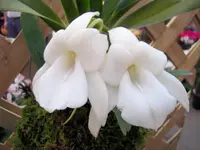
Angraecum magdalenae
Angraecum magdalenae
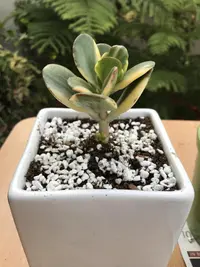
Jade Plant
Crassula ovata 'Variegata'
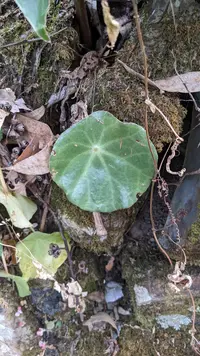
Begonia
Begonia conchifolia var. rubrimacula
 POPULAR
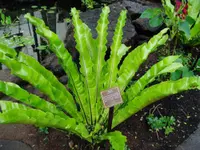
Japanese bird's-nest fern
Asplenium antiquum
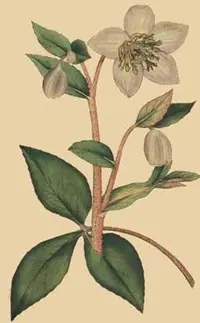
Majorcan Hellebore
Helleborus lividus
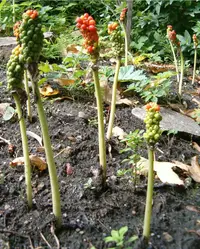
Arum orientale
Arum orientale
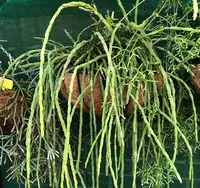
Chain Cactus
Rhipsalis paradoxa
white-lipped oncidium
Oncidium leucochilum