Panicle Hydrangea Care (Hydrangea paniculata 'Phantom')

Also known as: Tree Hydrangea, Hydrangea

About Panicle Hydrangea

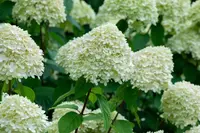
Hydrangea paniculata 'Phantom' is a deciduous flowering shrub known for its very large, conical flower clusters that shift from creamy white to soft pink with age. It forms an upright, bushy shape and can become a substantial landscape feature over time.

This cultivar originates from garden breeding selections of Hydrangea paniculata, a species native to eastern Asia. It is valued for strong stems that hold heavy blooms without flopping.

The plant is considered relatively easy to grow and adapts to a range of garden conditions, which simplifies how to care for Panicle Hydrangea. It generally prefers sun to light shade, consistent moisture, and well-drained, fertile soil.

Main Plant Requirements

Care Difficulty

Moderate Care

Light Preference

Full Sun

Water Requirements

Regular Water

Temperature Preference

Cold Hardy

Hardiness Zone

3–8

Soil Texture

Loamy, Sandy, Clay

Soil pH

Acidic (5.5–6.5), Slightly acidic (6.5–7.0)

Soil Drainage

Moist but well-drained

Fertilization

Light (every 4–6 weeks)

Get Personalized Care Plan

Scan your plant to receive care tips personalized for your specific plant

Available on iOS and Android

How to Care for the Panicle Hydrangea

This shrub thrives with bright outdoor light and careful protection from harsh midday sun.

  • Provide 4–6 hours of direct morning sun with light afternoon shade; east or northeast aspects suit Hydrangea paniculata 'Phantom' well.
  • Tolerates light to medium partial shade, but dense shade reduces flowering and causes weak, stretched growth with fewer, smaller panicles.
  • In hotter summers, use filtered light or dappled shade from 12–4 p.m. to prevent leaf scorch and premature browning of flower heads.

This hydrangea prefers consistently moist, well-drained soil without becoming waterlogged.

  • Water when the top 3–5 cm of soil feels dry, aiming for deep soaking that reaches the root zone rather than frequent shallow splashes.
  • Increase watering during hot, dry spells and early flowering; reduce in cool, rainy weather and in late fall as growth slows.
  • Watch for wilting, drooping leaves, and crisp edges as signs of underwatering; yellowing leaves and soggy soil suggest poor drainage or overwatering in Hydrangea paniculata 'Phantom'.

This hardy shrub tolerates a wide temperature range but flowers best in moderate conditions.

  • Active growth and flowering are strongest at 65–80°F (18–27°C), with cool nights supporting sturdy stems and good bud formation.
  • Mature plants tolerate winter lows near -20°F (-29°C) in the ground, though young shrubs benefit from mulch to protect surface roots from freeze-thaw.
  • Heat above 90°F (32°C), especially with dry wind, can cause leaf scorch; provide soil moisture and light afternoon shade in midsummer to reduce stress.

This shrub tolerates a broad humidity range but grows best outdoors in moderate air moisture.

  • Aim for 40–60% humidity; short dry spells are tolerated if soil moisture is kept even.
  • Dry air combined with drought causes leaf edges to brown and flower clusters to wilt prematurely.
  • Increase local humidity during hot, dry periods by mulching the root zone and grouping nearby plants to reduce moisture loss.

Hydrangea paniculata 'Phantom' prefers deep, moist, well-drained, organic-rich soil for stable growth and flowering.

  • Use a loamy mix with plenty of organic matter, such as garden loam blended with composted bark or well-rotted compost.
  • Ensure drainage by avoiding heavy, compacted clay; incorporate coarse sand or fine gravel to prevent waterlogging around the roots.
  • Target a slightly acidic to neutral pH of 5.5–7.0, which supports nutrient uptake and consistent flower performance.
  • Improve aeration by mixing in chunky materials like pine bark fines, and avoid soils that stay sticky or puddled after rain.

This hydrangea can be grown in containers if the pot is large, stable, and allows consistent root moisture outdoors.

  • Choose a wide, heavy container to counterbalance tall, flower-laden stems that can make the plant top-heavy in wind.
  • Select a potting mix that drains freely yet holds moisture, then elevate the container on pot feet so drainage holes stay clear.
  • Place the container where wind exposure is reduced, since tall panicles act like sails and can stress roots in a movable pot.

This shrub responds well to moderate feeding on reasonably fertile soil during the growing season.

  • Apply a balanced slow-release fertilizer (around 10-10-10) once in early spring as new growth begins.
  • Supplement with a light application of compost around the root zone to improve soil structure and moisture retention.
  • Use half-strength liquid balanced feed every 4–6 weeks in poor soils only, stopping by late summer.
  • Avoid fertilizing Hydrangea paniculata 'Phantom' in fall and winter to prevent soft, frost-sensitive growth.

Pruning supports strong flowering and a stable framework in Hydrangea paniculata 'Phantom'.

  • Prune in late winter or very early spring before buds break, when the plant is fully dormant.
  • Remove dead, damaged, or crossing stems first using clean, sharp bypass pruners or loppers.
  • Shorten last year’s flowering stems to 2–4 strong buds to encourage larger panicles and compact shape.
  • Thin out a few of the oldest stems at the base to maintain good light penetration and air flow.

This hydrangea is usually grown in the ground, with transplanting done infrequently and with care.

  • Transplant in early spring or early fall when temperatures are mild and soil is workable.
  • Look for signs like slow growth, roots circling a container, or a plant drying out very fast before moving it.
  • Lift with as much root ball as possible, keep roots shaded and moist, and replant at the same soil depth.
  • Water thoroughly after transplanting, apply 5–8 cm mulch, and maintain even moisture to reduce root stress.

Propagation of Hydrangea paniculata 'Phantom' is commonly done from cuttings rather than seed for true-to-type plants.

  • Take softwood cuttings in late spring to early summer from non-flowering shoots 10–15 cm long.
  • Remove lower leaves, keep 2 leaves at the tip, and dip the cut base in rooting hormone powder if available.
  • Insert cuttings into a moist, free-draining mix of peat-free compost and perlite under high humidity and bright shade.
  • For layering, bend a low stem to the soil, nick lightly, bury a section, and sever once roots form later in the season.

This panicle hydrangea is generally cold hardy but benefits from simple winter care in colder regions.

  • Tolerates typical winters in much of the US, but extreme cold can damage young or exposed stems.
  • Apply 5–8 cm of organic mulch over the root zone in late fall, keeping mulch away from the main stems.
  • In very cold or windy sites, loosely wrap young shrubs with burlap to reduce desiccation and stem damage.
  • Move container plants to a sheltered, unheated but frost-free or slightly protected spot to prevent root freeze.

Care Tips

Sturdy framework pruning

In the first 2–3 years, select 5–7 well-spaced main stems and remove weak or crossing shoots in late winter to build a strong framework that can support large summer flower heads without flopping.

Discreet staking support

In windy or exposed sites, insert a low, unobtrusive stake near the base and loosely tie the heaviest flowering stems with soft ties to reduce breakage when the panicles become waterlogged after rain.

Mulch for root cooling

Apply a 5–8 cm layer of shredded bark or leaf mold over the root zone each spring, keeping it a few cm away from the stems, to keep roots cool, conserve moisture, and reduce soil splashing that can spread disease.

Targeted deadheading

In late winter, remove only the spent flower heads above a pair of healthy buds, rather than cutting back hard every time, to maintain plant shape and ensure reliable flowering on the new season’s growth.

Gradual transplant shifting

If the shrub is planted too close to a path or structure, move it in early spring using a 2-step process over 2 seasons (root pruning one year, full move the next) to reduce transplant shock when growing Panicle Hydrangea.

Everything About Panicle Hydrangea

Common Pests and Diseases

Hydrangea scale

This pest appears as small, white to brown bumps on stems and leaf undersides, often causing yellowing foliage and reduced vigor. This pest feeds on plant sap and can weaken panicle hydrangeas over time.

Solution

Prune out and discard heavily infested stems, then gently scrub remaining stems with a soft brush and soapy water to dislodge scales. For persistent infestations, use a horticultural oil spray in late winter and again in early summer, ensuring thorough coverage of stems and leaf undersides while improving plant vigor through proper watering and fertilization.

Aphids

These insects cluster on tender shoot tips and leaf undersides, excreting sticky honeydew that can lead to sooty mold growth. This pest distorts new growth and can cause leaves to curl or yellow.

Solution

Spray infested shoots with a strong stream of water to knock aphids off the plant, repeating every few days as needed. If populations remain high, apply insecticidal soap or a light horticultural oil, making sure to coat the undersides of leaves and young stems while also encouraging natural predators such as lady beetles by avoiding broad-spectrum insecticides nearby.

Leaf spot (Cercospora)

This disease causes small purple to brown spots that enlarge and may merge, leading to premature leaf drop, especially on lower leaves. Symptoms include thinning foliage and reduced ornamental quality during late summer.

Solution

Remove and discard infected fallen leaves and thin dense stems to improve air circulation around the shrub. Water at the base in the morning rather than overhead and, in severe recurring cases, apply a labeled fungicide at the first sign of spotting, following all directions as part of broader Hydrangea paniculata 'Phantom' care instructions.

Powdery mildew

This disease produces a white or gray powdery coating on leaves, especially in warm, humid conditions with poor airflow. Symptoms include distorted new growth and reduced flowering if the problem persists.

Solution

Increase spacing and prune crowded stems to improve air circulation, and avoid wetting foliage late in the day. At first signs of infection, remove heavily affected leaves and, if needed, apply a sulfur or potassium bicarbonate fungicide labeled for ornamentals, rotating products if the disease recurs frequently.

Spider mites

These pests are tiny and often hard to see, but cause fine stippling on leaves, bronzing, and premature leaf drop, often with fine webbing between leaves and stems. This pest is more common in hot, dry conditions or on plants stressed by drought.

Solution

Rinse foliage thoroughly with water, including leaf undersides, every few days to reduce mite numbers and lower dust on leaves. If damage continues, use insecticidal soap or horticultural oil applied in cooler parts of the day, and maintain more even soil moisture to reduce plant stress and make the shrub less susceptible to mite buildup.

Interesting Facts

Exceptional panicle size

This cultivar produces very large flower clusters, often up to 30–40 cm long, which are noticeably bulkier and denser than those of many other Hydrangea paniculata selections.

Strong stem structure

It was selected in part for its sturdy, upright stems that are able to hold its heavy flower heads with less flopping compared with many older panicle hydrangea cultivars.

Prolonged color change

Flower clusters open creamy white, then gradually take on soft pink to deeper pinkish-red tones as the season progresses, giving a long display of shifting color from mid to late summer into early fall.

Botan icon

Did you know?

Hydrangea paniculata 'Phantom' received formal recognition from several European plant trials and exhibitions because of its combination of large panicles, strong stems, and reliable flowering, which helped drive its rapid adoption in public landscapes and home gardens across temperate regions.

FAQs about Panicle Hydrangea

Lack of blooms often comes from too much shade, excess nitrogen fertilizer, or drought stress. This species flowers on new wood, so very late spring pruning can also remove developing buds and reduce flowering for the season.

Grow Healthy Plants with Botan Care

Keep your plants happy and healthy with plant identification, disease detection, and easy care guidance.

Botan plant care app — identify plants on mobile

Explore More Plants