Windbreak positioning
Site the shrub where buildings, fences, or taller evergreens filter the prevailing wind, as strong exposure can shred the long catkins and scorch foliage in winter storms.

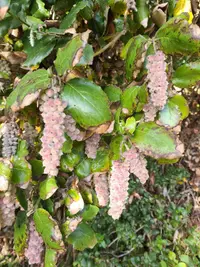
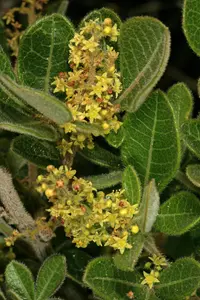
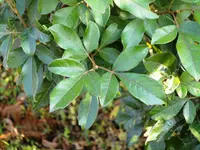
Silk tassel bush, Garrya elliptica, is an evergreen shrub known for its long, dangling winter catkins that resemble silky tassels. It typically forms a dense, upright to spreading hedge or large shrub. Native to coastal regions of western North America, it is often grown in mild, maritime climates where it tolerates wind and salt spray. The leathery, wavy-edged leaves and strong framework make it a good structural plant for year-round interest. It is generally robust and low-maintenance once established, though it prefers sun to light shade, well-drained soil, and moderate moisture. Understanding how to care for Silk tassel bush helps maintain its tidy shape and reliable flowering.

Care Difficulty
Easy Care

Light Preference
Full Sun

Water Requirements
Moderate Water

Temperature Preference
Cold Hardy

Hardiness Zone
7–9

Soil Texture
Sandy, Loamy, Clay

Soil pH
Slightly acidic (6.5–7.0), Slightly alkaline (7.0–7.5)

Soil Drainage
Well-drained

Fertilization
Minimal (feed rarely)
Scan your plant to receive care tips personalized for your specific plant
Available on iOS and Android
This evergreen shrub performs best in bright outdoor positions with some protection from harsh extremes of sun exposure.
This shrub prefers evenly moist but not saturated soil, especially while establishing.
This coastal shrub is adapted to mild climates and tolerates cool winters once established.
Humidity is not critical for Garrya elliptica, as it adapts well to typical outdoor conditions in temperate climates.
Garrya elliptica prefers moderately fertile, well-drained soil that does not remain waterlogged.
This species can be grown in containers, but only where a large, stable pot is available to accommodate its eventual size.
Garrya elliptica is a tough shrub that needs only light, targeted feeding to maintain healthy growth.
Thoughtful pruning keeps Garrya elliptica dense, healthy, and flowering well.
This shrub is usually grown in the ground; focus on careful planting and occasional transplanting rather than frequent repotting.
Garrya elliptica is most often propagated from semi-ripe cuttings rather than by seed.
This evergreen shrub is generally hardy in mild climates but benefits from simple winter care in colder areas.

Plant Health Check
Not sure what's wrong with your plant? Check your plant's health inside the app.
This species is notable for its long, silvery catkins that develop in winter when many other shrubs are bare, providing one of the few ornamental floral displays in the cold season in mild coastal climates.
Native populations along the Pacific coast of the US are adapted to exposed, windy, salt-laden environments, which is why the shrub tolerates maritime conditions and salt spray better than many evergreen species.
The plant is dioecious, meaning male and female flowers grow on separate plants, and male shrubs usually produce the most striking, long catkins that are valued in ornamental use.

Garrya elliptica forms part of the chaparral and coastal scrub communities in California and Oregon, where its dense evergreen structure provides year-round cover for birds and small mammals, contributing to habitat complexity in these fire-prone ecosystems.
Poor flowering is often due to heavy pruning at the wrong time, deep shade, or stress from drought or root disturbance. Avoid cutting shoots formed the previous year and keep the plant consistently watered during bud formation.
Keep your plants happy and healthy with plant identification, disease detection, and easy care guidance.