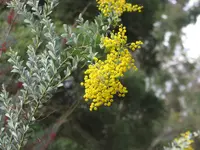
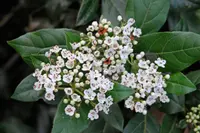
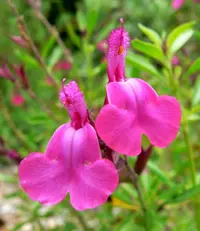
blue-fruited crowberry Care (Searsia laevigata)

Also known as: Dune Currantrhus, Dune Currant
blue-fruited crowberry

About blue-fruited crowberry

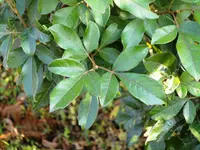
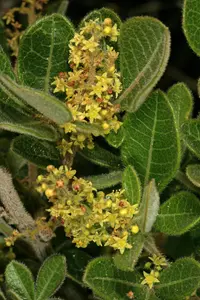
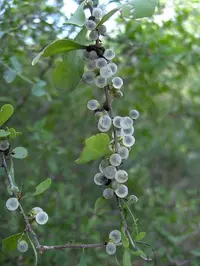
Blue-fruited crowberry (Searsia laevigata) is an evergreen shrub to small tree known for its dense branching, glossy foliage, and attractive blue-black berries. It forms a rounded, bushy shape that suits mixed shrub borders, screening, or informal hedging in mild climates.

This species is native to coastal and inland areas of South Africa, where it experiences sun, wind, and relatively dry conditions. Its toughness and adaptability make it fairly forgiving once established, though it prefers well-drained soil and regular light watering during the first years.

For gardeners learning how to care for blue-fruited crowberry, its main needs are good light, drainage, and space for its mature size, rather than intensive maintenance.

Main Plant Requirements

Care Difficulty

Easy Care

Light Preference

Full Sun

Water Requirements

Low Water

Temperature Preference

Warm Climate

Hardiness Zone

9–11

Soil Texture

Sandy, Loamy, Rocky

Soil pH

Slightly acidic (6.5–7.0), Neutral (7.0)

Soil Drainage

Well-drained

Fertilization

Minimal (feed rarely)

Get Personalized Care Plan

Scan your plant to receive care tips personalized for your specific plant

Available on iOS and Android

How to Care for the blue-fruited crowberry

Searsia laevigata thrives in bright, open conditions with strong but not extreme sun exposure.

  • Provide 6–8 hours of direct sun daily, ideally with morning sun and some light afternoon shade in very hot, inland sites.
  • Accepts light or dappled shade for part of the day, but dense shade leads to sparse growth and reduced flowering and fruiting in blue-fruited crowberry.
  • In hot summers, protect from intense midafternoon sun to limit leaf scorch, especially on young plants; in cooler coastal areas, full sun all day is suitable.

Searsia laevigata prefers deep, infrequent watering once established, with soil allowed to dry slightly between soakings.

  • Outdoors in the ground, water when the top 5–8 cm of soil feel dry, applying a slow, deep soak rather than light surface sprinkling.
  • Reduce watering in cool seasons, especially winter, and increase only during extended hot, dry periods or if foliage starts to dull and lower leaves wilt.
  • Use sharply drained soil; persistent sogginess, yellowing leaves, and dieback of young shoots indicate overwatering, while crisp leaf edges and drooping new growth suggest underwatering.

This shrub tolerates a wide temperature range but performs best in mild, coastal-type climates.

  • Optimal growth occurs around 60–80°F (16–27°C), with steady shoot development and good foliage density in this range.
  • Mature plants handle brief drops to about 25°F (−4°C), but young plants are more frost-sensitive and benefit from protection during cold snaps.
  • Tolerates summer heat up to about 95°F (35°C) if soil moisture is not extreme; extended cold below 25°F (−4°C) can damage tips and reduce flowering the following season.

Humidity is rarely limiting for Searsia laevigata, which adapts well to typical outdoor air in most regions.

Searsia laevigata grows best in mineral, fast-draining soil that does not stay wet after rain or irrigation.

  • Use sandy or gravelly loam with 20–40% coarse sand or grit to keep pores open and limit waterlogging.
  • Aim for slightly acidic to neutral pH around 6.0–7.2, avoiding strongly acidic or saline conditions.
  • Mix in a modest amount of compost or well-rotted organic matter, but keep overall texture lean rather than rich and heavy.
  • For heavy clay sites, create a raised bed or mound with added sand and fine gravel to improve drainage and root aeration.

This shrub can be grown in containers if the pot is sized and weighted to support its woody, spreading form.

  • Select a deep, wide, heavy container to counter wind rock and prevent the root ball from shifting as branches thicken.
  • Use a gritty, shrub-suitable mix with extra coarse sand or fine gravel so water passes through within a few minutes after watering.
  • Position the pot where runoff can drain freely away from the base, preventing standing water that could saturate the lowest drainage holes and roots.

This drought-tolerant shrub, sometimes called blue-fruited crowberry, needs only light, infrequent feeding in typical garden soil.

  • Use a balanced slow-release fertilizer or a thin layer of compost in early spring to support steady growth.
  • Apply at low strength, about half the label rate, to avoid overly lush, weak shoots.
  • Feed once per growing season in average soil; skip feeding on very fertile or native-adapted sites.
  • Do not fertilize in winter; stop feeding 6–8 weeks before expected frost to allow wood to harden.

Pruning Searsia laevigata is mainly used to maintain structure, health, and safe size.

  • Carry out light pruning in late winter or very early spring before new growth starts.
  • Remove dead, diseased, crossing, or storm-damaged branches with clean, sharp bypass pruners or loppers.
  • Thin crowded interior shoots to improve light and airflow, which reduces fungal problems.
  • Shorten or selectively remove wayward stems to control height and width while preserving the plant’s natural form.

This species is usually grown in the ground, so focus on careful transplanting rather than frequent repotting.

  • Transplant young plants in late winter or early spring when soil is workable and temperatures are mild.
  • Look for roots circling the container or stalled top growth as signs the plant is pot-bound and ready for planting out.
  • Water deeply the day before and after transplanting, and handle the root ball gently to limit root tearing.
  • Set the shrub at the same soil level as in the pot, firm soil carefully, then mulch 5–8 cm away from the stem.

Searsia laevigata is propagated mainly from semi-hardwood cuttings and seeds under controlled conditions.

  • Take semi-hardwood cuttings in late summer, using 8–10 cm shoots with several nodes.
  • Remove lower leaves, dip bases in a rooting hormone, and place in a free-draining mix under high humidity and bright, indirect light.
  • Sow cleaned seeds in autumn in a gritty, well-drained medium; cool conditions help break dormancy.
  • Keep cuttings and seed trays just moist, avoiding waterlogging, and maintain good air movement to limit rot.

This shrub is moderately cold hardy in mild-winter regions and usually needs only minimal winter care.

  • In colder areas, add a 5–8 cm mulch layer around the root zone to buffer soil temperature swings.
  • Avoid heavy pruning or high-nitrogen feeding late in the season so new shoots mature before frost.
  • For container plants in marginal climates, move pots to a sheltered, frost-free or lightly heated area over winter.

Care Tips

Wind-firm training

In the first 2–3 years, lightly stake young plants and remove stakes gradually while pruning to a single strong leader so the shrub develops a wind-firm framework in exposed coastal sites.

Salt spray management

After coastal storms, hose foliage with fresh water in the morning to remove salt deposits and reduce leaf burn, especially on plants still establishing their root systems.

Root-zone protection

Maintain a 5–8 cm layer of coarse organic mulch over the root zone, keeping it 5 cm away from the stems, to buffer soil temperature, suppress weeds, and protect shallow feeder roots from disturbance.

Structural renewal pruning

Every 3–4 years, remove 1–3 of the oldest, thickest branches at the base to stimulate new shoots and maintain a dense, balanced crown suited to low-maintenance landscapes.

Pest scouting routine

Inspect foliage and stems at least twice per season for scale insects and leaf spot, and prune out localized infestations early rather than relying first on chemical controls when caring for blue-fruited crowberry.

Common Pests and Diseases

Leaf-galling aphids

This pest forms small, often reddish or swollen galls along the leaf margins and midribs, causing distortion and curling of Searsia laevigata foliage. These insects feed on plant sap but usually weaken the plant only when populations are heavy or the shrub is stressed.

Solution

Prune off and dispose of heavily galled shoots before the aphids exit the galls, and avoid high-nitrogen fertilization that promotes soft new growth. For active infestations, hose down foliage with a strong stream of water and, if needed, apply a targeted insecticidal soap or ready-to-use neem oil to young leaves, repeating every 7–10 days until new growth emerges clean.

Soft scale

This pest appears as small, dome-shaped brown or gray bumps on stems and older leaves, often accompanied by sticky honeydew and black sooty mold. These insects draw sap from the plant, which can lead to yellowing, leaf drop, and general decline in severe cases.

Solution

Scrape or wipe off accessible scale by hand with a cloth or soft brush dipped in soapy water, focusing on young stems. For heavier infestations, apply horticultural oil during mild weather to thoroughly coat stems and the undersides of leaves, and improve plant vigor through proper watering and light to help the shrub outgrow damage.

Leafspot complex

This disease causes irregular brown, purple, or dark spots on leaves, sometimes with pale centers and yellow halos, and may lead to premature leaf drop on stressed plants. Symptoms include increased spotting during periods of warm, humid or rainy weather, especially on dense, shaded shrubs.

Solution

Remove and discard affected fallen leaves and heavily spotted shoots to reduce the source of infection, and thin interior branches to improve light and airflow through the canopy. Avoid overhead watering, irrigate at soil level in the morning, and if the problem is persistent, use a labeled copper or chlorothalonil-based fungicide during wet periods according to package directions.

Powdery mildew

This disease shows as a white to gray, powdery coating on young leaves and shoots, which may become distorted, stunted, or slightly yellowed. Symptoms include more severe infection when plants grow in still, shaded positions with cool nights and warm, dry days.

Solution

Prune to open the canopy and improve air circulation, and avoid overhead watering late in the day to keep foliage dry. At first sign of disease, treat young growth with a sulfur spray or horticultural oil labeled for powdery mildew, repeating as needed, and focus on keeping the plant healthy with appropriate light and soil drainage as part of overall Searsia laevigata plant care.

Interesting Facts

Cape coastal specialist

This species is naturally restricted to coastal and near-coastal areas of South Africa’s Western and Eastern Cape, where it is a characteristic component of dune thicket and coastal scrub vegetation exposed to salt-laden winds.

Variable leaf forms

It shows notable leaf variation across its range, with some populations having entire, smooth leaflets and others having more toothed margins, which has led to the recognition of infraspecific forms and occasional confusion with related Searsia species.

Bird-dispersed fruits

Its small, reddish to dark fruits are an important winter food source for many coastal birds, which eat the fleshy outer layer and disperse the seeds through their droppings, helping maintain and spread coastal thicket communities.

Botan icon

Did you know?

It is considered one of the hardiest small trees or shrubs for windy, salt-exposed South African coastal sites and has been widely used in coastal restoration plantings to stabilize dunes and rehabilitate degraded shorelines.

FAQs about blue-fruited crowberry

This species is typically evergreen, retaining foliage throughout the year in mild climates. In colder or very dry conditions, it may thin its leaves slightly, but it does not usually drop all foliage seasonally.

Grow Healthy Plants with Botan Care

Keep your plants happy and healthy with plant identification, disease detection, and easy care guidance.

Botan plant care app — identify plants on mobile

Explore More Plants