Laurustinus Care (Viburnum tinus)

Also known as: Laurustinus viburnum, laurestine

About Laurustinus

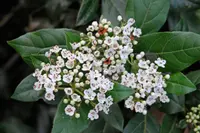
Laurustinus, Viburnum tinus, is an evergreen shrub valued for dense foliage and long flowering. It typically forms a rounded, bushy shape with glossy dark green leaves. Clusters of white to pale pink flowers appear in winter to early spring, followed by metallic blue-black berries. Native to the Mediterranean region, it adapts well to many mild climates and is often used for hedges or foundation plantings. Its toughness, tolerance of light shade, and moderate drought resistance make it relatively easy to grow in gardens. To care for Laurustinus, provide well-drained soil, regular but not excessive moisture, and at least some direct light.

Main Plant Requirements

Care Difficulty

Easy Care

Light Preference

Partial Sun

Water Requirements

Moderate Water

Temperature Preference

Warm Climate

Hardiness Zone

8–10

Soil Texture

Sandy, Loamy, Clay

Soil pH

Slightly acidic (6.5–7.0), Slightly alkaline (7.0–7.5)

Soil Drainage

Moist but well-drained

Fertilization

Minimal (feed rarely)

Get Personalized Care Plan

Scan your plant to receive care tips personalized for your specific plant

Available on iOS and Android

How to Care for the Laurustinus

Viburnum tinus prefers bright conditions but copes well with varying garden light.

  • Provide 4–6 hours of direct sun daily, ideally with gentle morning sun and light afternoon shade in hot climates.
  • Tolerates partial shade, but dense shade reduces flowering and leads to sparse, stretched growth on Laurustinus.
  • In very hot summers, protect from intense sun 12–4 p.m. with dappled or filtered light to prevent leaf scorch and dry, stressed foliage.

Viburnum tinus prefers steady moisture in well-drained soil, especially during establishment.

  • Water when the top 3–5 cm of soil feel dry, soaking the root zone deeply rather than giving light splashes.
  • In the first 1–2 growing seasons, monitor closely during hot, dry spells; mature shrubs usually need water only after prolonged drought.
  • Yellowing, soft leaves and persistent wet soil suggest overwatering or poor drainage, while dull, curling leaves and dry, cracking soil indicate underwatering.

This shrub handles a wide temperature range but performs best in mild climates.

  • Optimal growth occurs around 50–75°F (10–24°C), supporting steady foliage development and reliable flowering.
  • Mature plants usually tolerate brief drops to about 15–20°F (-9 to -6°C), but young shrubs benefit from mulch to protect roots.
  • Heat up to about 90°F (32°C) is tolerated if soil moisture is maintained; prolonged hard frost or cold winds can damage buds and leaf tips.

Humidity is rarely a limiting factor for Viburnum tinus in typical outdoor conditions.

Viburnum tinus grows best in moderately fertile, moisture-retentive but drained soil.

  • Aim for a loamy or sandy-loam structure enriched with 20–30% well-rotted compost to support steady growth.
  • Ensure drainage by avoiding compacted clay; incorporate coarse sand or fine grit if water lingers after rain.
  • Target a slightly acidic to neutral pH of about 6.0–7.5, which suits most garden situations.
  • Avoid waterlogged or extremely shallow soils, as low oxygen around the roots increases disease risk.

This shrub can adapt to container growing when the pot is large and stable.

  • Choose a heavy, wide-based container to prevent wind rock, as the evergreen canopy can act like a sail.
  • Use a potting mix that combines shrub compost with about 20% grit to keep drainage reliable over several seasons.
  • Raise the container slightly on feet or blocks so drainage holes stay clear and winter water does not pool under the base.

Viburnum tinus responds well to modest, consistent nutrition rather than heavy feeding.

  • Use a balanced slow-release fertilizer (around 10-10-10) or a thin layer of compost in early spring as new growth starts.
  • Feed once in spring and again in mid-summer during active growing season; avoid late-season applications that push tender growth.
  • Apply at half to three-quarter label rate, keeping granules or solution off the stems and foliage to prevent scorch.
  • Stop feeding Laurustinus in late summer to allow wood to harden before winter and reduce risk of cold damage.

Pruning helps maintain shape and flowering performance in Viburnum tinus.

  • Schedule main pruning just after flowering finishes in late winter or early spring, so next year’s buds are not removed.
  • Use clean, sharp bypass pruners to remove dead, damaged, or crossing branches back to healthy wood.
  • Thin congested interior stems to improve light and air flow, which supports denser growth and reduces disease pressure.
  • Shorten overly long shoots by up to one-third, following the natural outline to keep a balanced, informal shrub shape.

This shrub is usually grown in the ground, so focus on thoughtful transplanting or occasional container up-sizing.

  • Look for roots circling the pot holes, soil drying very fast, or reduced vigor as signs a container-grown shrub needs more space.
  • Plan major transplanting for late winter to early spring in mild climates, or early fall where summers are hot and dry.
  • Move up 1 pot size only, loosen circling roots gently, and keep as much original root ball intact as possible to limit shock.
  • Water deeply after transplanting, then keep soil evenly moist and shaded from intense sun for 1–2 weeks while roots re-establish.

New Viburnum tinus plants are most often raised from semi-ripe cuttings, with layering and seeds as alternatives.

  • Take semi-ripe stem cuttings in mid to late summer, 8–10 cm long, from non-flowering shoots.
  • Remove lower leaves, dip the cut end in rooting hormone, and place in a sterile, free-draining medium such as 50:50 perlite and peat-free compost.
  • Maintain bright, indirect light, high humidity, and temperatures around 65–75°F until roots form, usually in several weeks.
  • For layering, bend a low branch to the soil, pin and cover a section, then separate and pot once a strong root system has formed.

This evergreen shrub is fairly cold hardy in mild climates but benefits from simple winter care in colder areas.

  • Laurustinus tolerates light frosts but may suffer leaf or bud damage in prolonged freezes below about 10–15°F.
  • Apply a 5–8 cm mulch layer over the root zone in late fall, keeping it slightly away from the main stems.
  • In very cold or windy sites, use burlap or a windbreak fence to limit foliage scorch and desiccation.
  • Move container plants into a sheltered, unheated but frost-free spot and water sparingly to keep the root ball just moist.

Care Tips

Bud Protection

In colder zones, wrap young shrubs with breathable frost cloth before hard freezes to prevent flower bud damage and maintain reliable late‑winter bloom.

Renewal Pruning Cycle

Every 2–3 years, remove 1–3 of the oldest stems at ground level in late spring to keep the shrub dense, well-lit inside, and less prone to fungal issues.

Hedge Wind Management

When using this shrub as a windbreak, allow the outer face to stay slightly wider at the base than the top so lower branches keep their foliage and the hedge does not thin out near the ground.

Root Zone Mulching

Maintain a 5–8 cm mulch layer out to at least the drip line, but keep it 5–8 cm away from the stems to stabilize soil moisture and reduce stress-related pest problems when growing Laurustinus.

Scale Monitoring Routine

From spring through fall, inspect the undersides of leaves and young stems monthly for scale insects and, if found early, wipe small colonies off with a cloth dipped in soapy water before populations build up.

Common Pests and Diseases

Viburnum beetle

This pest causes extensive shot-holes and skeletonizing of leaves, often starting in spring with larvae feeding on young foliage. Symptoms include browned, tattered leaves and, in heavy infestations, partial defoliation.

Solution

Prune out and destroy egg-laden shoots in late winter by removing stems with rows of tiny eggs near the tips. During larval stages in spring, shake branches over a sheet and dispose of larvae, and if needed use a targeted insecticide labeled for leaf-feeding beetles, applied thoroughly to the foliage according to Viburnum tinus care instructions.

Black vine weevil

This pest feeds on leaves at night, leaving irregular notches along the leaf margins, while larvae feed on roots and can cause general decline. Symptoms include slow growth, wilting in dry weather, and notched leaves on the outer canopy.

Solution

Inspect plants after dark with a flashlight and hand-pick adults from foliage. For long-term control, apply beneficial nematodes to the soil in late summer or early fall to target larvae, and avoid overwatering to limit stress on damaged roots.

Armillaria root disease

This disease, caused by Armillaria fungi, leads to gradual decline, yellowing foliage, branch dieback, and eventual plant death, especially in poorly drained or previously infected sites. Symptoms include white fungal sheets under the bark near the base and dark shoestring-like rhizomorphs on roots or in the soil.

Solution

Remove and destroy severely affected plants including as much root material as possible and avoid replanting susceptible woody plants in the same spot. Improve drainage, avoid overwatering, and keep mulch and soil away from direct contact with the lower stem to reduce infection risk in nearby plants.

Leaf spot

This disease causes small brown, purple, or tan spots on leaves that may merge into larger blotches, sometimes surrounded by a darker margin. Symptoms include premature leaf drop and a generally thin, tired-looking canopy.

Solution

Prune out heavily spotted leaves and thin dense growth to improve airflow, disposing of all fallen leaves to reduce fungal spore levels. In severe or recurrent cases, use a suitable fungicide labeled for ornamental shrubs in early spring, and water at the base rather than over the foliage to keep leaves dry.

Sooty mold

This disease appears as a black, powdery or velvety coating on leaves and stems, often developing on honeydew excreted by sap-sucking insects such as aphids or scale. Symptoms include dulled, sticky foliage and reduced photosynthesis, though the fungus usually remains on the plant surface.

Solution

First control the honeydew-producing insects with targeted methods such as insecticidal soap or horticultural oil. Then gently wash affected leaves with lukewarm water and a soft cloth or spray to remove the mold, and improve air circulation so foliage dries quickly after rain or irrigation.

Interesting Facts

Winter-flowering shrub

This species produces clusters of fragrant white to pinkish flowers from late autumn through winter, providing nectar and pollen when few other shrubs are in bloom in mild climates.

Evergreen in shade

Unlike many viburnums, this species keeps its dense, glossy foliage year-round and tolerates relatively low light, which makes it a reliable screening shrub in coastal and urban gardens.

Berry color change

Its fruits develop from green to bright metallic blue and often age to black, creating a long-lasting display that also serves as a food source for birds in late winter and early spring.

Botan icon

Did you know?

Viburnum tinus is native to Mediterranean maquis shrublands and has adapted to dry, rocky slopes and salty coastal air, which explains its notable tolerance of urban pollution and seaside exposure in cultivation.

FAQs about Laurustinus

Poor flowering usually comes from too much shade, heavy pruning at the wrong time, or nutrient imbalance. Avoid pruning after flower buds form, ensure at least moderate light, and use a balanced, slow-release fertilizer rather than high-nitrogen products.

Grow Healthy Plants with Botan Care

Keep your plants happy and healthy with plant identification, disease detection, and easy care guidance.

Botan plant care app — identify plants on mobile

Explore More Plants