Branch tip pinching
Pinch or lightly clip soft new shoot tips in late winter or early spring to encourage denser branching and a fuller hedge or screen form.

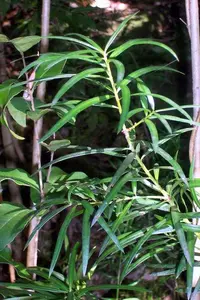
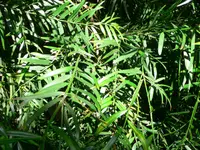
Dwarf plum-pine (Podocarpus spinulosus) is a compact, slow-growing conifer native to eastern Australia, where it grows in woodland and heath habitats. It stays relatively low and dense, with fine, needle-like leaves and a neat, bushy habit that suits small gardens and containers. The plant produces small, plum-like fleshy cones that add subtle ornamental interest rather than showy color. It is generally considered a tough, adaptable shrub, but steady moisture, free-draining soil, and protection from extreme heat or drying winds help maintain good growth. Understanding how to care for dwarf plum-pine starts with providing stable conditions and avoiding waterlogged roots.

Care Difficulty
Moderate Care

Light Preference
Partial Shade

Water Requirements
Moderate Water

Temperature Preference
Warm Climate

Hardiness Zone
9–11

Soil Texture
Sandy, Loamy, Organic-rich

Soil pH
Acidic (5.5–6.5), Slightly acidic (6.5–7.0)

Soil Drainage
Well-drained

Fertilization
Minimal (feed rarely)
Scan your plant to receive care tips personalized for your specific plant
Available on iOS and Android
Podocarpus spinulosus prefers bright conditions with some protection from intense midday sun.
This species prefers evenly moist, well-drained soil rather than extremes of dryness or saturation.
This plant handles a mild climate but dislikes hard freezes and extreme heat stress.
This species manages well in typical indoor humidity if extremes are avoided.
Podocarpus spinulosus prefers a free-draining, slightly acidic to neutral mix that holds some moisture but never stays waterlogged.
This species is well suited to container growing when the pot provides stable support and excess water can drain freely.
Podocarpus spinulosus grows steadily with modest feeding rather than heavy fertilization.
Podocarpus spinulosus responds well to light, deliberate pruning that maintains its natural, dense form.
This species is usually grown in the ground, but container plants and young specimens benefit from careful transplanting.
New plants of Podocarpus spinulosus are most reliably produced from semi-hardwood cuttings under stable conditions.
This species is moderately cold tolerant but benefits from basic winter precautions in colder regions.

Plant Health Check
Not sure what's wrong with your plant? Check your plant's health inside the app.
This species is naturally restricted to sandstone-based forests and heathlands of eastern New South Wales, where it grows among nutrient-poor, acidic soils that many other conifers cannot tolerate.
Unlike the softer leaves of some related podocarps, its needle-like leaves end in a distinct sharp tip, an adaptation thought to reduce herbivory while remaining flexible enough to cope with wind exposure in coastal and ridgetop sites.
In its native habitat it often forms part of the shaded understorey beneath taller eucalypts and shrubs, showing a high tolerance for low light while still maintaining evergreen foliage.
This species is an evergreen conifer, keeping foliage year-round rather than shedding it seasonally. Individual leaves live several years, so the plant maintains a consistent green appearance, useful for structure, screening, and background planting in most climates where it is hardy.
Keep your plants happy and healthy with plant identification, disease detection, and easy care guidance.