Wind-shaping training
In the first 2–3 years, lightly stake young stems and use soft ties to guide the main leader upright so wind does not bend it permanently and create a weak, leaning structure later.

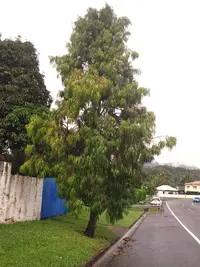
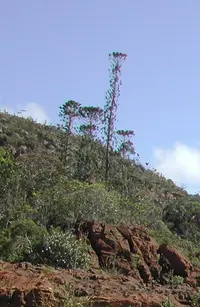
Northern brown pine (Podocarpus grayae) is an evergreen coniferous tree from the rainforests of eastern Australia. It naturally grows as a tall, narrow tree with dense, fine-textured foliage.
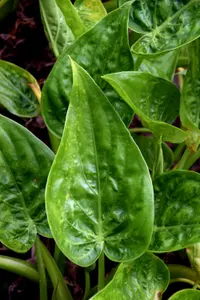
Its leaves are slender and dark green, giving a soft, feathery look rather than a sharp, spiky pine appearance. In nature it often grows along streams and in moist forest valleys.
This species is slow to moderate in growth and usually quite long-lived when conditions are stable. For those learning how to care for northern brown pine, its main needs are consistent moisture, good drainage, and protection from extreme heat or cold.
The plant prefers bright light without harsh, prolonged exposure to intense midday sun. It suits sheltered gardens and, in mild climates, structured hedging or specimen planting.

Care Difficulty
Moderate Care

Light Preference
Partial Sun

Water Requirements
Moderate Water

Temperature Preference
Warm Climate

Hardiness Zone
10–11

Soil Texture
Sandy, Loamy, Organic-rich

Soil pH
Acidic (5.5–6.5), Slightly acidic (6.5–7.0)

Soil Drainage
Well-drained

Fertilization
Minimal (feed rarely)
Scan your plant to receive care tips personalized for your specific plant
Available on iOS and Android
Podocarpus grayae prefers bright, stable light conditions similar to its native open forest edges.
This species prefers evenly moist but never waterlogged soil.
This species grows best in mild, frost-free climates with moderate seasonal variation.
This species handles typical indoor humidity but benefits from moderately moist air.
Use a free-draining, slightly acidic to neutral mix that keeps roots aerated and never waterlogged.
This species adapts well to container growing when the pot is chosen to support its woody, upright habit.
Podocarpus grayae benefits from modest, steady nutrition rather than heavy feeding.
Podocarpus grayae responds well to thoughtful pruning that maintains a dense, clean structure.
This species is more often planted in the ground, but container-grown plants or young Podocarpus grayae may need occasional moves.
Podocarpus grayae is most commonly propagated from semi-hardwood cuttings taken from healthy, non-flowering shoots.
In mild to warm climates, Podocarpus grayae usually needs minimal winter attention once established.

Plant Health Check
Not sure what's wrong with your plant? Check your plant's health inside the app.
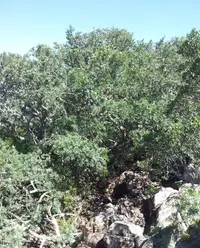
This species is native to a restricted area of subtropical and tropical rainforest in eastern Australia, where it grows naturally in warm, moist valleys and along sheltered slopes.
In its natural habitat it can reach medium tree size while tolerating considerable shade under taller rainforest species, a trait that reflects its adaptation to layered forest canopies.
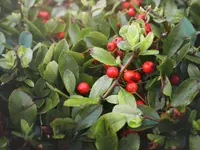
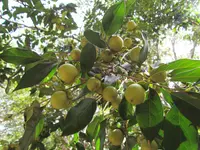
Its fleshy, berry-like seed cones are adapted to attract birds, which eat the fleshy part and disperse the hard seeds, helping maintain genetic exchange between scattered rainforest populations.
Growth is moderate. In suitable outdoor conditions it typically adds about 20–40 cm of height per year, sometimes more when young. Container plants grow more slowly due to root restriction and limited nutrients.
Keep your plants happy and healthy with plant identification, disease detection, and easy care guidance.