


Optimize air movement
Place plants where there is gentle but consistent air circulation, such as near an open interior doorway or a circulating fan on low, to dry leaves within 4 hours after misting or soaking and prevent rot in the leaf bases.

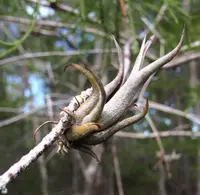
The potbelly airplant, Tillandsia paucifolia, is an epiphytic bromeliad that naturally anchors to trees rather than growing in soil. It stores water in its swollen, bulb-like base and has narrow, curling leaves covered with fine scales that give a soft, silvery look.
This species occurs in warm regions of Central America, the Caribbean, and parts of Florida, where it absorbs moisture and nutrients from rain, air, and debris. Its slow growth, drought tolerance, and lack of soil needs make it relatively easy to keep indoors once you understand how to care for potbelly airplant.

Care Difficulty
Moderate Care

Light Preference
Bright Indirect Light

Water Requirements
Moderate Water

Temperature Preference
Tropical / Frost Sensitive

Hardiness Zone
10–12

Soil Texture
Sandy, Rocky, Organic-rich

Soil pH
Acidic (5.5–6.5), Slightly acidic (6.5–7.0)

Soil Drainage
Well-drained

Fertilization
Light (every 4–6 weeks)
Scan your plant to receive care tips personalized for your specific plant
Available on iOS and Android
This epiphytic species thrives in bright, indirect light with brief gentle direct sun.
This air plant absorbs water through its leaves and needs thorough wetting followed by complete drying.
This species prefers warm conditions and does not tolerate frost.
This air plant prefers moderate humidity and dries fully between waterings.
Tillandsia paucifolia does not grow in soil and instead anchors onto surfaces.
This species can be displayed in containers as a mounted or loose air plant rather than a rooted potted plant.
This air plant benefits from light, periodic feeding rather than heavy fertilization, which supports steady growth without salt buildup.
Pruning needs for Tillandsia paucifolia are minimal and focus mainly on hygiene and appearance.
This air plant is usually mounted rather than potted, so transplanting focuses on remounting or repositioning rather than true repotting.
Propagation of Tillandsia paucifolia is most practical through division of offsets rather than seed.
This subtropical air plant is not frost hardy and needs protection in regions with cold winters.

Plant Health Check
Not sure what's wrong with your plant? Check your plant's health inside the app.
The swollen, pot-shaped base of this species is formed by tightly overlapping leaf bases that trap water, dust, and organic debris, creating a miniature reservoir and nutrient tank for the plant.
In its native range from Florida through parts of Central America, this air plant commonly anchors to rough-barked trees such as pines and oaks, using their texture for firm attachment without taking nutrients from the host.
Like many bromeliads, it uses CAM photosynthesis, opening its leaf pores mainly at night to take in carbon dioxide, which helps reduce water loss in the bright, often dry habitats where it grows.

This species often grows in association with colonies of ants and other small arthropods that shelter in its leaf bases, and their accumulated waste gradually enriches the trapped debris, providing a slow-release nutrient source for the plant.
Brown leaf tips usually come from underwatering, very dry air, or intense direct sun. Entire brown, crispy leaves suggest prolonged drought, while soft, dark brown tissue points to rot from staying wet too long or poor air circulation.
Keep your plants happy and healthy with plant identification, disease detection, and easy care guidance.

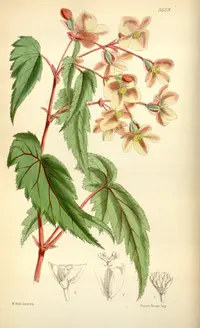
Sutherland begonia
Begonia sutherlandii
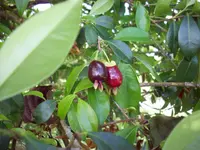
Cherry of the Rio Grande
Eugenia involucrata
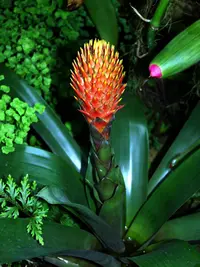
Guzmania conifera
Guzmania conifera
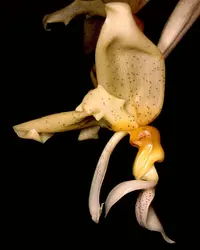
Stanhopea graveolens
Stanhopea graveolens
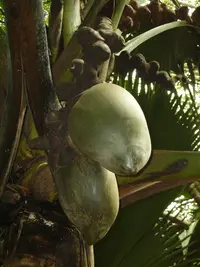
double coconut
Lodoicea maldivica

Speedy Jenny
Tradescantia chrysophylla 'Baby Bunny Bellies'
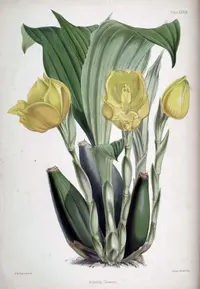
Anguloa clowesii
Anguloa clowesii
Dragon Wing Begonia
Begonia Dragon Wing® Pink