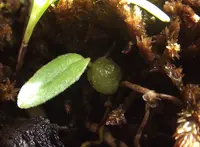
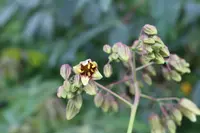
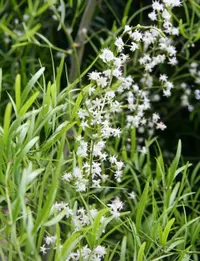
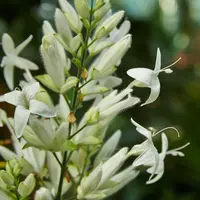
Manatee River airplant Care (Tillandsia simulata)

Also known as: broad needleleaf airplant, Florida airplant
Manatee River airplant

About Manatee River airplant

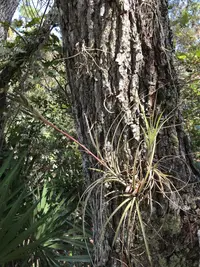
The Manatee River airplant, Tillandsia simulata, is a small epiphytic bromeliad that grows without soil, anchoring to tree bark or other rough surfaces. It forms a tuft of narrow, arching gray-green leaves that can create loose clumps over time.

This species is native to humid habitats in Florida and nearby regions, often found on cypress and pine trees. Its main appeal is the low-maintenance nature typical of air plants, though it depends on consistent air circulation and regular moisture. Simple routines make it straightforward to care for Manatee River airplant indoors or mounted in displays.

It generally prefers bright, indirect light, good airflow, and periodic soaking or misting rather than permanent potting in soil.

Main Plant Requirements

Care Difficulty

Moderate Care

Light Preference

Partial Shade

Water Requirements

Moderate Water

Temperature Preference

Tropical / Frost Sensitive

Hardiness Zone

9–11

Soil Texture

Sandy, Rocky, Organic-rich

Soil pH

Acidic (5.5–6.5)

Soil Drainage

Well-drained

Fertilization

Light (every 4–6 weeks)

Get Personalized Care Plan

Scan your plant to receive care tips personalized for your specific plant

Available on iOS and Android

How to Care for the Manatee River airplant

Tillandsia simulata prefers bright, indirect light that mimics open pine woods or bright porches.

  • Provide 4–6 hours of bright, filtered light daily, such as dappled shade under trees or under 30–50% shade cloth.
  • Allow gentle morning sun but protect from harsh midday and afternoon sun, which can scorch leaves and cause bleaching or crispy tips.
  • In winter, move Manatee River airplant to a brighter position if days are short, but still shield it from direct, low-angle midday sun.

Water needs focus on thorough wetting followed by complete drying of the plant.

  • Soak or heavily mist Tillandsia simulata until fully wet, then let it dry within 3–4 hours; in warm, dry weather this may be needed 2–3 times per week.
  • In cool or very humid conditions, reduce to once weekly and confirm leaves feel dry and silvery before the next soaking.
  • Signs of underwatering include curling or rolling leaves, while soft, brown bases or a musty smell suggest overwatering and poor air drying.

This air plant thrives in mild, frost-free conditions with good air movement.

  • Aim for 65–80°F (18–27°C) for best growth, with steady temperatures and protection from sudden cold drafts or heat spikes.
  • Plant tolerates short periods down to about 40°F (4°C), but exposure near or below freezing can cause leaf tissue damage or plant death.
  • In hot spells above 90°F (32°C), increase shade and air circulation and water earlier in the day so plants dry by night, reducing rot risk.

This atmospheric bromeliad prefers moderate to high humidity and reacts quickly to very dry air.

  • Aim for 50–70% humidity; it tolerates brief dips lower if watering is consistent.
  • Dry, curling leaf tips and dulling or browning at the edges indicate humidity stress in Manatee River airplant.
  • Increase humidity by grouping plants, using a nearby pebble tray, or running a small humidifier without directly wetting flowers.

Tillandsia simulata is an air plant that must never be planted in traditional potting soil.

  • Mount on inert, fast-drying surfaces such as cork bark, driftwood, or open mesh rather than using any dense substrate.
  • If placing in a decorative container, keep the base open and use loose materials like large bark chunks, coarse sand, or aquarium gravel to support, not bury, the plant.
  • Ensure air can circulate 360° around the leaves and base; trapped moisture against the plant encourages rot.
  • Avoid peat-based mixes, compact moss pads, or any medium that stays wet for more than a few hours after misting or soaking.

This species is suitable for container display only when kept above the medium rather than potted in it.

  • Choose shallow, wide vessels that let the plant sit securely on top while keeping leaf bases exposed to moving air.
  • Use heavy ceramic or glass containers if the display is tall so the arrangement does not tip when the foliage dries and becomes lighter.
  • Raise the plant on small stones or a wire stand inside the container so any collected water drains away from the base quickly.

Tillandsia simulata benefits from light, carefully diluted feeding rather than heavy fertilization.

  • Use a balanced water-soluble air plant fertilizer or orchid fertilizer at 1⁄4 strength for Manatee River airplant.
  • Feed every 3–4 weeks in spring and summer, immediately after soaking or misting the plant.
  • Skip or greatly reduce feeding in fall and winter when growth slows.
  • Never use slow-release pellets or compost, which can burn tissues and encourage rot.

Pruning needs for Tillandsia simulata are minimal and focus on hygiene rather than shaping.

  • Trim only dead or browned leaves, cutting close to the base with clean, sharp scissors.
  • Remove spent flower spikes once they dry to keep the plant tidy and reduce disease risk.
  • Gently pull away loose, dry leaf bases by hand instead of tearing green tissue.
  • Limit pruning of healthy leaves, since excessive removal weakens the plant and flowering.

This air plant does not require conventional repotting, but it may need remounting or repositioning over time.

  • Shift or remount when clumps overgrow their support, airflow declines, or growth becomes noticeably slow.
  • Best timing is spring to early summer, when temperatures are warm and light levels increase.
  • Every 2–4 years, detach offsets gently and fix them on new bark, cork, or wire frames without burying any base.
  • After moving, soak the plants, then keep in bright, indirect light with good air movement to limit stress.

Propagation of Tillandsia simulata is most reliable through division of offsets rather than from seed.

  • Allow pups to reach about 1⁄3–1⁄2 the size of the parent before separating for stronger establishment.
  • Separate in spring or early summer, when warmth and longer days support faster growth.
  • Twist or gently pull pups away from the parent, keeping the basal area intact.
  • Mount new plants on a support, then maintain bright, indirect light and frequent light misting until firmly attached.

Tillandsia simulata is not frost hardy and needs protection from freezing conditions in most climates.

  • Keep plants above 40–45°F; prolonged exposure near or below freezing damages tissues.
  • In cold regions, grow Tillandsia simulata indoors or in a greenhouse during winter months.
  • Place indoors in bright, indirect light away from cold drafts and heater vents.
  • Reduce watering slightly but maintain good air circulation to prevent rot in cool conditions.

Care Tips

Mounting selection

Choose mounts made of untreated cork, hardwood, or lava rock rather than soft, rotting wood so the plant can anchor securely and air can circulate around the base without staying wet.

Airflow optimization

Place plants near a gentle fan or open vent that provides steady, indirect air movement, which helps leaves dry quickly after misting and reduces the risk of rot and fungal issues.

Rinse after display

After using plants in terrariums, floral arrangements, or event decor, give them a thorough rinse with clean water and allow them to dry upside down so trapped moisture does not collect in the leaf bases.

Clustered mounting

Mount several plants of different sizes on one branch or cork slab, spacing them 3–5 cm apart, to create a stable mini-colony that dries evenly and makes it easier to manage caring for Manatee River airplant as a group.

Seasonal light shift

In winter, move mounts 15–30 cm closer to bright windows or artificial lights and extend artificial light duration by 1–2 hours to compensate for shorter days and maintain active growth.

Common Pests and Diseases

Scale insects

This pest feeds under waxy, immobile bumps along the leaves and sheaths, weakening the air plant and causing yellowing or stunted growth.

Solution

Remove affected plants from nearby hosts like oaks or citrus, then gently scrape or wipe the scales off the leaves with a cotton swab dipped in 70% isopropyl alcohol and rinse with room-temperature water; improve air movement and avoid overfertilizing to reduce future outbreaks.

Mealybugs

These insects appear as white, cottony clusters at the leaf bases and in tight rosettes, where they suck sap and leave sticky residue that encourages sooty mold.

Solution

Physically remove visible clusters with a cotton swab dipped in 70% isopropyl alcohol, then rinse the plant thoroughly and dry in bright, airy conditions; repeat inspections weekly and isolate heavily infested plants to prevent spread to nearby air plants and bromeliads.

Fungal leaf spot

This disease causes small dark or water-soaked specks on the leaves that can expand into irregular brown lesions, especially in plants kept constantly wet with poor airflow.

Solution

Trim off badly spotted leaves with sterile scissors, then adjust watering so the plant dries within a few hours, increase air circulation, and avoid misting late in the day; in severe or persistent cases, a labeled copper-based fungicide can be used lightly while monitoring for leaf sensitivity.

Bacterial blight

This disease produces rapidly spreading soft, dark, or translucent patches at the leaf bases, often with a wet or foul-smelling area where water has sat for too long.

Solution

Promptly remove and discard severely affected plants to protect nearby specimens, keep water from pooling in the leaf bases by shaking excess water out after soaking or heavy rain, and increase ventilation and light levels to help remaining plants dry quickly and resist infection.

Interesting Facts

Florida scrub specialist

This species is naturally restricted to central Florida, where it grows on trees in scrub and flatwoods habitats dominated by pines and oaks, often in dry, sandy landscapes rather than rainforests.

Prefers low branches

In the wild it is frequently found on relatively low branches and fence lines, which exposes it to good air movement and high light but also to occasional ground-level mists and fogs from nearby wetlands.

Often hosts tiny invertebrates

Clumps of this air plant commonly shelter small spiders and insects that use the dense leaves as a microhabitat, adding to the local biodiversity in its native scrub ecosystems.

FAQs about Manatee River airplant

Lack of bright light, insufficient maturity, or poor air movement commonly delay flowering. This species usually blooms once when fully grown, then produces offsets. Consistent light, good hydration, and stable temperatures support Tillandsia simulata care for reliable blooming.

Grow Healthy Plants with Botan Care

Keep your plants happy and healthy with plant identification, disease detection, and easy care guidance.

Botan plant care app — identify plants on mobile

Explore More Plants