woolly kohleria Care (Kohleria hirsuta)

woolly kohleria

About woolly kohleria

Kohleria hirsuta, commonly called woolly kohleria, is a compact flowering houseplant from tropical Central and South America. It belongs to the Gesneriaceae family, the same family as African violets.

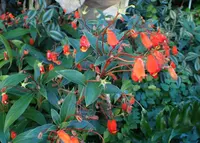
The plant forms upright to slightly arching stems with soft, fuzzy leaves and tubular flowers, often orange to red with patterned throats. The foliage and stems are covered in fine hairs, giving a distinct velvety look and texture.

This species grows from underground rhizomes, so it can regrow after resting periods if conditions are suitable. It is considered moderately easy if given warm temperatures, bright filtered light, and evenly moist but not waterlogged soil.

Understanding how to care for woolly kohleria mainly involves managing light, moisture, and temperature to keep growth steady and flowering reliable.

Main Plant Requirements

Care Difficulty

Moderate Care

Light Preference

Bright Indirect Light

Water Requirements

Moderate Water

Temperature Preference

Tropical / Frost Sensitive

Hardiness Zone

11–12

Soil Texture

Loamy, Peaty, Organic-rich

Soil pH

Acidic (5.5–6.5), Slightly acidic (6.5–7.0)

Soil Drainage

Moist but well-drained

Fertilization

Light (every 4–6 weeks)

Get Personalized Care Plan

Scan your plant to receive care tips personalized for your specific plant

Available on iOS and Android

How to Care for the woolly kohleria

This species prefers bright, indirect light that mimics dappled forest conditions.

  • Provide 4–6 hours of bright, filtered light each day, such as near an east window or under light shade outdoors, to support compact growth and flowering in woolly kohleria.
  • Tolerates partial shade with 2–4 hours of soft morning sun, but growth and blooming may slow if light drops much below this range.
  • Avoid strong midday or afternoon sun, which can scorch leaves and fade flowers; in summer, use sheer curtains or locate it where larger plants cast light shade.

Watering should keep the root zone lightly moist but never saturated.

  • Allow the top 2–3 cm of soil to dry before watering, then water thoroughly so moisture reaches the root zone while excess drains away.
  • Reduce watering in cooler, low-light months, letting the top 3–4 cm dry; in active growth with warm conditions, dryness at only 1–2 cm signals time to water Kohleria hirsuta.
  • Watch for soft, yellowing leaves or a sour soil smell as signs of overwatering, and for limp, dull leaves and very light pots as signs the plant is too dry.

This plant thrives in consistently warm, frost-free conditions.

  • Aim for 65–80°F (18–27°C) during active growth; stable warmth supports strong stems and reliable flowering.
  • Protect from cold; growth slows below about 60°F (16°C) and tissue damage can occur near 40°F (4°C), so avoid frost and prolonged chills.
  • Tolerates brief heat up to 85–90°F (29–32°C) if humidity is moderate and soil does not dry completely, but in hot spells increase airflow and shade from harsh sun.

This species prefers moderately high humidity to keep foliage and flowering consistent.

  • Aim for 50–70% humidity; it copes briefly with 40% but growth may slow.
  • Crisping leaf edges, curling, and buds drying before opening signal air that is too dry.
  • Group plants, use a nearby humidifier, or place a water-filled pebble tray under woolly kohleria to raise local humidity.

This plant needs a light, airy, fast-draining mix that still holds some moisture.

  • Use a loose, organic-rich mix such as 2 parts peat or coco coir, 1 part perlite, and 1 part fine bark.
  • Aim for slightly acidic to neutral pH around 6.0–7.0 for stable nutrient uptake in Kohleria hirsuta.
  • Ensure the structure stays open; add extra perlite or pumice if the mix feels dense or compacts after watering.
  • Avoid heavy garden soil, pure compost, or mixes that stay soggy, since the rhizomes are prone to rot in low-oxygen conditions.

This species is well suited to container growing due to its compact, rhizomatous habit.

  • Choose a pot only slightly wider than the root and rhizome zone to prevent excessive unused wet mix around them.
  • Select a container material that matches your climate, such as breathable terracotta for humid regions or plastic for faster drying homes.
  • Use a pot shape with more width than depth so rhizomes can spread without creating a tall, unstable column of foliage.

Kohleria hirsuta benefits from light, consistent feeding during active growth for steady flowering.

  • Use a balanced water-soluble fertilizer (for example 10-10-10 or 20-20-20) at 1/4–1/2 strength for woolly kohleria indoor care.
  • Feed every 2–3 weeks in spring and summer when growth and flowering are strongest.
  • Switch to a slow-release fertilizer or dilute compost tea if you prefer less frequent liquid feeding.
  • Reduce feeding to once every 4–6 weeks in fall and stop during winter dormancy if stems die back.

Pruning supports compact growth and better flowering in Kohleria hirsuta.

  • In late winter or early spring, remove dead, weak, or damaged stems down to healthy tissue.
  • Pinch soft growing tips during the season to encourage branching and a fuller, bushier shape.
  • Thin crowded stems at the base to improve air flow and light penetration into the center of the plant.
  • Use clean, sharp scissors or small pruners to make precise cuts and reduce disease risk.

Kohleria hirsuta grows from rhizomes and benefits from periodic division and repotting in containers.

  • Repot every 1–2 years in late winter or early spring, when new shoots appear and roots circle the pot or growth slows.
  • Choose a pot 2–3 cm wider with drainage holes and use a light, airy mix such as peat or coir with perlite.
  • Gently tease apart crowded rhizomes, trim damaged roots, and replant them at the same depth to limit stress.
  • Water lightly after repotting, keep in bright, indirect light, and maintain moderate humidity until growth stabilizes.

Kohleria hirsuta is commonly propagated from rhizome divisions and stem cuttings.

  • In late winter to early summer, divide rhizomes, ensuring each piece has at least 1–2 growing eyes, then plant shallowly in light mix.
  • Take 7–10 cm non-flowering stem cuttings, remove lower leaves, and root in moist, sterile medium at 70–75°F.
  • Maintain high humidity and bright, indirect light to support quick rooting, using a clear cover with vents if needed.
  • Sow seeds on the surface of fine mix, do not bury, and keep consistently warm and slightly moist for germination.

Kohleria hirsuta is frost sensitive and needs protection in regions with cold winters.

  • In USDA zones colder than 10, grow in containers and move indoors before temperatures fall below 50°F.
  • Provide bright, indirect indoor light and keep temperatures around 60–70°F through winter.
  • Allow top growth to die back naturally, then keep rhizomes barely moist, never fully dry or waterlogged.
  • Outdoors in mild climates, mulch lightly over the root zone to buffer against cool night temperatures.

Care Tips

Refresh Tubers Annually

Every 1–2 years, unpot the plant at the start of active growth, gently divide crowded rhizomes, and replant only firm, healthy pieces to keep foliage dense and blooms reliable.

Use Shallow Containers

Choose a wide, shallow pot rather than a deep one so the shallow rhizomes can spread evenly, which promotes a fuller top growth and more flowering stems.

Encourage Compact Growth

Pinch out the soft tips of young shoots once or twice early in the season to stimulate branching and create a bushier plant with more flowering points when growing woolly kohleria.

Manage Seasonal Rest

If stems die back and growth slows, reduce watering, keep the pot just barely moist, and wait for new shoots from the rhizomes before resuming normal care instead of discarding the plant.

Monitor Leaf Pubescence

Check the fine hairs on leaves regularly; if they start to mat or trap dust, gently clean with a soft dry brush rather than water-spraying to reduce disease risk and maintain healthy photosynthesis.

Common Pests and Diseases

Cyclamen mites

This pest often hides in the fuzzy leaf and stem hairs, causing distorted new growth, stunting, and failure of flower buds to open.

Solution

Isolate the plant, remove and discard badly deformed growth, then increase humidity and airflow while avoiding leaf wetting; treat new growth with a targeted miticide labeled for cyclamen mites or use repeated applications of insecticidal soap on young tissues, keeping the plant slightly cooler (65–70°F) to slow mite reproduction.

Mealybugs

These insects settle in leaf axils and along the hairy stems, forming white cottony clusters and causing yellowing, sticky honeydew, and reduced vigor.

Solution

Physically remove colonies with cotton swabs dipped in 70% isopropyl alcohol, rinse foliage with lukewarm water, then repeat alcohol or insecticidal soap treatments every 7–10 days until no new insects appear, checking especially around the growing points and under leaves.

Botrytis blight

This disease produces soft, water-soaked spots on leaves, fuzzy gray mold on flowers and stems, and rapid wilting of affected parts, especially in cool, humid rooms.

Solution

Remove and discard all infected tissue, increase airflow, avoid overhead watering, and keep foliage dry; in persistent cases, apply a fungicide labeled for Botrytis on ornamentals and space plants so leaves do not touch to prevent spread while following good woolly kohleria indoor care practices.

Powdery mildew

This disease appears as white, talcum-like patches on leaves and stems, often leading to leaf curling, dull coloration, and reduced flowering in low-light, stagnant air conditions.

Solution

Improve light and airflow, avoid crowding plants, and wipe off early patches with a damp cloth; for ongoing infections, use a potassium bicarbonate, sulfur, or neem oil product labeled for powdery mildew, applied to both upper and lower leaf surfaces while keeping the plant out of direct sun until foliage dries.

Thrips

These insects feed inside flower buds and along leaf surfaces, causing silvery streaks, brown scarring, and deformed or discolored tubular flowers.

Solution

Remove and discard heavily damaged flowers and buds, then rinse the plant thoroughly; use sticky traps to monitor adults and apply insecticidal soap or a spinosad-based product to the foliage and developing buds every 7–10 days, rotating treatments and keeping the plant slightly apart from others until new growth is clean.

Interesting Facts

Velvety leaf surface

This species develops a dense covering of fine hairs on its leaves and stems, which reduces water loss and diffuses strong light in its native tropical habitats.

Speckled tubular flowers

Its orange to red tubular flowers are marked with contrasting spots inside the throat, a pattern that helps guide pollinating insects toward the nectar source.

Rhizome-based survival

The plant forms scaly underground rhizomes that store nutrients and water, allowing it to resprout after periods of stress such as drought or damage to aboveground shoots.

FAQs about woolly kohleria

Lack of flowers usually comes from insufficient light, depleted nutrients, or the plant being too young. Ensure a bright spot, feed lightly during active growth, and avoid repeated hard pruning that removes developing buds.

Grow Healthy Plants with Botan Care

Keep your plants happy and healthy with plant identification, disease detection, and easy care guidance.

Botan plant care app — identify plants on mobile

Explore More Plants