corrida yerba de guava Care (Geophila repens)

corrida yerba de guava

About corrida yerba de guava

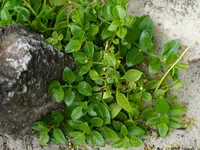
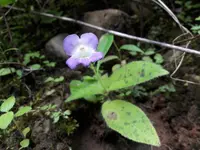
Geophila repens, often called corrida yerba de guava, is a small, creeping tropical groundcover in the coffee family. It forms low mats of rounded green leaves on thin, trailing stems. In its natural habitat, it grows on shaded forest floors in humid regions of Central and South America, Africa, and Asia, often among leaf litter. The plant stays compact and tends to spread more than it climbs, which makes it suitable for terrariums and as a understory accent in warm gardens. It is generally considered delicate but not difficult if its basic needs are met. Those learning how to care for corrida yerba de guava should focus on consistent moisture, soft light, and loose, humus-rich soil.

Main Plant Requirements

Care Difficulty

Moderate Care

Light Preference

Partial Shade

Water Requirements

Keep Soil Moist

Temperature Preference

Tropical / Frost Sensitive

Hardiness Zone

11–12

Soil Texture

Loamy, Silty, Organic-rich

Soil pH

Acidic (5.5–6.5), Slightly acidic (6.5–7.0)

Soil Drainage

Moist but well-drained

Fertilization

Minimal (feed rarely)

Get Personalized Care Plan

Scan your plant to receive care tips personalized for your specific plant

Available on iOS and Android

How to Care for the corrida yerba de guava

This low-growing forest plant prefers soft, filtered light similar to the dappled shade of understory habitats.

  • Provide bright dappled shade or filtered light under taller plants or trees, with 1–3 hours of gentle morning sun and no direct harsh midday or afternoon sun.
  • Tolerates deep shade but growth becomes sparse and leaves pale; too much direct sun scorches foliage and dries the shallow roots quickly.
  • Outdoors, position corrida yerba de guava where summer light is filtered through branches; in brighter seasons increase shade using neighboring plants or light shade cloth.

Moist, not waterlogged soil supports the shallow roots of this creeping species best.

  • Water when the top 2–3 cm of soil feel slightly dry, aiming to keep the root zone evenly moist without puddling or standing water.
  • Use loose, organic-rich soil that drains freely; on slopes or raised beds, water more slowly so moisture penetrates instead of running off.
  • In warm, dry periods expect to water more often; underwatering shows as limp, curling leaves, while yellowing foliage and a sour smell indicate overwatering and poor aeration.

This species prefers warm, frost-free conditions similar to a sheltered tropical forest floor.

  • Aim for 65–80°F (18–27°C) for steady growth, keeping conditions as stable as possible with limited daily swings.
  • Below about 50°F (10°C) growth slows sharply; brief dips to 45°F (7°C) may be tolerated, but repeated chills weaken the plant.
  • Protect from frost, cold winds, and reflected heat from concrete; above 85°F (29°C) increase shade and humidity and avoid hot, drying exposures.

This groundcover prefers consistently humid air for best growth.

  • Aim for 60–80% humidity, similar to a warm, shaded forest floor.
  • Tolerates brief dips to 40–50% but leaves may curl, crisp at edges, or stall in growth when air is too dry.
  • Increase humidity with a pebble tray under shallow trays, grouped plants, or a small nearby humidifier, which is especially useful when caring for corrida yerba de guava.

This species prefers loose, moisture-retentive soil that still drains freely.

  • Use a fine-textured mix of 50% peat or coco coir, 30% compost, and 20% perlite for a soft, airy root zone.
  • Target slightly acidic to neutral pH, around 5.5–7.0, which supports healthy nutrient uptake.
  • Improve drainage and aeration by avoiding heavy clay and adding extra perlite or fine bark if the mix feels dense or compacts easily.
  • Avoid constantly waterlogged or very sandy soils, which either suffocate roots or dry out too quickly for Geophila repens.

This creeping species is well suited to shallow containers and dish gardens.

  • Choose wide, shallow pots that let stems spread horizontally while keeping the root zone close to the moist surface layer.
  • Select plastic or glazed ceramic pots to slow moisture loss, helpful because the plant has fine, shallow roots that dry quickly.
  • Use low-sided containers placed on stable, level surfaces so trailing stems do not pull the pot over as they spread outward.

Geophila repens is a light feeder, so use modest nutrition to support steady growth without forcing soft, weak foliage.

  • Use a balanced liquid fertilizer (such as 10-10-10) at 1/4–1/2 strength for caring for corrida yerba de guava in containers.
  • Feed every 4–6 weeks during the active growing season, skipping applications if growth is already strong.
  • Apply a thin layer of fine compost or a low-dose slow-release fertilizer at the start of spring for outdoor patches.
  • Stop feeding in late fall and winter to avoid pushing tender growth in low light and cooler temperatures.

Pruning Geophila repens is mainly about light grooming to maintain a tidy, low groundcover carpet.

  • Best time for light pruning is late winter to early spring, before strong new growth starts.
  • Remove dead, yellowing, or damaged stems and leaves with clean, sharp scissors or small snips.
  • Trim back overly long or crowded runners to maintain even coverage and prevent patchy, tangled areas.
  • Pinching soft tips can encourage slightly denser growth, but avoid cutting back to bare, leafless sections.

This species is usually grown as a groundcover, so transplanting small patches is more common than container repotting.

  • Transplant when growth slows, roots mat densely under the surface, or plants outgrow the intended area.
  • Aim for early spring or early fall, when temperatures are mild and soil moisture is stable.
  • Lift shallow sections with a trowel, keeping roots attached to a soil slab to reduce disturbance and shock.
  • Replant at the same depth in loose, moist soil, then water gently and shade lightly for 3–7 days while roots re-establish.

Geophila repens is commonly multiplied by using its natural creeping habit and rooting nodes.

  • Layering is very effective: pin down a healthy runner so its nodes contact moist soil until roots form.
  • Division in early spring works well; lift a small mat and gently separate rooted sections by hand.
  • Stem cuttings taken from non-woody runners can root in a loose, humid mix kept at 70–80°F.
  • Seeds are less commonly used; if attempted, sow shallowly in warm, consistently moist, filtered-light conditions.

Geophila repens prefers frost-free to lightly frosty climates and needs simple winter precautions in colder areas.

  • This plant is sensitive to hard freezes; foliage may burn below about 30°F, though roots can survive mild cold.
  • Apply a 2–5 cm layer of leaf mulch over the root zone in late fall in exposed sites.
  • Move container-grown plants indoors or into a cool, bright, frost-free space before night frosts arrive.
  • Reduce watering in winter, keeping soil barely moist so chilled roots are not sitting in saturated conditions.

Care Tips

Surface runner management

Periodically lift and reposition longer stems so they creep over the soil surface instead of hanging in midair, which encourages new rooting nodes and a denser mat of foliage.

Rooting new sections

Pin down healthy runners onto fresh, moist substrate using small U-shaped wire or hairpins, then cut and pot them separately once new roots and leaves have formed for easy propagation and thicker coverage.

Leaf litter mulching

Add a very thin layer of fine, sterile leaf litter or coconut husk chips around the runners to mimic forest-floor conditions, keeping nodes slightly shaded and reducing evaporation without smothering the stems.

Quarantine and inspection

When growing corrida yerba de guava in mixed terrariums or understory groupings, quarantine new plants for 2–3 weeks and inspect the undersides of leaves and stem nodes with a hand lens to catch mites or scale before they spread.

Gentle airflow control

Provide very soft, indirect air movement using a low-speed fan aimed away from the plant to prevent stagnant air and fungal spots, but avoid strong drafts that dry the thin leaves and delicate surface roots.

Common Pests and Diseases

Spider mites

This pest often colonizes the undersides of the thin, creeping leaves in dry, warm indoor or greenhouse conditions, causing stippling and fine webbing. Symptoms include dull, speckled foliage and gradual leaf yellowing or drop.

Solution

Rinse stems and leaf surfaces thoroughly with lukewarm water, then wipe or spray with insecticidal soap or a ready-to-use horticultural oil, repeating every 5–7 days until no mites remain. Increase ambient humidity, avoid very dry air near heaters, and inspect regularly, as this is a key aspect of Geophila repens care.

Scale insects

These insects attach to the creeping stems and leaf midribs, appearing as small brown or tan bumps and excreting sticky honeydew. Symptoms include slow growth, yellowing, and sooty mold developing on the honeydew.

Solution

Gently scrape or wipe visible scales off stems and leaves with a cotton swab dipped in isopropyl alcohol, then follow with an application of insecticidal soap or light horticultural oil. Isolate heavily infested plants, prune heavily affected runners, and monitor weekly for crawlers to prevent reestablishment.

Foliar leaf spot

This disease shows as small, water-soaked or dark brown spots on the thin leaves, often enlarging and merging under persistently wet conditions. Symptoms include premature leaf yellowing, edge blight, and gradual thinning of the mat-forming foliage.

Solution

Remove and discard affected leaves and any heavily spotted runners to reduce pathogen spread, and allow the leaf surface to dry between waterings by avoiding overhead watering. Improve air movement, reduce overcrowding of runners, and if needed apply a labeled broad-spectrum fungicide suitable for tender tropical groundcovers.

Stem blight

This disease causes brown to black lesions on the slender creeping stems, leading to sudden wilting and collapse of affected sections, especially in overly wet or poorly drained substrates. Symptoms include blackened, soft stem sections and rapid dieback of connected leaves.

Solution

Cut back and discard all visibly blighted stems, sterilizing cutting tools between cuts, and avoid reusing contaminated potting mix. Adjust watering so the substrate stays lightly moist but not saturated, improve drainage and airflow, and consider a preventive fungicide drench only if the plant has a history of recurrent blight in the same conditions.

Interesting Facts

Pantropical forest creeper

This species is naturally distributed across many tropical regions in Africa, Asia, Australia, and the Americas, typically forming low, creeping mats on the shaded floor of moist forests.

Specialized shade adaptation

Its small, thin leaves are adapted to capture limited light under dense canopies, and it commonly grows in deep shade where many other groundcovers fail to persist.

Bird‑dispersed red berries

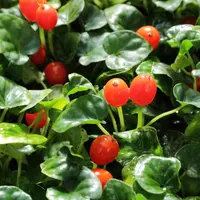
The plant produces small red berries that are eaten by forest birds, which then disperse its seeds through their droppings, helping the species colonize new shaded sites.

Botan icon

Did you know?

Molecular and morphological studies place this species in the coffee family (Rubiaceae), making it a distant relative of Coffea arabica despite its very different creeping, shade‑loving growth habit.

FAQs about corrida yerba de guava

This species is a low, creeping groundcover that spreads by thin stolons running along the soil surface. It does not climb or attach to supports, so it stays close to the ground or trails over pot edges.

Grow Healthy Plants with Botan Care

Keep your plants happy and healthy with plant identification, disease detection, and easy care guidance.


Botan plant care app — identify plants on mobile

Explore More Plants