Wildlife-friendly spacing
Plant shrubs 1.5–3 m apart in naturalistic drifts so they form a dense thicket that supports birds and beneficial insects while also shading out many weeds.

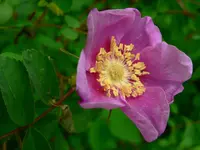
Nootka rose, Rosa nutkana, is a deciduous wild rose native to western North America, often found along streams, forest edges, and open slopes. It typically forms dense thickets with arching, thorny stems and attractive pink single flowers.
This shrub can reach a medium height and spreads by suckers, making it useful for naturalistic plantings, wildlife gardens, and erosion control. The flowers are followed by round red hips that provide food for birds and visual interest.
Rosa nutkana is generally hardy and adaptable, which makes it relatively straightforward to care for Nootka rose in suitable climates. It prefers sun to light shade, moderate moisture, and well-drained, not overly rich soils.

Care Difficulty
Easy Care

Light Preference
Full Sun

Water Requirements
Moderate Water

Temperature Preference
Cold Hardy

Hardiness Zone
3–8

Soil Texture
Sandy, Loamy, Clay

Soil pH
Acidic (5.5–6.5), Slightly acidic (6.5–7.0)

Soil Drainage
Moist but well-drained

Fertilization
Minimal (feed rarely)
Scan your plant to receive care tips personalized for your specific plant
Available on iOS and Android
This species thrives in full sun but tolerates some light shade, especially in hotter climates.
Rosa nutkana prefers evenly moist, well-drained soil once established in the landscape.
This hardy rose is well adapted to cool and temperate climates with pronounced seasonal changes.
Humidity is usually not a limiting factor for Rosa nutkana in outdoor conditions.
Rosa nutkana prefers moderately fertile, well-structured soil that drains freely yet retains some moisture.
This species can be grown in large outdoor containers if given enough root space and stability.
This native shrub usually thrives in average soil and needs only light feeding in poor or highly disturbed sites.
Rosa nutkana responds well to thoughtful pruning that maintains a natural, arching form and encourages flowering wood.
This species is typically grown in the ground, so care focuses on field transplanting rather than long-term container culture.
Rosa nutkana is commonly propagated for restoration plantings using both vegetative and seed methods.
This shrub is cold hardy across most temperate climates and generally needs minimal winter care once established.

Plant Health Check
Not sure what's wrong with your plant? Check your plant's health inside the app.
Rosa nutkana is native to the Pacific coast and coastal mountains of western North America, where it commonly forms dense thickets along streams, forest edges, and disturbed sites from sea level up into montane zones.
This species bears some of the largest single flowers of the North American wild roses, typically 5–8 cm across, with 5 broad petals that are pale to deep pink and a conspicuous central cluster of yellow stamens.
Its hips, leaves, and stems provide food and structure for many animals; birds and small mammals eat the hips and disperse the seeds, while the thorny branches offer nesting sites and protective cover for songbirds.

Rosa nutkana readily hybridizes with other native wild roses in its range, and botanists have documented natural hybrid swarms where its traits blend with related species, which complicates identification and helps maintain genetic diversity in wild rose populations.
This species forms suckering thickets from its root system and can spread aggressively in open ground. Use root barriers, regular pruning, or mowing around patches to keep it contained in small gardens or near structures.
Keep your plants happy and healthy with plant identification, disease detection, and easy care guidance.