Provide Climbing Support
Install a sturdy support such as a rough wooden fence, masonry wall, or wire trellis before planting, since aerial roots cling best to textured, stable surfaces and moving the plant later is difficult.

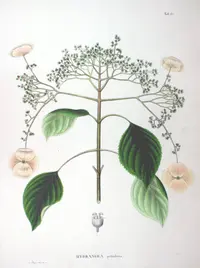
Climbing hydrangea (Hydrangea anomala) is a deciduous woody vine that clings to walls, fences, and tree trunks with aerial roots. It forms a permanent framework of sturdy stems and broad, toothed green leaves that turn yellow in fall.
In late spring to early summer it produces flat, lacecap-style flower clusters with showy white outer florets and smaller fertile flowers in the center. The plant is native to wooded mountain slopes in East Asia, where it naturally scrambles over rock and bark.
Once established, it is long-lived and relatively low maintenance but slow to get going. To care for Climbing Hydrangea, provide cool, evenly moist soil, partial shade, and a strong support structure.

Care Difficulty
Moderate Care

Light Preference
Partial Shade

Water Requirements
Regular Water

Temperature Preference
Cold Hardy

Hardiness Zone
4–8

Soil Texture
Loamy, Clay, Organic-rich

Soil pH
Acidic (5.5–6.5), Slightly acidic (6.5–7.0)

Soil Drainage
Moist but well-drained

Fertilization
Light (every 4–6 weeks)
Scan your plant to receive care tips personalized for your specific plant
Available on iOS and Android
Hydrangea anomala prefers bright but gentle light that protects leaves and flowers from harsh midday sun.
Hydrangea anomala needs evenly moist, well-drained soil that never stays waterlogged or bone dry for long.
This species is a cold-hardy climber that grows best in cool to mild conditions without extreme heat.
This climber prefers moderately moist air but adapts to most outdoor humidity levels.
Hydrangea anomala grows best in deep, moisture-retentive but well-drained soil.
This species can be grown in large, sturdy containers if given adequate root space and support.
Hydrangea anomala benefits from light, consistent feeding during its active growing season in spring and summer.
Hydrangea anomala responds well to modest, well-timed pruning that controls size while preserving flowering wood.
This climbing shrub is usually grown in the ground, so management focuses on careful transplanting rather than frequent repotting.
Hydrangea anomala is most commonly propagated from cuttings and layering, which produce plants true to type.
This species is generally cold hardy, but young plants and container specimens benefit from some winter preparation.

Plant Health Check
Not sure what's wrong with your plant? Check your plant's health inside the app.
This species climbs by producing dense clusters of short aerial roots along its stems that anchor firmly into bark, stone, or brick, allowing mature plants to cover large vertical surfaces without support.
In its native range from the Himalayas to Japan, it naturally grows in cool, moist mountain forests, where it scrambles up tree trunks and rock faces under relatively low light compared with most showy flowering shrubs.
The flat, lacecap-like flower clusters consist of a ring of sterile, showy flowers around a center of small, fertile flowers that provide nectar and pollen for insects while the outer ring mainly functions to attract pollinators.

Genetic and pollen studies indicate that this species is an important wild relative and genetic reservoir for several ornamental climbing hydrangea cultivars, so it contributes indirectly to the breeding and improvement of many garden forms used worldwide.
This species performs far better outdoors, where it can attach to walls, fences, or trees and experience seasonal temperature changes. Climbing Hydrangea indoor care is possible only short term, usually as a young plant or in bright, cool sunrooms.
Keep your plants happy and healthy with plant identification, disease detection, and easy care guidance.