Red yucca Care (Hesperaloe parviflora)

Also known as: red yucca
Red yucca

About Red yucca

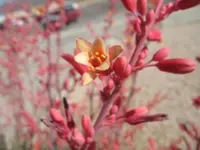
Red yucca, Hesperaloe parviflora, is a drought-tolerant succulent perennial native to arid regions of Texas and northern Mexico. It forms dense clumps of narrow, arching, evergreen leaves that resemble yucca but are softer and spineless. Tall flower stalks rise above the foliage, carrying many tubular red to coral flowers that attract hummingbirds and pollinators over a long season. The plant suits hot, dry landscapes, rock gardens, and xeriscapes, and adapts well to urban conditions. It is generally easy to grow due to its heat tolerance, low water needs, and resistance to most pests. To care for Red yucca, provide strong light, well-drained soil, and avoid persistent wet conditions.

Main Plant Requirements

Care Difficulty

Easy Care

Light Preference

Full Sun

Water Requirements

Low Water

Temperature Preference

Cold Hardy

Hardiness Zone

5–11

Soil Texture

Sandy, Loamy, Rocky

Soil pH

Slightly acidic (6.5–7.0), Slightly alkaline (7.0–7.5)

Soil Drainage

Well-drained

Fertilization

Minimal (feed rarely)

Get Personalized Care Plan

Scan your plant to receive care tips personalized for your specific plant

Available on iOS and Android

How to Care for the Red yucca

This desert perennial thrives in strong light and performs best with full, direct sun.

  • Provide 6–10 hours of direct sun daily; a south- or west-facing exposure suits Red yucca in most US climates.
  • Plant in open, unshaded sites; it tolerates light afternoon shade in very hot regions, but flowering may decrease.
  • Avoid deep shade, which causes weak, floppy leaves and sparse blooms; in summer heatwaves, reflected heat from walls or pavement can scorch foliage.

This species is drought-tolerant and prefers deep but infrequent watering once established.

  • Allow the top 5–8 cm of soil to dry before watering; in the ground, this often means waiting until the soil looks pale and feels crumbly.
  • During the first growing season, water thoroughly when lower leaves soften or curl; reduce once roots are established and new leaves stay firm between waterings.
  • Use sharply drained, gritty soil; yellowing, mushy leaves and a rotting crown indicate overwatering, while shriveling leaves and dry leaf tips suggest underwatering.

This desert plant tolerates wide temperature swings but still has preferred ranges for best growth.

  • Active growth and flowering occur around 70–90°F (21–32°C); it also performs well during cooler spring and fall at 60–75°F (16–24°C).
  • Mature plants tolerate short drops to about 0°F (−18°C) in dry soil; extended wet cold below 15°F (−9°C) increases crown-rot risk.
  • In hot summers above 100°F (38°C), plants usually cope well if soil drains quickly; brief shade and slightly reduced watering help during extreme heatwaves.

This desert species handles low indoor humidity easily and rarely needs special humidity care.

  • Best performance occurs around 20–40% humidity, similar to dry indoor air in heated homes.
  • Plants tolerate very dry air without damage, so do not add trays of water or humidifiers for Red yucca.
  • Limp, pale new leaves usually indicate root or watering issues rather than humidity stress.

Hesperaloe parviflora needs very free-draining, mineral-rich soil to prevent root rot.

  • Use a gritty mix such as 50–60% coarse sand or small gravel with 40–50% cactus/succulent potting mix.
  • Aim for slightly alkaline to neutral pH around 7.0–8.0, which matches many arid and calcareous soils.
  • Improve drainage and aeration by avoiding fine peat; add pumice or perlite if the mix feels dense or stays wet for days.
  • Do not plant in heavy clay, compacted ground, or low spots where water collects after rain.

This species is well suited to containers outdoors in sunny, dry locations.

  • Choose a deep, heavy pot that anchors the stiff, upright leaves against wind and prevents tipping.
  • Select thick-walled clay or concrete containers, which reduce moisture buildup and keep roots slightly cooler in summer.
  • Lift the container on pot feet or blocks so drainage holes stay clear and water can exit rapidly after rain or irrigation.

This drought-adapted species needs only light feeding in reasonably fertile soil, so keep Red yucca on a lean nutrient schedule.

  • Use a balanced, slow-release fertilizer or a thin layer of compost in spring as new growth starts.
  • Feed at low strength, around 1/2 the label rate, to avoid soft, weak growth.
  • Apply only once per growing season in most garden soils, skipping feeding on very rich or amended sites.
  • Stop fertilizing in late summer so the plant hardens off before cooler weather.

Pruning Hesperaloe parviflora is minimal and mainly focused on cleanliness and encouraging flowering display.

  • Best time is late winter or early spring, before new flower stalks emerge.
  • Remove spent flower stalks at the base using clean, sharp pruners to keep the clump tidy.
  • Cut out dead, damaged, or diseased leaves at soil level without cutting healthy foliage tips.
  • Light thinning of crowded clumps can improve air flow but does not significantly change plant shape.

This species is most often grown in-ground, with transplanting needed only after many years or when clumps outgrow their space.

  • Transplant or up-pot when roots circle the container, drainage slows, or growth becomes noticeably weaker.
  • Plan moves for late winter to early spring so roots establish before peak summer heat.
  • Expect to transplant container plants every 3–5 years, choosing a slightly larger pot with very sharp drainage.
  • Water thoroughly after transplanting, then allow soil to dry between waterings to limit root stress and rot risk.

Hesperaloe parviflora is typically propagated by division or seed to maintain or increase plantings.

  • Divide mature clumps in late winter or early spring, lifting and separating offsets with a sharp, clean spade or knife.
  • Replant divisions at the same depth in very well-drained soil, then water once to settle roots.
  • For seed, sow fresh seed in a gritty mix, barely covered, and keep lightly moist until germination.
  • Provide bright light, warmth around 70–80°F, and low to moderate moisture for slow but steady seedling growth.

This species is cold hardy in much of its range and usually needs only basic winter care in the landscape.

  • Mature plants tolerate freezes and light snow in well-drained soil, especially in dry climates.
  • In colder zones or exposed sites, apply a light, dry mulch around the root zone without burying the crown.
  • Container plants in regions below about 0°F benefit from moving to an unheated, bright garage or porch.

Care Tips

Encourage clump renewal

Every 5–7 years, remove 1–2 of the oldest, most congested rosettes at the base with a clean pruning saw to open the clump and stimulate fresh, vigorous offsets for easier long-term growing Red yucca.

Manage flower stalks

After the main bloom flush, selectively cut back only broken, spent, or leaning flower stalks at the base while leaving a few sturdy ones to continue feeding the plant and supporting late-season flowering.

Use reflective mulch

In cooler or marginal climates, apply a 5–8 cm layer of pale gravel or decomposed granite around the crown to reflect light and store daytime heat, which keeps roots drier and improves flowering performance.

Plan for snow load

In regions with wet, heavy snow, loosely tie the leaves into an upright bundle with soft garden tape before storms to prevent leaf breakage and crown damage from compacted snow.

Control volunteer seedlings

If self-sown seedlings become a problem, deadhead flower stalks before seed pods dry and shake out, or pull young seedlings when they have 2–4 leaves to prevent overcrowding and competition with the main clump.

Common Pests and Diseases

Yucca plant bug

This pest feeds on the leaves, causing pale stippling, rough patches, and sometimes browned or ragged areas on older foliage.

Solution

Prune and discard heavily damaged leaves, then spray the foliage with a firm stream of water to dislodge nymphs and adults. If activity remains high, use a ready-to-use insecticidal soap or neem oil, applied in the early morning and repeated as needed according to label directions.

Scale insects

These insects appear as small, rounded or oval bumps on leaves and flower stalks, often causing yellowing, reduced vigor, and sticky honeydew on nearby surfaces.

Solution

Wipe or gently scrape off visible scales with a soft cloth or brush, and remove heavily infested flower stalks. For persistent infestations, treat with horticultural oil, coating stems and leaf bases thoroughly to suffocate remaining insects.

Mealybugs

This pest forms cottony white clusters in leaf bases and along flower stalks, where feeding weakens the plant and may distort new growth.

Solution

Physically remove mealybugs with a cotton swab dipped in 70% isopropyl alcohol, focusing on the tight leaf rosettes. Follow up with insecticidal soap or neem oil sprays on sheltered areas of the plant until no new clusters appear.

Snails and slugs

These pests chew irregular holes in the fleshy leaf margins and may leave silvery slime trails on or around the plant, especially after rain or overhead irrigation.

Solution

Hand-pick snails and slugs in the evening or early morning and remove nearby hiding places such as boards or dense groundcover. If damage continues, use iron phosphate slug bait placed around, but not on, the clump following label rates.

Leaf spot

This disease causes small tan to brown spots that may merge into larger lesions, mostly on older leaves, often following prolonged wet or humid conditions.

Solution

Cut off and dispose of affected leaves to reduce spore spread, and water at the base of the plant rather than overhead to keep foliage dry. In sites with repeated issues, improve spacing and airflow around clumps; a copper or chlorothalonil-based fungicide can be used preventively during extended wet periods if cultural changes are not sufficient.

Interesting Facts

Not a true yucca

Despite its common name red yucca, this species is not a true Yucca but belongs to the genus Hesperaloe in the asparagus family (Asparagaceae), and it is more closely related to plants like agave than to true yuccas.

Hummingbird specialist flowers

Its long, tubular, reddish to coral flowers are shaped and positioned on tall stalks in a way that strongly favors hummingbird pollination, and in its native range these birds are among its primary pollinators.

Cold-hardy desert native

Although native to dry, rocky habitats of west and central Texas and northeastern Mexico, it tolerates winter temperatures far below freezing and is widely grown in USDA zones that experience regular frost.

Botan icon

Did you know?

The narrow, arching leaves of this species bear long, curling, threadlike fibers along their margins, a distinctive feature that helps field botanists separate it from true yuccas and from many similar arid-land ornamentals.

FAQs about Red yucca

Lack of flowers usually comes from insufficient maturity, too much shade, or excessive nitrogen fertilizer. Older clumps bloom more reliably. Ensure strong light, avoid heavy feeding, and do not remove flower stalks until they are completely dry.

Grow Healthy Plants with Botan Care

Keep your plants happy and healthy with plant identification, disease detection, and easy care guidance.

Botan plant care app — identify plants on mobile

Explore More Plants