Grey Willow Care (Salix cinerea)

Also known as: Grey Sallow, European Gray Willow
Grey Willow

About Grey Willow

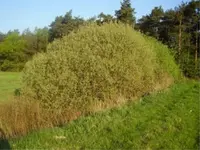
Grey willow (Salix cinerea) is a deciduous shrub or small tree, commonly found in wetlands, riverbanks, and damp lowlands. It is native to Europe and western Asia but is also naturalized in parts of North America.

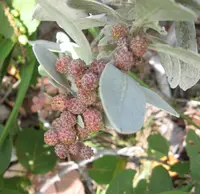
The plant has many upright stems, soft grey-green leaves, and produces early spring catkins that support insects. It often forms thickets and can spread in suitable moist sites.

Grey willow grows fast and is generally hardy, but it needs consistently moist soil and space for its root system. Understanding how to care for Grey Willow starts with providing plenty of moisture and light, and avoiding very dry, compacted ground.

Main Plant Requirements

Care Difficulty

Moderate Care

Light Preference

Full Sun

Water Requirements

Keep Soil Moist

Temperature Preference

Cold Hardy

Hardiness Zone

4–8

Soil Texture

Loamy, Silty, Peaty

Soil pH

Strongly acidic (4.5–5.5), Acidic (5.5–6.5)

Soil Drainage

Waterlogged tolerant

Fertilization

Minimal (feed rarely)

Get Personalized Care Plan

Scan your plant to receive care tips personalized for your specific plant

Available on iOS and Android

How to Care for the Grey Willow

This willow grows best in open sites with abundant natural light.

  • Provide 6–8 hours of direct sun daily; morning and late-afternoon sun are ideal, with some relief from intense midday summer sun in hotter regions.
  • Grey Willow tolerates light partial shade, but dense shade leads to weak, elongated shoots and sparse foliage over time.
  • In winter, full sun exposure is beneficial; avoid planting where nearby buildings or trees will cast heavy shade as they leaf out in spring.

This species is adapted to consistently moist to wet conditions and dislikes drying out.

  • Maintain evenly moist soil, especially in the top 5–10 cm; do not allow the root zone to fully dry, particularly in the first 2–3 growing seasons.
  • In spring and summer, increase watering during hot, windy periods if leaves start to droop or curl, a sign of insufficient moisture in the root zone.
  • Ensure soil drains slowly but does not stay stagnant; persistent standing water causing sour smell, yellowing leaves, or dieback suggests oxygen-poor, waterlogged conditions for Salix cinerea.

This willow is a cold-hardy shrub suited to temperate outdoor climates.

  • Optimal growth occurs around 55–75°F (13–24°C) during the main growing season, supporting steady shoot and root development.
  • Mature plants tolerate winter lows near 0°F (−18°C) and short drops below this; young plants benefit from shelter from harsh, drying winds.
  • In summer, it endures up to about 86–90°F (30–32°C) if soil stays moist; prolonged heat with dry soil causes leaf scorch and stress.

Salix cinerea handles a wide humidity range but grows best in consistently moist air.

  • Aim for 50–70% humidity, especially for young or container-grown Grey Willow near drying winds or heat sources.
  • Leaves curling, browning at tips, or dropping early often indicate low humidity combined with dry soil.
  • Group plants near water features, keep nearby soil consistently damp, or place trays of water and stones close to increase ambient humidity.

Salix cinerea prefers consistently moist, deep, and nutrient-rich soil with steady structure.

  • Use a loamy mix with high organic matter, such as garden loam blended with compost and leaf mold, to retain moisture without becoming compacted.
  • Ensure soil is moist but not stagnant; slight surface waterlogging is tolerated if deeper layers still have some aeration.
  • Target a slightly acidic to neutral pH around 6.0–7.0, avoiding strongly alkaline or saline conditions that restrict nutrient uptake.
  • Improve heavy clay by incorporating coarse sand and fine bark to increase aeration, and avoid very shallow, gravelly beds that dry out quickly.

This species can be grown in large outdoor containers if water and stability are carefully managed.

  • Choose a wide, heavy pot that resists tipping as the canopy becomes dense and wind-catching.
  • Use a deep container to accommodate vigorous roots and reduce rapid drying between thorough waterings.
  • Select a thick-walled material like glazed ceramic or wood to moderate temperature swings and slow moisture loss from the root zone.

Salix cinerea is a fast-growing shrub that benefits from modest, targeted feeding on poor soils.

  • Use a balanced, slow-release fertilizer (for example 10-10-10) or a light layer of compost in early spring.
  • Feed once in spring and, if growth is weak, once again in midsummer during the active growing season.
  • Apply at 1/2 strength for synthetic products to avoid excessive, weak growth and potential root burn.
  • Stop feeding by late summer so Grey Willow can harden new wood before winter dormancy.

Pruning Salix cinerea helps maintain a stable framework and encourages vigorous, healthy shoots.

  • Carry out main pruning in late winter or very early spring before buds break.
  • Remove dead, damaged, crossing, or inward-growing branches first to open the canopy.
  • Shorten or thin crowded stems to control size and maintain an attractive, balanced shape.
  • Use clean, sharp bypass pruners or loppers, cutting just above a bud or branch junction.

This willow is usually grown in the ground, so focus on careful transplanting rather than frequent repotting.

  • Transplant in late fall or very early spring while the plant is dormant for lower stress.
  • Look for signs such as circling roots, root-bound pots, or stunted growth in container-grown plants.
  • Move up 1 container size or into a prepared ground site with moist, well-drained soil and ample space for roots.
  • Water thoroughly after planting, keep soil evenly moist, and mulch lightly to reduce root stress and moisture loss.

Salix cinerea is commonly propagated from cuttings, which root fast under suitable moisture conditions.

  • Take hardwood cuttings in late fall–winter or softwood cuttings in late spring–early summer.
  • Use 15–25 cm sections with several nodes, inserting at least 2 nodes below the soil or water line.
  • Place cuttings in consistently moist soil or water in bright, indirect light until strong roots form.
  • Seed propagation is possible but less common because seeds are short-lived and need fresh, moist sowing conditions.

This willow is cold hardy in most temperate climates and usually needs minimal winter care.

  • Established in-ground plants tolerate typical frosts once fully dormant.
  • Apply a 5–8 cm mulch layer around the root zone to moderate soil temperature and reduce heaving.
  • For container specimens, move pots to a sheltered, unheated area and prevent the root ball from freezing solid.

Care Tips

Encourage Multi-Stems

After establishment, cut back 1–2 older stems at the base each winter to stimulate new shoots and maintain a dense, multi-stemmed form that is more wind-stable and visually balanced.

Stabilize Wet Banks

Plant on the upper edge of ponds or ditches and lightly peg young stems to the slope so the developing root system helps bind the soil and reduce erosion over time.

Pollard For Size Control

In restricted spaces, establish a pollarding point 1.5–2 m above ground and cut back to this height every 1–3 years to keep the canopy compact while retaining a strong trunk.

Use Living Stakes

Take 60–100 cm hardwood cuttings in late winter and insert them directly into moist ground to create living stakes, windbreaks, or informal screens without needing pots or a nursery bed.

Regular Pest Monitoring

From early spring, inspect undersides of leaves and young shoots every 1–2 weeks for aphids, sawfly larvae, and rust spots, and remove affected shoots early to keep problems manageable when growing Grey Willow.

Common Pests and Diseases

Willow beetles

These insects chew leaves, creating holes and skeletonized areas, and heavy infestations can defoliate young willows.

Solution

Hand-pick adults and larvae from reachable branches and prune heavily infested twigs; for larger plants, use a strong water spray to dislodge larvae and, if needed, apply a targeted pyrethroid or spinosad product, following label directions and avoiding spraying during peak pollinator activity.

Willow leaf blotch

This disease causes irregular dark brown to black blotches on leaves, which may merge and lead to premature leaf drop in late spring or summer.

Solution

Remove and destroy fallen leaves to reduce overwintering spores, thin crowded stems to improve airflow, and in high-value plantings consider a preventive copper or chlorothalonil spray at bud break and again after leaf expansion as part of broader Salix cinerea care instructions.

Willow scab

This disease leads to blackish, velvety lesions on young shoots and leaves, often causing wilted tips and dieback of current-season growth.

Solution

Prune out and discard affected twigs during dry weather, cutting back into healthy wood, disinfect pruning tools between cuts, and support recovery by avoiding excess nitrogen fertilization and by maintaining good spacing and airflow around the plant.

Aphids

These insects cluster on young shoots and leaf undersides, sucking sap and causing distorted growth, sticky honeydew, and sometimes sooty mold on leaves and stems.

Solution

Wash colonies off with a firm stream of water, encourage natural predators such as lady beetles by limiting broad-spectrum insecticides, and if populations remain high, use insecticidal soap or horticultural oil, ensuring thorough coverage of undersides of leaves.

Willow rust

This disease produces yellow to orange powdery pustules on the undersides of leaves, often leading to yellowing and early leaf drop later in the season.

Solution

Rake and destroy infected leaves in autumn to reduce inoculum, avoid overhead irrigation that keeps foliage wet, and in severe, recurrent cases use a labeled systemic fungicide early in the season when new leaves emerge, repeating as directed on the product label.

Interesting Facts

Key wetland stabilizer

Salix cinerea forms dense thickets along lakes, rivers, and fens, where its extensive root system helps stabilize wet, peaty soils and reduce shoreline erosion.

Hybridization hotspot

This species hybridizes readily with related willows such as Salix aurita and Salix caprea, creating complex hybrid swarms that make field identification difficult even for specialists.

Invasive in Australasia

Although native to Europe and parts of western Asia, grey willow is a serious invasive shrub in New Zealand and southeastern Australia, where it displaces native wetland vegetation and alters hydrology.

Botan icon

Did you know?

Catkins of Salix cinerea provide some of the earliest abundant pollen and nectar resources for bees and other pollinators in late winter to early spring in its native range, making it an important bridge species between winter scarcity and spring floral abundance.

FAQs about Grey Willow

This is a relatively fast-growing shrub or small tree, often adding 30–90 cm of height per year in moist, fertile conditions. Growth slows in dry, compacted, or nutrient-poor soils and with root disturbance.

Grow Healthy Plants with Botan Care

Keep your plants happy and healthy with plant identification, disease detection, and easy care guidance.

Botan plant care app — identify plants on mobile

Explore More Plants