peregrina Care (Jatropha integerrima)

Also known as: Spicy Jatropha, Integrileaf Jatropha, Violin-leaved Nut, Rose-flowered Jatropha
peregrina

About peregrina

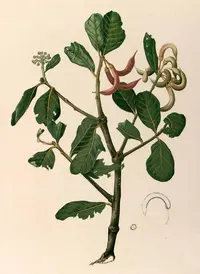
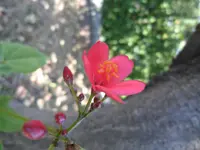
Peregrina, Jatropha integerrima, is a small evergreen shrub or tree grown mainly for its clusters of bright red flowers and neat, glossy leaves. It is often used in warm climates as an ornamental hedge, patio specimen, or container plant.

This species is native to the Caribbean and Central America, where it grows in sunny, well-drained sites. It handles heat and short dry spells fairly well, which makes it relatively forgiving once established.

Consistent warmth, plenty of light, and free-draining soil are the main factors that influence how easy it is to care for peregrina.

Main Plant Requirements

Care Difficulty

Moderate Care

Light Preference

Full Sun

Water Requirements

Moderate Water

Temperature Preference

Tropical / Frost Sensitive

Hardiness Zone

10–11

Soil Texture

Sandy, Loamy, Organic-rich

Soil pH

Acidic (5.5–6.5), Slightly acidic (6.5–7.0)

Soil Drainage

Well-drained

Fertilization

Light (every 4–6 weeks)

Get Personalized Care Plan

Scan your plant to receive care tips personalized for your specific plant

Available on iOS and Android

How to Care for the peregrina

Jatropha integerrima thrives in bright, warm landscapes with strong but managed sun exposure.

  • Provide 6–8 hours of sun daily, with morning sun and light afternoon shade to reduce leaf scorch risk, especially in hot climates.
  • Tolerates light partial shade (around 3–4 hours of direct sun), but flowering and compact growth of peregrina improve with more sun.
  • In summer, protect from harsh west-facing exposure; in cooler months, maximize direct sun to support continuous blooming and sturdy stems.

This shrub prefers a consistent but not soggy moisture regime that mimics a dry tropical climate.

  • Outdoors in well-drained soil, water only when the top 3–5 cm feels dry, then soak the root zone deeply and allow excess to drain away.
  • Reduce frequency in cool seasons, watching leaves for cues: limp, curling, dry edges suggest underwatering, while yellowing, soft leaves hint at overwatering.
  • Soil must drain freely; amend heavy clay with coarse sand or grit to prevent root rot in Jatropha integerrima, especially during rainy periods.

This species grows best in warm, frost-free conditions and reacts quickly to cold stress.

  • Ideal growing temperatures are 70–85°F (21–29°C), which support steady growth and frequent flowering.
  • Avoid temperatures below 40°F (4°C); brief dips near this level can cause leaf drop, and hard frost can kill stems or the whole plant.
  • Tolerates short heat waves up to about 95°F (35°C) if soil is not waterlogged; in very hot, dry periods, slight afternoon shade reduces heat stress and leaf scorch.

This species handles 30–50% humidity well and usually does not need special humidity management indoors.

  • Peregrina tolerates typical dry household air but may drop buds if exposed to very hot, dry drafts for long periods.
  • Humidity stress shows as crisp leaf edges, slow new growth, and flower buds that dry and fall before opening.
  • If air is extremely dry near heaters, increase local humidity slightly by grouping plants together rather than misting leaves.

This plant prefers sharply drained, slightly sandy soil that does not stay wet around the roots.

  • Use a mix of 50–60% all-purpose potting mix with 20–30% coarse sand and 20–30% perlite to create a gritty, fast-draining medium.
  • Aim for a slightly acidic to neutral pH around 6.0–7.0, which suits most Jatropha integerrima plants in containers and warm gardens.
  • In heavy or clay ground, raise the planting area and blend in coarse sand and fine bark to improve aeration and drainage depth.
  • Avoid compacted, waterlogged, or peat-heavy soil that stays soggy, as this greatly increases the risk of root rot and stem decline.

This species is well suited to container growing in warm climates and on patios or balconies.

  • Choose a heavy, wide-based pot to counter the top-heavy canopy and reduce the risk of the plant tipping in strong wind.
  • Select a container depth that allows a moderately deep root system, leaving at least 5–8 cm of space below the root ball for growth.
  • Use a pot material like unglazed terracotta if extra evaporation is needed to keep the root zone from remaining moist for too long.

Jatropha integerrima responds well to moderate, consistent feeding during its active growing season.

  • Use a balanced, water-soluble fertilizer (around 10-10-10 or 14-14-14) at 1/2 strength every 4–6 weeks in spring and summer.
  • Alternatively, apply a slow-release granular fertilizer once at the start of spring, following label rates for shrubs.
  • In nutrient-poor soils, a thin layer of well-rotted compost around the root zone in spring supports growing peregrina.
  • Stop or greatly reduce feeding in fall and winter when growth slows, to avoid weak, elongated shoots.

Pruning Jatropha integerrima maintains shape, encourages branching, and supports continuous flowering.

  • Carry out main pruning in late winter or early spring before vigorous new growth begins.
  • Remove dead, diseased, crossing, or inward-growing stems first to improve light and air movement through the canopy.
  • Shorten long, leggy shoots to create a compact, rounded form and stimulate more flowering tips.
  • Use clean, sharp bypass pruners; make cuts just above outward-facing buds to guide future growth.

Container-grown plants and young landscape specimens benefit from thoughtful repotting or transplanting to sustain healthy growth.

  • Plan major moves for late spring, once temperatures are consistently warm and frost risk has passed.
  • Check for roots circling the pot, pushing through drainage holes, or very slow growth as signs a container plant needs a larger pot every 2–3 years.
  • When transplanting into the ground, choose a sunny, well-drained site and plant at the same depth as in the original container.
  • Gently loosen circling roots, water thoroughly after planting, and shade the plant lightly for 3–7 days to reduce transplant shock.

New Jatropha integerrima plants are most often produced from semi-hardwood cuttings or seeds under warm conditions.

  • Take 10–15 cm semi-hardwood stem cuttings in late spring or early summer, using non-flowering shoots.
  • Remove lower leaves, dip the cut end in rooting hormone, and insert into a well-drained, slightly moist mix such as perlite and peat or coarse sand.
  • Maintain bottom warmth around 70–80°F, high but not saturated moisture, and bright, indirect light to encourage rooting.
  • For seeds, sow fresh seed in warm, free-draining soil, keep lightly moist, and provide consistent heat for several weeks until germination.

This tropical shrub is frost-tender and needs protection in regions with cool or freezing winters.

  • In USDA zones below 10, grow in containers and move plants indoors or into a greenhouse before temperatures drop near 40°F.
  • Site in the brightest possible indoor light and reduce watering while growth is slow.
  • For in-ground plants in mild climates, add a 5–8 cm mulch layer around the root zone, keeping mulch off the stem base.
  • After light frost damage, wait until late winter or early spring, then trim back dead tips once the extent of injury is clear.

Care Tips

Shape With Pinching

Pinch out soft shoot tips after a flush of flowers to encourage a bushier framework and more branching, which leads to heavier bloom production over time.

Manage Suckers Early

Inspect the base of the plant monthly and remove any basal shoots or suckers cleanly at their origin so energy is directed into the main stems and flowering canopy.

Support Wind-Exposed Plants

In windy sites, install a sturdy stake and use soft ties to secure the main stem loosely, checking and adjusting ties every 2–3 months to prevent rubbing damage.

Cold-Season Protection

In regions with light frost, mulch the root zone with 5–8 cm of bark or compost in late fall and use a breathable frost cloth on cold nights to protect woody tissue and flower buds.

Monitor Sap Exposure

Wear gloves when pruning and avoid touching eyes or mouth, since the milky sap is irritating; rinse tools after cutting and keep children and pets away from fresh cuts when caring for peregrina.

Common Pests and Diseases

Red spider mites

This pest commonly infests foliage in hot, dry conditions, causing fine stippling, bronzing, and eventual leaf drop. Symptoms include thin webbing on leaf undersides and between stems.

Solution

Rinse foliage thoroughly with a strong stream of water, focusing on leaf undersides, then repeat every few days to break the life cycle. For heavier infestations, use a horticultural oil or insecticidal soap labeled for mites and increase humidity slightly while avoiding waterlogged soil.

Whiteflies

These insects often gather on the undersides of leaves, sucking sap and causing yellowing, curling, and sticky honeydew that can attract sooty mold. Disturbed plants may release small white insects that fly up in a cloud.

Solution

Use a handheld sprayer or hose to wash the undersides of leaves regularly and remove heavily infested foliage. Combine this with yellow sticky traps and, if needed, insecticidal soap or neem oil, making sure to treat every 5–7 days until no new adults appear.

Scale insects

This pest appears as small, rounded or oval bumps on stems and leaf veins, where it feeds on sap and weakens the plant. Symptoms include yellowing leaves, reduced flowering, and sticky honeydew on foliage and nearby surfaces.

Solution

Physically remove scales by gently scraping with a fingernail or soft brush, or wipe stems with a cotton pad dipped in diluted alcohol, then rinse with water. For persistent infestations, apply horticultural oil thoroughly to smother remaining scales, repeating according to label directions until new growth emerges clean.

Leaf spot

This disease produces small, dark or tan lesions on leaves that may enlarge, coalesce, and cause partial defoliation, especially in warm, wet weather. Symptoms include irregular spots often with yellow halos and premature leaf drop on lower branches.

Solution

Remove and discard affected leaves and fallen debris to reduce inoculum, and water at the base rather than over the foliage. Improve air circulation around the shrub and, if the problem recurs, apply a copper-based or other ornamental-approved fungicide according to label directions during periods of prolonged humidity.

Powdery mildew

This disease forms a white to gray powdery coating on leaves, young stems, and flower buds, which can distort new growth and reduce flowering. Symptoms include dull, faded foliage and leaves that may curl or drop early in shaded or crowded conditions.

Solution

Prune to open the canopy and increase light and airflow, and avoid overhead watering, especially in the evening. Remove and discard heavily affected leaves, then use a labeled ornamental fungicide or a potassium bicarbonate or neem-based product at the first signs of infection, repeating as needed to protect new growth while growing peregrina in humid climates.

Interesting Facts

Year‑round flowering shrub

This species can flower almost continuously in warm climates, producing clusters of bright red to pink star-shaped flowers that attract butterflies and other pollinators over much of the year.

Toxic yet ornamental

All parts of the plant, especially the seeds, contain toxic compounds similar to those found in other Jatropha species, which makes it important as an ornamental that should not be ingested by humans or pets.

Native Caribbean origin

The species is naturally distributed in the Caribbean region, particularly Cuba, and has been widely introduced as an ornamental shrub in tropical and subtropical landscapes around the world.

Botan icon

Did you know?

In frost‑free regions, this plant can be trained as a small multi‑stemmed tree, and its older stems develop a grayish, somewhat corky bark that provides structural interest even when the plant is not in peak bloom.

FAQs about peregrina

Lack of flowers often comes from insufficient light, heavy pruning at the wrong time, or low nutrients. Ensure strong sun exposure, avoid cutting new tips, and use a balanced fertilizer during the warm growing season.

Grow Healthy Plants with Botan Care

Keep your plants happy and healthy with plant identification, disease detection, and easy care guidance.

Botan plant care app — identify plants on mobile

Explore More Plants