False spiraea Care (Sorbaria sorbifolia)

Also known as: Sorbaria
False spiraea

About False spiraea

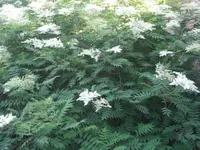
False spiraea (Sorbaria sorbifolia) is a deciduous shrub grown for its fern-like foliage and frothy white summer flowers. It forms dense thickets from suckering roots and can spread quickly in suitable conditions.

This species is native to eastern Asia, including Siberia, Korea, and parts of China, and is often used in colder climates for structure and seasonal interest. It tolerates urban conditions, poor soils, and cold winters, which makes it relatively easy to establish.

Gardeners who care for False spiraea should note its vigorous growth and plan space or root barriers where necessary. It generally prefers full sun to light shade and consistently moist, well-drained soil.

Main Plant Requirements

Care Difficulty

Easy Care

Light Preference

Full Sun

Water Requirements

Regular Water

Temperature Preference

Cold Hardy

Hardiness Zone

2–7

Soil Texture

Loamy, Clay, Organic-rich

Soil pH

Acidic (5.5–6.5), Slightly acidic (6.5–7.0)

Soil Drainage

Moist but well-drained

Fertilization

Minimal (feed rarely)

Get Personalized Care Plan

Scan your plant to receive care tips personalized for your specific plant

Available on iOS and Android

How to Care for the False spiraea

This shrub prefers bright outdoor exposures with a balance of sun and light shade for dense growth.

  • Provide 4–6 hours of direct sun daily, ideally morning sun with light afternoon shade, to support strong flowering and compact form.
  • Tolerates partial shade (2–4 hours sun), but Sorbaria sorbifolia may produce fewer flowers and looser growth in shadier sites.
  • In hot summers, protect from harsh afternoon sun to limit leaf scorch; in cooler climates, more direct sun helps foliage color and seasonal vigor.

This species prefers consistently moist, but not saturated, soil once established in the landscape.

  • Water when the top 3–5 cm of soil feels dry, aiming for deep soaking that wets the root zone rather than frequent shallow sprinkling.
  • Ensure soil drains well; waterlogged ground leads to yellowing leaves, soft stems, and root rot, while crisp, browning leaf edges signal underwatering.
  • Increase watering during hot, dry spells and reduce in cool or rainy periods, allowing surface soil to dry slightly between soakings, especially in heavy clay.

This hardy shrub thrives in cool to temperate climates and tolerates a wide range of outdoor temperatures.

  • Active growth is strongest around 60–75°F (16–24°C), with healthy leaf and shoot development during spring and early summer.
  • Dormant plants tolerate winter cold down to about -30°F (-34°C) in the ground, provided roots are mulched and soil drains well.
  • Handles summer heat up to about 90°F (32°C) if soil moisture is consistent; extended hotter, dry periods can cause leaf scorch and reduced flowering the following season.

Humidity is not a critical factor for Sorbaria sorbifolia in typical outdoor conditions.

Sorbaria sorbifolia prefers evenly moist, well-drained ground with a moderately rich structure.

  • Use a loamy soil with a mix of mineral particles and organic matter so roots can spread easily.
  • Incorporate 25–40% compost into native soil to improve moisture retention, structure, and nutrient supply.
  • Ensure excess water can drain away; avoid sites that stay waterlogged, as this encourages root problems.
  • Aim for slightly acidic to neutral pH (6.0–7.0); add organic matter or sulfur only if soil tests strongly alkaline.

This shrub can be grown in large containers if the pot provides enough space and stability for its vigorous root system.

  • Choose a heavy, wide container (ceramic or thick plastic) to anchor the suckering, spreading top growth in wind.
  • Fill the pot with a chunky, well-draining mix (e.g., 60–70% loam-based compost plus bark or perlite) to prevent waterlogging.
  • Position the container where runoff cannot pool around the base, as standing water increases the risk of root rot.

This shrub grows well in average soil, so False spiraea only needs moderate feeding in poor or very depleted sites.

  • Apply a light layer of compost around the root zone in early spring to support new growth.
  • In low-fertility soils, use a balanced slow-release fertilizer (such as 10-10-10) once in spring.
  • Use fertilizer at half the label strength to avoid overly lush, weak growth.
  • Do not feed in late fall or winter, when the plant is dormant.

Pruning helps keep Sorbaria sorbifolia dense, manageable, and flowering well.

  • Carry out main pruning in late winter or very early spring before buds break.
  • Remove dead, damaged, or crossing stems first, using clean, sharp bypass pruners or loppers.
  • Thin crowded older stems at the base to open the shrub and encourage strong new shoots.
  • Shorten long, wayward branches to maintain the desired size and shape after flowering.

This shrub is usually grown in the ground, so care focuses on transplanting rather than frequent repotting.

  • Plan transplanting for early spring or early fall, when temperatures are mild and soil is workable.
  • Move plants when growth is slow, foliage is sparse, or roots circle and fill a container.
  • Dig a wide hole, keep a solid root ball, and water deeply to reduce transplant shock.
  • Space divisions or new plants where spreading roots and suckers have room to expand.

Sorbaria sorbifolia spreads strongly, and controlled propagation helps create new plants without unwanted thickets.

  • Lift and divide rooted suckers in early spring or fall, replanting pieces with several shoots and roots.
  • Take softwood or semi-ripe stem cuttings in late spring–summer and root them in moist, well-drained medium.
  • Keep cuttings warm (65–75°F) and humid with bright, indirect light until rooted.
  • Sow fresh seed outdoors in fall to allow natural cold stratification over winter.

This shrub is cold hardy in most temperate climates and usually needs minimal winter care in the ground.

  • Tolerates freezing temperatures once established, with stems dying back in very cold areas then resprouting.
  • Apply 5–8 cm of organic mulch over the root zone in late fall, keeping it off the stems.
  • For container plants, move pots to a sheltered, unheated area or insulate containers to prevent root damage.

Care Tips

Root spread control

Install a vertical root barrier 30–45 cm deep around planting areas near lawns or beds to prevent this suckering shrub from spreading into unwanted spaces.

Sucker selection

Each spring, remove most new suckers at the base and keep only a few well-placed shoots to renew the clump and maintain an attractive, controlled form when growing False spiraea.

Mulch for cane health

Apply a 5–8 cm layer of coarse organic mulch over the root zone, keeping it a few cm away from stems, to moderate soil temperature and reduce stress on young canes.

Flowering management

Deadhead spent flower panicles promptly if self-seeding is not desired, or leave some in place to provide late-season structure and wildlife interest in larger, naturalized plantings.

Rejuvenation timing

Every 3–5 years, cut one-third to one-half of the oldest stems down to 5–10 cm above ground in late winter to keep growth vigorous and foliage dense from the base.

Common Pests and Diseases

Aphids

These insects cluster on young stems and leaf undersides, sucking sap and causing curling, distortion, and sticky honeydew on false spiraea foliage.

Solution

Spray colonies off with a firm stream of water, then treat remaining hotspots with insecticidal soap or a light horticultural oil, repeating every 5–7 days until no new aphids appear; encourage natural predators such as lady beetles by avoiding broad-spectrum insecticides nearby.

Spider mites

These pests thrive in hot, dry conditions, causing stippled, dull leaves, fine webbing, and gradual leaf drop on stressed plants.

Solution

Increase humidity around the shrub and hose down foliage thoroughly, especially leaf undersides, then apply insecticidal soap or a labeled miticide, making 2–3 applications at 5–7 day intervals while monitoring for returning webbing and speckling.

Leaf spot

This disease produces small brown or purplish spots on leaves that may enlarge, merge, and cause premature leaf drop, especially in dense or shaded plantings.

Solution

Prune to improve airflow, avoid overhead watering, and promptly remove and discard heavily spotted leaves; in severe or recurring cases, apply a suitable ornamental shrub fungicide in spring when new growth emerges, following label intervals.

Powdery mildew

This disease appears as a white or gray powdery coating on leaf surfaces, which can lead to distorted growth and reduced vigor during humid, stagnant weather.

Solution

Thin crowded stems to improve air movement, water at the base rather than on foliage, and remove heavily infected shoots; if needed, use a systemic or contact fungicide labeled for powdery mildew, starting at the first sign of white patches and repeating as directed.

Interesting Facts

Fernlike leaf display

The leaves are pinnate, meaning made up of many paired leaflets, which gives the shrub a fernlike texture that is uncommon among temperate deciduous shrubs of similar size.

Early colonizer habit

This species spreads aggressively through underground rhizomes, allowing it to form dense thickets that quickly occupy disturbed or open ground, which is why it can behave invasively in parts of North America and Europe.

Cold-climate adaptation

Native to cool regions of northeastern Asia, the shrub is fully deciduous and extremely winter-hardy, tolerating very low temperatures that would damage many other ornamental shrubs.

Botan icon

Did you know?

Genetic and field studies show that what was once treated as several closely related taxa in northeastern Asia is often now included within Sorbaria sorbifolia, which helps explain the wide variation in height, leaf shape, and growth vigor seen in cultivated plants of this species.

FAQs about False spiraea

This species spreads vigorously by underground suckers, forming dense thickets if not managed. Install root barriers, remove unwanted shoots regularly, and avoid planting near small beds or property lines where spreading would be a problem when growing False spiraea.

Grow Healthy Plants with Botan Care

Keep your plants happy and healthy with plant identification, disease detection, and easy care guidance.

Botan plant care app — identify plants on mobile

Explore More Plants