Slope Erosion Control
Plant on a slight slope or berm and stagger plants in a zigzag pattern so roots knit the soil together more quickly and reduce erosion around paths and retaining walls.

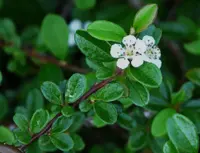
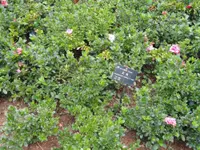
Bearberry cotoneaster (Cotoneaster dammeri) is a low, spreading evergreen shrub often used as a groundcover or to soften slopes and walls. It forms dense mats of small, glossy leaves with arching stems that can root as they creep along the soil.
In spring it produces small white flowers, followed by bright red berries that often persist into winter and attract birds. This species is native to mountainous regions of central and southern China, which helps explain its tolerance of cool conditions and poor, rocky soils.
It is generally considered an easy shrub to grow, as it adapts to a range of soils and light levels from sun to light shade. Understanding how to care for Bearberry Cotoneaster mainly involves providing well-drained soil and avoiding excessive summer drought.

Care Difficulty
Easy Care

Light Preference
Full Sun

Water Requirements
Low Water

Temperature Preference
Cold Hardy

Hardiness Zone
5–8

Soil Texture
Sandy, Loamy, Clay

Soil pH
Slightly acidic (6.5–7.0), Slightly alkaline (7.0–7.5)

Soil Drainage
Well-drained

Fertilization
Minimal (feed rarely)
Scan your plant to receive care tips personalized for your specific plant
Available on iOS and Android
This low, spreading shrub prefers bright outdoor conditions with a balance of sun and light shade.
This shrub prefers moderately moist, well-drained soil and dislikes standing water.
This hardy groundcover shrub tolerates a wide range of outdoor temperatures once established.
This shrub adapts well to typical outdoor humidity and rarely needs special humidity management.
Cotoneaster dammeri prefers mineral-based, well-structured soil that drains quickly yet does not dry out instantly.
This species is suitable for container growing, especially on patios, balconies, or as a low cascading feature.
This low-maintenance shrub needs modest feeding to stay dense and fruit well.
Thoughtful pruning keeps Cotoneaster dammeri low, tidy, and fruiting well.
This groundcover shrub is usually transplanted in the landscape rather than repotted frequently.
Cotoneaster dammeri is commonly propagated vegetatively for uniform, dense groundcover.
This shrub is generally cold hardy and needs minimal winter attention in most temperate gardens.

Plant Health Check
Not sure what's wrong with your plant? Check your plant's health inside the app.
This species forms dense, carpeting mats with shallow but wide-spreading roots that help stabilize soil on slopes, which is why it is widely used for erosion control on banks and embankments.
Its small white spring flowers are highly attractive to bees and other pollinating insects, and the red pomelike fruits that follow provide food for birds well into autumn and early winter.
Cotoneaster dammeri is native to mountainous regions of central and southern China, where it naturally grows on rocky slopes and forest margins, which explains its tolerance for poor, stony soils when cultivated.

Horticultural selection of Cotoneaster dammeri has produced several widely used groundcover cultivars, such as 'Coral Beauty' and 'Skogholm', which differ in growth habit, fruiting display, and winter foliage color yet all retain the species’ characteristic mat-forming, slope-stabilizing growth.
This species is generally evergreen in mild climates, holding glossy leaves year-round. In colder areas it can be semi-evergreen, dropping some foliage in winter, but stems usually stay alive and leaf out again in spring.
Keep your plants happy and healthy with plant identification, disease detection, and easy care guidance.