Germander Sage Care (Salvia chamaedryoides)

Also known as: Chihuahuan Desert Sage, Blue Oak Sage
Germander Sage

About Germander Sage

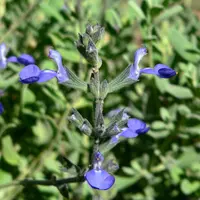
Germander sage, Salvia chamaedryoides, is a compact, woody perennial herb grown mainly for its soft silvery foliage and deep blue flowers. It forms low mounds or loose mats that suit borders, rock gardens, and containers.

This species comes from high, dry areas of Mexico, so it is adapted to sun, wind, and lean, well-drained soils. Once established, it copes well with heat and short dry spells, which makes it a reliable choice in water-wise gardens.

These traits generally make it straightforward to care for Germander Sage, as long as it receives good light and soil that does not stay wet for long periods.

Main Plant Requirements

Care Difficulty

Easy Care

Light Preference

Full Sun

Water Requirements

Low Water

Temperature Preference

Warm Climate

Hardiness Zone

7–10

Soil Texture

Sandy, Loamy, Rocky

Soil pH

Slightly acidic (6.5–7.0), Slightly alkaline (7.0–7.5)

Soil Drainage

Well-drained

Fertilization

Minimal (feed rarely)

Get Personalized Care Plan

Scan your plant to receive care tips personalized for your specific plant

Available on iOS and Android

How to Care for the Germander Sage

This sun-loving subshrub flowers best with strong, consistent light.

  • Provide 6–8 hours of direct sun daily; morning sun plus light afternoon shade suits hot summer climates best for Germander Sage.
  • In very hot inland areas, protect from harsh sun after 2–3 p.m. to reduce leaf scorch and faded blooms.
  • In cooler or coastal regions, full sun all day is ideal; if grown in partial shade, expect looser growth and fewer flowers.

This drought-tolerant shrub prefers infrequent, deep watering in fast-draining soil.

  • Allow the top 3–5 cm of soil to dry fully before watering; in the ground this often means waiting until foliage looks slightly less perky rather than following a fixed schedule.
  • Water deeply, then let excess drain away; sandy or gravelly soil suits Salvia chamaedryoides and helps prevent root rot.
  • In winter, reduce watering sharply and watch for yellowing, soft stems as a sign of excess moisture, or crisp, drooping leaves as a sign of underwatering.

This plant prefers warm, dry conditions and tolerates moderate cold once established.

  • Optimal growth occurs around 65–80°F (18–27°C), with the best flowering in warm, bright summers.
  • Mature plants often survive brief dips to about 15–20°F (-9 to -6°C) in well-drained soil, but young plants are more vulnerable to hard frost.
  • In regions with hot summers above 90°F (32°C), provide airflow and some afternoon shade to limit stress and prevent leaf scorch.

This species prefers dry air and does not need extra humidity indoors or outdoors.

  • Aim for 30–50% humidity, similar to typical indoor or arid outdoor conditions.
  • Plants tolerate very dry air; problems usually arise only if combined with overwatering or poor drainage.
  • Wilting with soggy mix or persistent leaf yellowing indicates moisture stress, so improve air flow and reduce watering rather than adding humidity.

This subshrub needs dry, sharply drained, mineral soil to stay healthy long term.

  • Use a sandy or gritty loam with plenty of mineral content; avoid peat-heavy, spongy mixes that hold water.
  • A practical mix is 50–60% cactus or succulent mix combined with coarse sand, pumice, or perlite for extra drainage.
  • Target slightly alkaline to neutral pH around 7.0–8.0, which suits Salvia chamaedryoides and supports strong root growth.
  • Raise planting areas or use mounded beds if native soil is heavy clay, preventing water from pooling around the crown.

This species is well suited to containers in sunny, dry locations.

  • Choose a wide, not overly deep pot so the shallow, spreading roots have room without leaving a large volume of wet mix below.
  • Use unglazed terracotta if possible, as it allows the mix to dry faster and prevents chronic root moisture.
  • Place containers where wind exposure is limited, since the fine stems can act like a sail and tip lightweight pots.

This drought-tolerant subshrub from dry habitats needs only modest feeding to stay healthy.

  • Apply a light dressing of compost or well-rotted manure around the root zone once in spring for Germander Sage.
  • Use a balanced, slow-release fertilizer (around 10-10-10) at half strength at the start of the growing season if growth seems weak.
  • Avoid high-nitrogen products that push soft, leafy growth at the expense of flowers and drought tolerance.
  • Do not feed in fall or winter, when growth slows, to prevent tender, cold-sensitive shoots.

Thoughtful pruning keeps Salvia chamaedryoides compact, long-lived, and free-flowering.

  • In late winter or very early spring, trim back the entire plant by about one-third to refresh growth.
  • During the growing season, deadhead spent flower spikes to encourage repeat blooming and a tidy shape.
  • Remove dead, damaged, or crossing stems at the base using clean, sharp hand pruners.
  • Avoid cutting into old, woody stems with no green buds, as these may not reshoot well.

Container-grown or newly planted Salvia chamaedryoides benefits from careful transplanting to avoid root stress.

  • Check containers for roots circling, emerging from drainage holes, or noticeably slow growth as signs it needs more space.
  • Transplant or up-pot in early spring or early fall, allowing mild conditions for root establishment.
  • Move to a pot only 1–2 in wider, using free-draining, gritty mix to prevent waterlogging.
  • Handle the root ball gently, loosen only lightly, water once to settle soil, then keep on the dry side while it re-establishes.

New Salvia chamaedryoides plants are most reliable from stem cuttings and division of mature clumps.

  • Take 7–10 cm softwood or semi-ripe cuttings in late spring to summer, from non-flowering shoots.
  • Insert cuttings into a very free-draining mix, keep lightly moist, and provide bright, indirect light until rooted.
  • Divide older, healthy plants in early spring, replanting sections into well-drained soil and watering once to settle.
  • Seeds are less common; if used, sow in warm (65–70°F), bright conditions and keep just slightly moist.

This species is moderately cold hardy but benefits from simple winter care in colder regions.

  • In USDA zones around 7–8, established plants usually overwinter in the ground with minimal intervention.
  • Apply a 5–7 cm layer of dry mulch around the root zone in late fall, keeping it off the woody crown.
  • In colder or very wet climates, grow in containers and move to a bright, frost-free, well-ventilated spot for winter.
  • Reduce watering in winter, keeping the soil barely moist to avoid root rot in cool conditions.

Care Tips

Encourage Dense Mounding

Pinch or lightly shear back new growth by 2–3 in after the first main flush of flowers to encourage a tighter mound and more branching, which increases flowering later in the season.

Optimize Reflective Heat

Site plants near light-colored gravel, paving, or a stone wall so reflected light and stored heat keep foliage drier and roots warm, which closely mimics its native habitat and supports long-term vigor when growing Germander Sage.

Improve Drainage Microsite

If soil is only moderately free-draining, plant on a slight slope or a 10–15 cm raised berm of gritty mix so excess water moves away quickly and roots stay aerated in wet seasons.

Limit Organic Mulch

Keep organic mulch pulled back 10–15 cm from the crown and use a thin layer of gravel or coarse sand instead, which protects the base from rot and keeps stems from staying damp.

Plan For Renewal

Every 3–4 years, replace older, woody plants by taking semi-ripe cuttings in late summer and replanting young divisions, which maintains a compact, floriferous planting over time.

Common Pests and Diseases

Spider mites

This pest thrives in hot, dry conditions and often appears on drought-tolerant salvias, causing stippled, faded leaves and fine webbing on stems and foliage.

Solution

Rinse foliage thoroughly with a strong stream of water, focusing on leaf undersides, then improve air movement around the plant and avoid prolonged drought stress; if needed, apply insecticidal soap or horticultural oil in the cool part of the day and repeat at 5–7 day intervals until new growth appears clean.

Leafhoppers

These insects feed on soft new growth, leading to pale stippling, distorted tips, and sometimes transmission of leaf-spotting pathogens.

Solution

Remove heavily affected shoot tips, reduce nearby weedy host plants, and encourage natural predators; if damage is ongoing, use a low-toxicity contact spray such as insecticidal soap, applied in the evening to young foliage and repeated as new growth emerges.

Botrytis blight

This disease develops in cool, damp conditions and causes soft, browning patches on leaves and flower spikes that may be covered with gray fuzzy mold.

Solution

Promptly remove and discard all affected stems and spent flower spikes, increase spacing and airflow around plants, avoid overhead watering late in the day, and, in persistent wet weather, consider a registered ornamental fungicide labeled for Botrytis, applied according to Salvia chamaedryoides care instructions.

Powdery mildew

This disease appears as white, powdery patches on leaves and stems, which can cause leaf curling, yellowing, and reduced flowering under humid, crowded conditions.

Solution

Thin congested stems to increase airflow, water at soil level rather than overhead, remove and discard the most affected foliage, and, if needed, use a sulfur or potassium bicarbonate fungicide labeled for ornamental plants, applied early when symptoms first appear.

Interesting Facts

High-elevation specialist

This species is native to the high, dry plateaus of central Mexico, where it grows in rocky, alkaline soils and tolerates intense sun and large day–night temperature swings.

Grey foliage adaptation

Its small, grey, slightly hairy leaves reflect sunlight and reduce water loss, an adaptation that helps the plant conserve moisture in arid, high-light environments.

Long-blooming nectar source

In suitable climates it produces deep blue flowers over a long season, often from late spring into fall, providing sustained nectar for bees, butterflies, and hummingbirds.

Botan icon

Did you know?

This species is sometimes used in breeding programs and garden selections to introduce drought tolerance and long flowering periods into ornamental sages, due to its natural adaptation to dry, high-altitude habitats.

FAQs about Germander Sage

This species forms a low, slowly expanding clump with short runners. It can edge outward over time but is not considered aggressive. Occasional edging or division keeps it contained and suited to smaller spaces or borders.

Grow Healthy Plants with Botan Care

Keep your plants happy and healthy with plant identification, disease detection, and easy care guidance.

Botan plant care app — identify plants on mobile

Explore More Plants