bloodroot Care (Sanguinaria canadensis)

Also known as: puccoon-root
bloodroot

About bloodroot

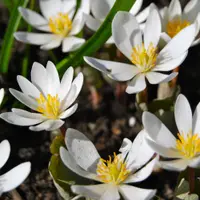
Bloodroot, Sanguinaria canadensis, is a small spring-blooming woodland perennial native to eastern North America. It emerges very early in the season, often before trees leaf out. Plants form low clumps of blue-green, rounded leaves that unfurl around a single white flower with a golden center. The flowers are short-lived, but the foliage remains attractive for much of the growing season. Bloodroot spreads slowly by rhizomes, creating naturalistic drifts in shaded gardens over time. It prefers moist, humus-rich, well-drained soil and light to moderate shade, which guides how to care for bloodroot in garden settings.

Main Plant Requirements

Care Difficulty

Moderate Care

Light Preference

Partial Shade

Water Requirements

Regular Water

Temperature Preference

Cold Hardy

Hardiness Zone

3–8

Soil Texture

Loamy, Silty, Organic-rich

Soil pH

Acidic (5.5–6.5), Slightly acidic (6.5–7.0)

Soil Drainage

Moist but well-drained

Fertilization

Minimal (feed rarely)

Get Personalized Care Plan

Scan your plant to receive care tips personalized for your specific plant

Available on iOS and Android

How to Care for the bloodroot

This spring ephemeral thrives in woodland-style light that mimics dappled forest conditions.

  • Provide 2–4 hours of gentle morning sun with bright dappled or filtered shade the rest of the day to match its native woodland habitat.
  • Site bloodroot under deciduous trees so it receives more light in early spring before leaf-out, then increasing shade as the canopy closes.
  • Avoid hot, direct afternoon sun, which can scorch foliage and shorten blooming, but also avoid deep, continuous shade that reduces flowering.

This rhizomatous perennial prefers consistently moist, well-drained soil that never stays soggy for long.

  • Irrigate when the top 2–4 cm of soil feels slightly dry, aiming for evenly moist conditions during active spring growth and flowering.
  • Use humus-rich, well-draining soil so excess water moves away from the rhizomes; standing water encourages rot and fungal problems.
  • Reduce watering after foliage dies back in summer, but do not let the site bake and crack; drooping leaves or crispy edges suggest drought stress, while yellowing, mushy bases suggest overwatering of Sanguinaria canadensis.

This woodland native is cold-hardy and adapted to cool spring growth followed by summer dormancy.

  • Active growth occurs best around 50–65°F (10–18°C), with flowers emerging in early cool weather and foliage fading as temperatures rise.
  • Sanguinaria canadensis tolerates winter lows close to 0°F (-18°C) under insulating mulch and leaf litter once fully dormant.
  • Extended heat above 85°F (29°C), especially with dry soil, can speed dormancy and stress plants, so provide shade and moisture during hot spells.

This woodland spring ephemeral prefers moderately moist air that matches a shaded forest floor.

  • Aim for 40–60% humidity, which most shaded outdoor sites provide naturally for bloodroot.
  • Plants tolerate short dry spells but may scorch or wilt at leaf edges in hot, very dry air.
  • Increase humidity outdoors by mulching the soil heavily and grouping plants near other shade perennials to reduce evaporation.

This species needs loose, humus-rich soil that mimics a deciduous woodland floor.

  • Use a deep, loamy mix with high organic matter, such as garden loam blended with leaf mold or composted bark.
  • Ensure drainage is steady but not rapid; soil should stay evenly moist yet never waterlogged or sticky.
  • Target slightly acidic to neutral pH around 5.5–7.0 for reliable Sanguinaria canadensis care.
  • Improve aeration and structure by incorporating shredded leaves, fine bark, or coarse sand, and avoid compacted, heavy clay or barren sand.

This plant can be grown in containers, but only when the pot closely replicates a cool, shaded woodland root zone.

  • Choose a wide, relatively deep container so the shallow rhizomes can spread horizontally without crowding.
  • Use a thick top dressing of leaf mold or fine bark in the pot to buffer temperature swings and conserve moisture.
  • Place the container in bright shade and shield the sides from hot sun to prevent the compost from overheating and drying too quickly.

This woodland native needs minimal feeding, especially when grown in rich, humus-heavy soil.

  • Use a light top-dressing of leaf mold or compost in early spring as growth emerges.
  • If soil is poor, apply a balanced, slow-release granular fertilizer at 1/2 strength once in spring.
  • Avoid midsummer and fall feeding, as bloodroot enters dormancy and extra nutrients are not needed.
  • Keep fertilizers off emerging shoots and water lightly after application to disperse nutrients.

Pruning needs for Sanguinaria canadensis are minimal and focus on cleanliness rather than shaping.

  • In late spring or early summer, remove spent flower stalks if seed is not desired.
  • Trim away yellowed, diseased, or damaged leaves at ground level using clean, sharp scissors or pruners.
  • Leave healthy foliage until it naturally dies back, as it feeds the rhizomes for next year’s bloom.
  • Avoid cutting into underground rhizomes, which store energy and determine clump size.

This species is usually grown in the ground and is moved only when clumps become crowded or poorly sited.

  • Look for reduced flowering, congested shoots, or rhizomes surfacing as signs a transplant is needed.
  • Transplant in early spring or early fall, when soil is moist and temperatures are cool.
  • Lift clumps gently, disturbing roots as little as possible, and replant at the same depth in shaded, humus-rich soil.
  • Water thoroughly after moving and keep the area evenly moist for several weeks to limit transplant shock.

Division is the most reliable method for increasing Sanguinaria canadensis in home gardens.

  • Divide mature clumps in early fall or very early spring while plants are dormant or just emerging.
  • Use a clean, sharp knife to cut rhizomes into segments, each with at least 1 healthy bud and some roots.
  • Replant divisions immediately in moist, well-drained, humus-rich soil, keeping rhizomes just below the surface.
  • Seeds can be sown fresh in a shaded, cool bed, but germination is slow and variable.

This hardy woodland perennial requires little winter care in most temperate climates.

  • Dormant rhizomes tolerate typical winter frosts in USDA zones suited to growing bloodroot.
  • Apply a thin layer of shredded leaves or compost mulch in late fall to buffer freeze–thaw cycles.
  • In containers, move pots into an unheated garage or cold frame to prevent deep freezing of the root zone.

Care Tips

Mark Dormant Clumps

Place small, discreet labels or stones where the rhizomes are in late spring so you do not accidentally disturb or damage the clumps when the foliage disappears in summer.

Divide For Longevity

Every 5–7 years, lift and divide overgrown rhizome masses in late summer or early fall, replanting firm, healthy pieces at the same depth to maintain vigorous flowering and prevent crowding by more aggressive woodland perennials.

Use Leaf Mulch

Apply a 2–5 cm layer of shredded deciduous leaves in fall to mimic woodland leaf litter, which protects shallow rhizomes from freeze–thaw cycles and slowly enriches the soil as it breaks down.

Control Spreading Neighbors

Regularly cut back or thin out nearby vigorous groundcovers and tree seedlings so emerging shoots are not shaded or physically crowded, which helps maintain distinct, healthy bloodroot patches.

Protect Seed Capsules

If self-seeding is desired, avoid heavy mulching or raking around the plants in spring so ants can access and carry the seeds, supporting natural colony expansion when growing bloodroot.

Common Pests and Diseases

Botrytis blight

This disease causes soft, water-soaked spots on petals, leaves, and emerging shoots, which soon develop gray, fuzzy mold. Symptoms include collapse of young flower buds and distortion or death of new growth in cool, wet spring conditions.

Solution

Remove and discard affected flowers and foliage as soon as symptoms appear, and keep old leaf litter and spent blooms cleaned up around the clump. Improve air circulation, avoid overhead watering, and if outbreaks are recurrent, apply a labeled fungicide in early spring according to bloodroot care instructions for shade perennials in your region.

Leaf spot

This disease produces small, dark, irregular spots on the leaves that may enlarge and merge, leading to premature yellowing and early leaf drop. Symptoms include a noticeably tattered or thinned canopy by early summer in moist, crowded plantings.

Solution

Cut and remove spotted leaves at ground level once they begin to decline, and clear away plant debris at the end of the season to reduce overwintering spores. Space clumps so foliage can dry quickly after rain, water at soil level if irrigation is needed, and use a preventive fungicide only if leaf spot is severe for multiple seasons in a row.

Slugs and snails

These pests chew irregular holes in the foliage, especially on tender new leaves, and may skeletonize parts of the leaf surface. Symptoms include slime trails on the soil or mulch and damage that appears overnight in cool, damp weather.

Solution

Hand-pick slugs and snails at dusk or early morning and reduce hiding spots by limiting thick mulch layers, boards, and dense groundcover near the clumps. Use iron phosphate bait around but not on the crowns, and keep the soil surface slightly drier by watering in the morning rather than the evening.

Rhizome rot (soil-borne)

This disease causes the underground rhizomes to become soft, discolored, and foul-smelling, leading to stunted or collapsing shoots in spring. Symptoms include poor emergence, sudden wilting, and sections of the clump that fail to return after wet seasons or prolonged waterlogging.

Solution

Dig up affected rhizomes, cut away and discard all soft or dark tissue, and replant only firm, healthy sections in well-drained soil raised slightly above surrounding grade. Avoid overwatering, never allow the planting site to stay waterlogged, and sanitize tools between cuts to reduce spread of soil-borne pathogens.

Interesting Facts

Blood-red rhizome sap

When the thick underground rhizome is cut or broken, it exudes a red latex-like sap that gave rise to the common name bloodroot and has been chemically studied for alkaloids such as sanguinarine.

Ephemeral forest strategy

This species is a classic spring ephemeral, emerging, flowering, and storing energy before deciduous trees fully leaf out, then retreating underground for the rest of the growing season.

Seed dispersal by ants

Its seeds carry a fleshy, nutrient-rich appendage called an elaiosome that attracts ants, which carry the seeds to their nests and effectively disperse them away from the parent plant.

Botan icon

Did you know?

This species often emerges and blooms so early in spring that its flower can appear before the single leaf has fully unfurled, allowing it to take maximum advantage of brief high light levels on the forest floor.

FAQs about bloodroot

Lack of flowers usually comes from plants being too young, disturbed recently, or planted too deep. Heavy shade, dry spring soil, or excess fertilizer can also reduce flowering. Stable, cool, moist spring conditions support reliable blooming.

Grow Healthy Plants with Botan Care

Keep your plants happy and healthy with plant identification, disease detection, and easy care guidance.

Botan plant care app — identify plants on mobile

Explore More Plants