Rotate regularly
Rotate the pot 1–2 times per month to keep stems from leaning hard toward the light, which encourages denser, more symmetrical clumps rather than weak, one-sided growth when growing Ernest's spiderwort.

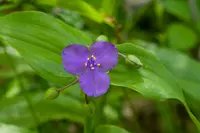
Tradescantia ernestiana, commonly called Ernest's spiderwort, is a compact, clump-forming perennial from the Ozark region of the central United States. It typically grows as low, upright tufts with narrow, grass-like leaves and short stems that carry small three-petaled flowers.
In nature, it often occurs in open woodlands and rocky slopes, where it experiences bright light with some shade and well-drained, gritty soils. Its modest size, tolerance of brief dryness once established, and generally resilient growth habit make it a relatively straightforward species if you want to care for Ernest's spiderwort in a garden or container setting.

Care Difficulty
Easy Care

Light Preference
Partial Shade

Water Requirements
Moderate Water

Temperature Preference
Warm Climate

Hardiness Zone
8–11

Soil Texture
Loamy, Sandy, Organic-rich

Soil pH
Acidic (5.5–6.5), Slightly acidic (6.5–7.0)

Soil Drainage
Moist but well-drained

Fertilization
Light (every 4–6 weeks)
Scan your plant to receive care tips personalized for your specific plant
Available on iOS and Android
This species prefers bright conditions that mimic open woodland edges or lightly shaded rock faces.
This plant prefers consistently lightly moist soil but reacts poorly to waterlogged conditions.
This species grows best in mild, temperate conditions without temperature extremes.
This species prefers moderately humid air but usually adapts to typical indoor levels.
This plant grows best in a loose, airy, and fast-draining potting medium.
This species is well suited to containers for both indoor and outdoor use.
This species responds well to light feeding during active growth, especially in containers.
Pruning supports compact, vigorous growth and maintains a tidy shape in Tradescantia ernestiana.
Container-grown plants benefit from occasional repotting to maintain root health and growth.
This species is commonly multiplied by stem cuttings and division for consistent traits.
Winter care depends on climate and whether plants are grown outdoors or in containers.

Plant Health Check
Not sure what's wrong with your plant? Check your plant's health inside the app.
This species occurs naturally in dry, rocky glades and open woodlands of the Ozark region of Arkansas and Missouri, where it grows in thin, well-drained soils over limestone or dolomite bedrock.
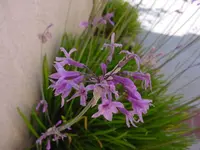
It produces violet-purple, three-petaled flowers mainly in spring, with each individual flower lasting only a single day while new buds open over several weeks.
Unlike many vining relatives in the genus, this species forms upright, fibrous clumps from short rhizomes, creating dense, low mounds rather than trailing stems.
This species forms clumps and slowly spreads outward via short rhizomes. It is not usually invasive in home gardens. Edging, dividing every few years, and removing unwanted seedlings keep the clumps neatly contained.
Keep your plants happy and healthy with plant identification, disease detection, and easy care guidance.