California wildrose Care (Rosa californica)

Also known as: california rose
California wildrose

About California wildrose

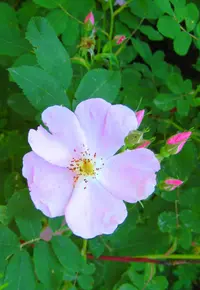
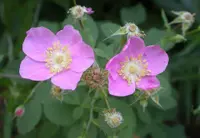
Rosa californica, commonly called California wildrose, is a deciduous shrub rose native to streambanks, wetlands, and open woodlands in California and parts of Oregon and Baja California. It typically forms dense thickets with arching, thorny stems, pink single flowers, and red rose hips that attract birds and pollinators.

This species is adapted to dry summers and moist winters, which makes it fairly resilient once established. It tends to spread by suckers, so it can fill an area over time.

For gardeners, it is considered a relatively easy native shrub if given sun, occasional moisture, and well-drained soil. Understanding how to care for California wildrose mainly involves allowing its natural, somewhat informal growth habit.

Main Plant Requirements

Care Difficulty

Easy Care

Light Preference

Full Sun

Water Requirements

Moderate Water

Temperature Preference

Cold Hardy

Hardiness Zone

6–9

Soil Texture

Sandy, Loamy, Clay

Soil pH

Slightly acidic (6.5–7.0), Neutral (7.0)

Soil Drainage

Well-drained

Fertilization

Minimal (feed rarely)

Get Personalized Care Plan

Scan your plant to receive care tips personalized for your specific plant

Available on iOS and Android

How to Care for the California wildrose

Rosa californica thrives in bright conditions typical of open woodlands and streambanks.

  • Provide 6–8 hours of direct sun daily, ideally with morning sun and light afternoon shade in hotter inland areas.
  • Tolerates partial shade (3–4 hours sun), but flowering and density decline if light drops below this level.
  • In summer, monitor for leaf scorch on exposed, dry sites; in winter, lack of sun is less critical while the plant is dormant.

Rosa californica prefers moist but not saturated soil once established.

  • Water when the top 3–5 cm of soil feels dry, soaking the root zone deeply rather than giving light, frequent splashes.
  • In the first growing season, water weekly during dry spells; once established, reduce to deep watering every 2–3 weeks in summer drought.
  • Ensure well-drained soil; yellowing, soft leaves suggest overwatering, while crisp leaf edges and dropping buds indicate underwatering.

This species is adapted to mild, Mediterranean-type climates with cool winters and warm, dry summers.

  • Active growth and flowering occur best around 60–80°F (16–27°C), with good vigor in typical spring and early summer conditions.
  • Hardy to about 10–15°F (-12 to -9°C) once established, tolerating normal frosts but young plants benefit from mulch in colder snaps.
  • Handles dry heat up to 95°F (35°C) if roots are mulched and soil does not fully dry; extreme, prolonged heat can reduce bloom quality.

This species is adapted to dry air and usually does not need special humidity control outdoors.

  • Tolerates wide humidity ranges, typically 20–60 %, without damage when soil moisture is appropriate.
  • Low humidity stress shows as crisp leaf edges combined with very dry soil, rather than from air dryness alone.
  • If grown in a very hot, exposed site, light mulching and grouping plants helps reduce leaf moisture loss more effectively than misting.

Rosa californica prefers well-structured, draining soil that mimics its native streamside and slope habitats.

  • Use a slightly sandy loam with 30–50 % mineral material (sand or fine gravel) plus compost for moderate organic content and structure.
  • Ensure fast drainage; raised beds or mounded planting areas prevent roots from sitting in water after rain or irrigation.
  • Aim for slightly acidic to neutral pH, roughly 6.0–7.2, avoiding strongly alkaline or saline soils that reduce nutrient availability.
  • To improve heavy clay, mix in coarse sand or small gravel and well-rotted compost to increase aeration and prevent waterlogging.

This species can be grown in large outdoor containers when enough root space and stability are provided.

  • Choose a deep, heavy container (at least 40–50 cm tall) so roots anchor strongly and the plant does not tip in wind.
  • Select thick-walled clay or concrete if the site is hot, as these materials buffer temperature and slow rapid drying.
  • Raise the pot slightly on feet so drainage holes clear quickly after rain, preventing standing water around the base.

This native shrub usually grows well in average soil, so fertilizing California wildrose is optional rather than essential.

  • If growth is weak or soil is very poor, apply a light layer of compost around the root zone in early spring.
  • Alternatively use a balanced slow-release fertilizer (around 10-10-10) at half label rate once in spring.
  • Avoid feeding after midsummer so new shoots harden before winter, especially in colder regions.

Pruning Rosa californica helps manage size, encourage flowering, and maintain a healthy thicket.

  • Best time is late winter to very early spring, before strong new growth begins.
  • Remove dead, diseased, crossing, or badly damaged canes with clean, sharp bypass pruners.
  • Thin out some older, woody stems at the base to open the center and stimulate vigorous new shoots.
  • Lightly shorten overly long or sprawling canes to control spread and improve shape and flower display.

This species is most often grown in the ground, so focus on careful outdoor transplanting rather than frequent repotting.

  • Transplant young plants in late fall or early spring when temperatures are mild and soil is moist.
  • Move when roots lightly fill the pot or growth slows, avoiding very root-bound plants with tight circling roots.
  • Dig a wide planting hole, keep the root ball intact, and water thoroughly to settle soil around roots.
  • Mulch 5–8 cm deep after transplanting and keep soil evenly moist for several weeks to reduce transplant stress.

Rosa californica is commonly propagated to expand thickets or restore native plantings.

  • Divide rooted suckers in late fall or early spring, replanting sections with several healthy shoots and roots.
  • Take semi-hardwood stem cuttings in late spring to summer and root in a moist, well-drained, sandy mix.
  • Keep cuttings in bright, indirect light with high humidity and stable temperatures around 65–75°F.
  • Sow stratified seeds in trays outdoors or in a cold frame to mimic natural winter–spring conditions.

This rose is generally cold hardy in its native range and usually needs minimal winter care.

  • In colder areas, apply 5–8 cm of organic mulch over the root zone after the first hard frost.
  • Avoid heavy pruning in late fall; leave most canes until late winter to reduce cold damage points.
  • Container plants benefit from moving to a sheltered, unheated but frost-free spot or wrapping the pot.

Care Tips

Sucker Management

Allow a few strong root suckers to develop for a dense thicket, but remove unwanted shoots at ground level with clean, sharp pruners to keep the plant from spreading into paths or nearby beds.

Wildlife-Friendly Thicket

Plant in a loose row and let stems arch naturally, then interplant with low native grasses or perennials to create a stable, erosion-controlling hedge that also provides shelter for birds and pollinators when growing California wildrose.

Basal Renewal Cuts

Every 2–3 years, remove a portion of the oldest, thickest canes right at the base in late winter to stimulate new, vigorous shoots and maintain a balanced, open shrub structure.

Dry-Season Weed Control

Use a 5–8 cm deep layer of coarse wood chip mulch around, but not touching, the base to suppress weeds and stabilize soil moisture during hot, dry periods, which helps this species establish a stronger root system.

Targeted Pest Monitoring

Inspect new growth and flower buds every 1–2 weeks in spring for aphids and leaf-chewing insects, and wash small infestations off with a firm stream of water before considering organic insecticidal soap treatments.

Common Pests and Diseases

Rose slug sawfly

This pest is the slimy, green larval stage of a sawfly that skeletonizes leaves, leaving only a thin, papery surface. Symptoms include windowpane-like damage and bronzed foliage, especially on lower, inner branches.

Solution

Inspect leaves in spring and early summer and crush or hand-pick larvae from undersides of leaves. For heavier infestations, spray foliage with a strong jet of water to dislodge larvae, then use a horticultural soap or spinosad product labeled for sawflies, applied in the evening to protect pollinators.

Aphids

These insects cluster on tender new shoots and flower buds, sucking sap and excreting sticky honeydew that can attract sooty mold. Symptoms include distorted new growth, sticky residues, and increased presence of ants on stems.

Solution

Rinse stems and buds with a firm stream of water every few days to reduce populations, then prune out heavily infested shoot tips. If needed, apply insecticidal soap or neem oil to young growth, targeting the undersides of leaves and repeating as directed until populations stay low.

Black spot

This disease causes round, dark spots with fringed edges on leaves, followed by yellowing and premature drop, especially in warm, humid periods. Symptoms include thinning foliage from the lower parts of the plant upward.

Solution

Remove and discard affected leaves from the plant and ground, and avoid overhead watering to keep foliage dry. Improve air circulation by thinning crowded stems, and during prolonged damp weather use a sulfur or chlorothalonil-based fungicide labeled for roses, applied at intervals according to the product instructions.

Rust

This disease produces bright orange to rust-colored pustules on the undersides of leaves, with yellowing or spotting visible on the upper surface. Symptoms include early leaf drop, especially on shaded or densely crowded stems.

Solution

Inspect leaves regularly and remove any that show orange pustules, disposing of them in the trash rather than compost. Enhance airflow by pruning congested canes and keeping nearby vegetation trimmed, and in recurring cases apply a rose-labeled fungicide for rust at the first sign of symptoms, continuing as recommended to protect new growth.

Powdery mildew

This disease forms white, powdery patches on young leaves, stems, and flower buds, often causing leaf curling and distorted new growth during warm days and cool nights. Symptoms include a matte, dusty coating that rubs off on fingers when touched.

Solution

Prune out and discard affected shoot tips, then adjust spacing and pruning so sun and air reach the plant, an important part of Rosa californica care instructions. Water at the base in the morning, not overhead, and if needed apply a potassium bicarbonate, sulfur, or neem-based fungicide labeled for powdery mildew, covering all young foliage thoroughly.

Interesting Facts

Key coastal riparian species

Rosa californica is a dominant native shrub in many California riparian corridors, where its dense thickets help stabilize stream banks and reduce erosion along waterways.

High wildlife value

Its flowers provide pollen for native bees and hoverflies, while the hips are a significant late-season food source for birds, small mammals, and even some larger mammals in California ecosystems.

Adapted to summer drought

This rose is physiologically adapted to the Mediterranean-type climate of California, often reducing leaf area or going partially dormant in late summer drought while maintaining deep root systems that access stored soil moisture.

Botan icon

Did you know?

Genetic and field studies show that Rosa californica readily hybridizes with some other native and introduced rose species in California, creating natural hybrid swarms that can complicate species identification in the wild.

FAQs about California wildrose

This species spreads by underground rhizomes and can form dense thickets over time. In small gardens, use root barriers, containers, or regular root pruning to keep it contained and protect nearby plantings.

Grow Healthy Plants with Botan Care

Keep your plants happy and healthy with plant identification, disease detection, and easy care guidance.

Botan plant care app — identify plants on mobile

Explore More Plants