Wind exposure management
Site plants where they receive good air movement but are shielded from persistent strong winds, using low windbreaks like mesh fencing or taller companion crops to reduce wind scorch and lodging.

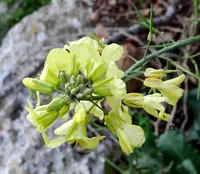
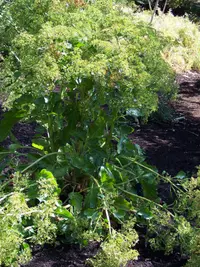
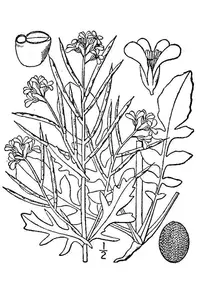
Mustard, Brassica cretica, is a leafy herbaceous plant in the cabbage family, related to common mustards and wild brassicas. It typically forms low clumps with lobed, somewhat leathery leaves and small, yellow, four-petaled flowers.
This species occurs naturally in rocky, coastal areas of the eastern Mediterranean, often on cliffs and dry slopes. It is adapted to sun, wind, and relatively poor, well-drained soils.
Brassica cretica grows fairly fast and is generally not demanding, but it resents heavy, waterlogged substrates and deep shade. Basic knowledge of how to care for mustard helps prevent stress, leggy growth, and pest issues.

Care Difficulty
Moderate Care

Light Preference
Full Sun

Water Requirements
Moderate Water

Temperature Preference
Warm Climate

Hardiness Zone
8–11

Soil Texture
Sandy, Loamy, Rocky

Soil pH
Slightly acidic (6.5–7.0), Neutral (7.0)

Soil Drainage
Well-drained

Fertilization
Minimal (feed rarely)
Scan your plant to receive care tips personalized for your specific plant
Available on iOS and Android
This Mediterranean wild cabbage thrives in bright, open sites with plenty of direct sun.
Brassica cretica prefers steady soil moisture without prolonged saturation.
This coastal brassica favors cool to mild conditions and dislikes temperature extremes.
Humidity plays a minor role for Brassica cretica, which adapts well to typical outdoor levels in temperate climates.
Brassica cretica prefers mineral, well-drained soil that mimics its native rocky slopes.
This species can be grown in containers if the pot is configured to prevent chronic wetness around the roots.
Brassica cretica benefits from moderate, targeted feeding in nutrient-poor or heavily harvested sites.
Pruning Brassica cretica is mainly corrective and helps maintain a compact, healthy shape.
This species is more often transplanted outdoors than grown long term in containers, but root care still matters.
Brassica cretica is most reliably propagated from seed, with simple requirements for germination.
Brassica cretica is fairly cold tolerant in mild climates and usually needs only light winter care outdoors.

Plant Health Check
Not sure what's wrong with your plant? Check your plant's health inside the app.
This Cretan wild mustard is a close relative of cultivated cabbages and kales, and has been used in genetic studies to understand how domesticated Brassica vegetables evolved from wild coastal ancestors.
The species naturally grows on rocky sea cliffs of the Aegean and eastern Mediterranean, tolerating salt spray, strong winds, and thin, alkaline soils that are challenging for many other plants.
Different island and coastal populations show notable genetic and morphological variation, so botanists use it as a model to study plant adaptation and population divergence in fragmented Mediterranean habitats.

Brassica cretica is considered one of the key wild gene-pool resources for breeding improved disease resistance and stress tolerance into commercial Brassica crops such as broccoli, cabbage, and cauliflower, making it important for long-term food security research.
This coastal species has pungent, edible leaves and young shoots often used cooked or as a strong-flavored leafy green. Flowers and immature seedpods are also edible in moderation, provided plants have not been sprayed with pesticides or contaminated by roadside pollution.
Keep your plants happy and healthy with plant identification, disease detection, and easy care guidance.