


Stabilize tall stems
As stems elongate and become heavy, anchor the pot with a topdressing of coarse gravel and, if needed, discreetly tie taller stems to a sturdy, rust-proof stake to prevent wind or accidental knock-over damage.

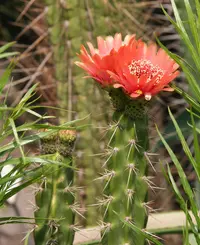
Corryocactus melanotrichus is a columnar cactus from arid regions of Bolivia and northern Argentina. It forms tall, branching stems armed with dense, often dark spines. In maturity, it can create striking clumps and may produce tubular flowers along the ribs, followed by small fruits. Growth is relatively slow, but the plant is long-lived when kept in suitable conditions. This species suits growers who can provide strong light, very well-drained mineral soil, and careful watering. With these basics understood, it is straightforward to care for Corryocactus melanotrichus in a dry, bright collection.

Care Difficulty
Moderate Care

Light Preference
Full Sun

Water Requirements
Low Water

Temperature Preference
Warm Climate

Hardiness Zone
9–11

Soil Texture
Sandy, Loamy, Rocky

Soil pH
Slightly acidic (6.5–7.0), Neutral (7.0)

Soil Drainage
Well-drained

Fertilization
Minimal (feed rarely)
Scan your plant to receive care tips personalized for your specific plant
Available on iOS and Android
This cactus prefers strong, direct light but can adapt to slightly less intense conditions with care.
This species is drought-tolerant and must dry well between waterings to avoid root problems.
This cactus prefers warm, arid conditions and reacts poorly to prolonged cold and frost.
This cactus tolerates dry indoor air well, so humidity is rarely a concern.
Provide a very fast-draining, mineral-rich cactus substrate to prevent root rot.
This species is suitable for container growing when the pot is chosen to support its columnar, branching habit.
This cactus grows well with minimal feeding but responds to light nutrition in active growth.
Pruning needs are low and mainly focused on health and safety for this spiny columnar cactus.
Container plants appreciate infrequent repotting focused on root health and stability.
Propagation is usually done from stem cuttings or seeds under warm, dry conditions.
This species dislikes prolonged hard frost and benefits from basic winter precautions in most climates.

Plant Health Check
Not sure what's wrong with your plant? Check your plant's health inside the app.
This species is notable for its dark, almost black, bristle-like spines at the areoles, which contrast strongly with the green stems and give rise to the epithet melanotrichus, meaning black-haired.
It forms many-branched, shrubby clumps of upright to arching stems rather than a single tall column, a growth form that helps it resist wind and temperature extremes in its native Andean habitats.
The plant produces narrow, tubular red to orange flowers along the sides of the stems, a shape and color combination typical of hummingbird-pollinated cacti in South America.
Sparse or absent flowering usually comes from insufficient light, cool temperatures, or lack of a dry rest in winter. Provide strong sun, a cooler, drier winter period, and avoid high-nitrogen fertilizer to support bud formation when caring for Corryocactus melanotrichus.
Keep your plants happy and healthy with plant identification, disease detection, and easy care guidance.

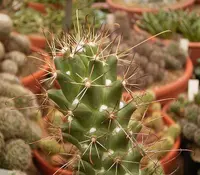
Cochemiea poselgeri
Cochemiea poselgeri
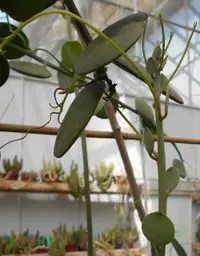 POPULAR
Silver Dollar Vine
Xerosicyos danguyi
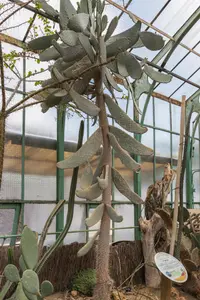
tuna
Consolea moniliformis
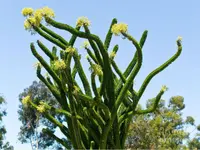
Madagascar Ocotillo
Alluaudia procera
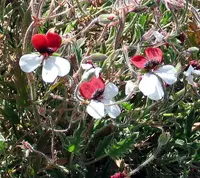
Tricolour Storksbill
Pelargonium tricolor
 POPULAR
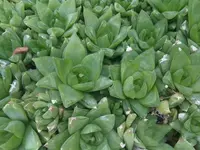
Cathedral Window Haworthia
Haworthia cymbiformis
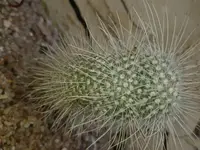
greenflower nipple cactus
Cochemiea barbata
 POPULAR
Moon Cactus
Gymnocalycium mihanovichii