

Staking young stems
Provide a sturdy stake or low trellis for young, elongated shoots and loosely tie them with soft ties to prevent wind damage and stem breakage as the plant gains height and weight.

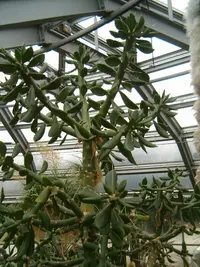
Quiabentia verticillata is a shrubby cactus with woody, branching stems and small, rounded leaves that appear along its joints. It often carries clusters of spines, giving it a rugged, architectural look.
This species is native to arid and semi-arid regions of South America, where it grows in dry, rocky habitats with intense sunlight. Its succulent tissues store water, which makes it tolerant of drought and occasional neglect.
For most growers, the main challenges are providing enough light and avoiding excess moisture around the roots. Understanding how to care for Quiabentia verticillata mainly involves bright exposure, a very free-draining mineral soil mix, and restrained watering.

Care Difficulty
Moderate Care

Light Preference
Full Sun

Water Requirements
Low Water

Temperature Preference
Tropical / Frost Sensitive

Hardiness Zone
10–12

Soil Texture
Sandy, Rocky, Loamy

Soil pH
Slightly acidic (6.5–7.0), Neutral (7.0)

Soil Drainage
Well-drained

Fertilization
Minimal (feed rarely)
Scan your plant to receive care tips personalized for your specific plant
Available on iOS and Android
This dryland cactus shrub thrives in strong light and needs several hours of direct sun for compact, healthy growth.
Watering should mimic an arid climate, with thorough soakings followed by clear drying of the soil.
This species prefers warm, dry conditions and does not tolerate hard frost.
This drought-adapted cactus handles typical indoor humidity and does not need special humidity management.
This species needs a very fast-draining, mineral-rich cactus substrate to prevent root and stem rot.
This cactus is well suited to container growing when stability and rapid drainage are prioritized.
This drought-tolerant cactus shrub adapts to lean soils and usually needs only light feeding in cultivation.
This shrubby cactus benefits from occasional structural pruning to maintain size and safety around its spines.
This species grows slowly and dislikes frequent disturbance, so repotting or transplanting should be infrequent and deliberate.
This cactus is most often propagated from stem cuttings, as seed is slower and less predictable.
This plant prefers warm, arid climates and needs protection in regions with cold or wet winters.

Plant Health Check
Not sure what's wrong with your plant? Check your plant's health inside the app.
This species is an unusual cactus that retains persistent, flat leaves on its segmented, spiny stems, unlike most cacti that have reduced their leaves entirely to spines.
It is naturally found in the Gran Chaco region of South America, where it grows in seasonally dry, scrubby woodland and savanna with high temperatures and irregular rainfall.
The plant’s prominent spines arise from modified leaf bases on the jointed stems, illustrating a transitional form between leafy shrubs and the more typical spine-only cactus architecture often discussed in Quiabentia verticillata care instructions.
Lack of blooms usually comes from insufficient light, too much nitrogen-rich fertilizer, or a plant that is still immature. Provide strong sun, avoid heavy feeding, and allow several seasons for flowering structures to develop fully.
Keep your plants happy and healthy with plant identification, disease detection, and easy care guidance.

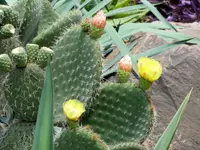
arborescent pricklypear
Opuntia leucotricha
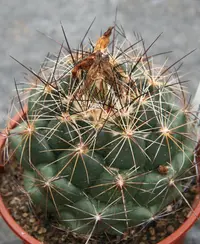
Coryphantha delaetiana
Coryphantha delaetiana
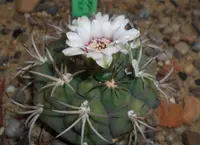
Gymnocalycium anisitsii
Gymnocalycium anisitsii
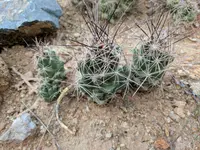
nipple beehive cactus
Coryphantha macromeris

Cephalocereus tetetzo
Cephalocereus tetetzo
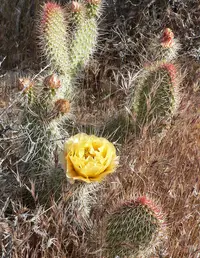
plains pricklypear
Opuntia polyacantha
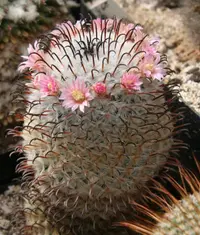
Mammillaria perezdelarosae
Mammillaria perezdelarosae
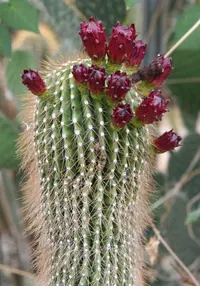
Cephalocereus polylophus
Cephalocereus polylophus