


Heavy pot choice
Use a wide, heavy terracotta or ceramic pot to counterbalance the tall column and reduce the risk of tipping as stems elongate over several years.

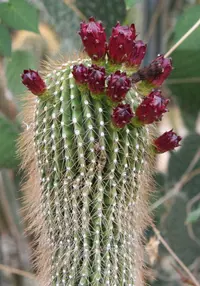
Cephalocereus polylophus is a columnar cactus from arid regions of central Mexico, where it grows on rocky slopes and well-drained hillsides. It forms upright, ribbed stems that can branch and slowly reach impressive heights in the ground.
The surface is lined with short, stiff spines rather than a dense woolly coat, giving it a clean, architectural look. Growth is slow, which suits container culture and small spaces.
This species prefers bright light, low to moderate moisture, and a gritty, fast-draining soil. With attention to avoiding overwatering and providing enough light, it is relatively straightforward to care for Cephalocereus polylophus.

Care Difficulty
Moderate Care

Light Preference
Full Sun

Water Requirements
Low Water

Temperature Preference
Tropical / Frost Sensitive

Hardiness Zone
10–12

Soil Texture
Sandy, Rocky, Loamy

Soil pH
Slightly acidic (6.5–7.0), Neutral (7.0)

Soil Drainage
Well-drained

Fertilization
Minimal (feed rarely)
Scan your plant to receive care tips personalized for your specific plant
Available on iOS and Android
This cactus needs strong, bright light to maintain compact growth and healthy color.
This species stores water in its stems and needs infrequent but thorough watering.
This cactus prefers warm, dry conditions and is sensitive to frost and prolonged cold.
This cactus handles typical indoor humidity well and rarely needs adjustment.
This species needs a very fast-draining, mineral-rich cactus substrate to prevent root rot.
This species is well suited to container culture when the pot provides fast drainage and stability.
This desert cactus has low nutrient demand, so light feeding is sufficient for healthy growth.
Pruning needs for Cephalocereus polylophus are minimal and mainly corrective.
Container-grown plants appreciate infrequent but careful repotting to maintain a stable root environment.
Propagation is possible but slow, so most plants are raised from seed under controlled conditions.
Cool, dry winter conditions are important for this frost-sensitive cactus, especially in container culture.

Plant Health Check
Not sure what's wrong with your plant? Check your plant's health inside the app.
This cactus is naturally restricted to a relatively small area in central Mexico, particularly in parts of Hidalgo and Querétaro, where it grows as a tall, ribbed column on semi-arid slopes and rocky outcrops.
Its many narrow ribs and patches of white wool help reduce direct sun exposure on the stem surface and trap a thin layer of air, which moderates temperature and water loss in its hot, dry habitat.
The plant produces tubular, often pale flowers that open mainly at night or in the early hours, a trait associated with pollination by nocturnal visitors such as moths and possibly bats.
This cactus is slow growing, often adding only 2–5 cm in height per year. Growth is faster in warm conditions with strong light, excellent drainage, and consistent but sparse watering. Expect a long-term, gradual increase in size.
Keep your plants happy and healthy with plant identification, disease detection, and easy care guidance.

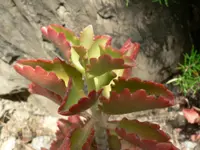
Six-Angled Kalanchoe
Kalanchoe sexangularis
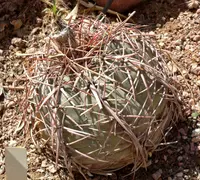
turk's head cactus
Echinocactus horizonthalonius
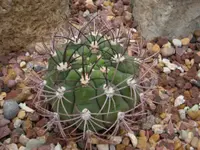
Giant Chin Cactus
Gymnocalycium saglionis

Austrocylindropuntia shaferi
Austrocylindropuntia shaferi
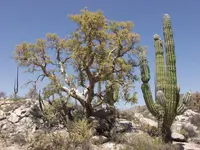
Baja elephant tree
Pachycormus discolor
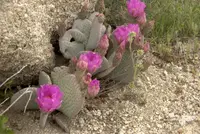
beavertail pricklypear
Opuntia basilaris
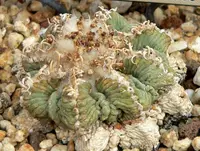
Aztekium ritteri
Aztekium ritteri
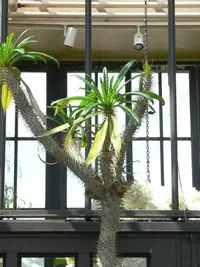
ghost-men
Pachypodium geayi