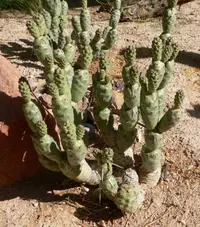
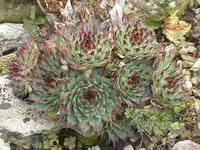
Babybum Humpfig Care (Gibbaeum heathii)

Babybum Humpfig

About Babybum Humpfig

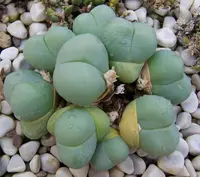
Babybum Humpfig (Gibbaeum heathii) is a small, clumping succulent from arid regions of South Africa. It forms tight pairs of rounded, fleshy leaves that resemble pebbles. New leaf pairs slowly replace older ones, giving the plant a compact, low-growing habit that suits windowsills and small pots. Colors range from gray-green to bluish tones, often with a slightly rough surface. This species is adapted to strong light, porous mineral soils, and very dry conditions between careful waterings. Understanding how to care for Babybum Humpfig mainly involves avoiding overwatering and providing enough light, which makes it manageable for patient growers who like slow, compact succulents.

Main Plant Requirements

Care Difficulty

Moderate Care

Light Preference

Full Sun

Water Requirements

Low Water

Temperature Preference

Tropical / Frost Sensitive

Hardiness Zone

10–11

Soil Texture

Sandy, Rocky, Loamy

Soil pH

Slightly acidic (6.5–7.0), Neutral (7.0)

Soil Drainage

Well-drained

Fertilization

Minimal (feed rarely)

Get Personalized Care Plan

Scan your plant to receive care tips personalized for your specific plant

Available on iOS and Android

How to Care for the Babybum Humpfig

This compact South African succulent needs bright, measured sun to stay compact and maintain healthy leaf color.

  • Provide 4–6 hours of direct morning sun with bright, filtered light the rest of the day; avoid intense midafternoon sun in hot, dry climates.
  • Babybum Humpfig tolerates light, open shade for part of the day, but stems and leaves may elongate or lose color if grown in shade for long periods.
  • In summer, harden plants gradually into higher light to prevent leaf scorch; in winter, prioritize the brightest spot available to compensate for short days.

Watering for this dwarf mesemb focuses on deep, infrequent soakings and fast drying between them.

  • Allow the soil to dry completely through at least the top 3–5 cm before watering, then drench and let excess drain away; never leave the root zone saturated.
  • During active growth in cooler seasons, watch Gibbaeum heathii for slightly softer, duller leaves as a cue to water; in hot summer dormancy, water only lightly or not at all.
  • Reduce or stop watering at the first signs of overwatering, such as translucent, splitting, or mushy leaves, and improve drainage with gritty, mineral-rich substrate.

This species prefers cool to warm, dry conditions and is sensitive to both hard frost and extreme, humid heat.

  • Aim for 55–75°F (13–24°C) during active growth; it tolerates short peaks up to about 90°F (32°C) if shade and airflow are good.
  • Protect from frost; brief dips to 32°F (0°C) may be survived if soil is completely dry, but growth is safer above 40°F (4°C).
  • In very hot spells above 90°F (32°C), provide light shade, excellent ventilation, and keep the plant on the dry side to reduce stress and root rot risk.

This compact succulent prefers very dry air and rarely suffers from low humidity indoors when watered correctly.

  • Target 20–40% humidity, similar to arid climates, and avoid placing the plant in humid rooms like bathrooms or near humidifiers.
  • Dry indoor air is usually safe, but prolonged humidity above 50% raises the risk of stem and root rot in Babybum Humpfig.
  • Watch for soft, splitting leaves or lingering surface moisture as signs humidity is too high, and increase air movement or relocate to a drier spot.

This species needs a very lean, rocky, fast-draining substrate that dries quickly between light waterings.

  • Use a sandy, gritty mix such as 60–70% mineral material (pumice, coarse sand, fine gravel) with 30–40% cactus mix to support Gibbaeum heathii.
  • Ensure drainage is rapid so water runs through in seconds and the potting mix dries within a few days, preventing root rot.
  • Aim for slightly acidic to neutral pH around 6.0–7.0, avoiding strongly acidic or alkaline substrates that can limit nutrient uptake.
  • Do not add moisture-retentive components like peat-heavy compost or coconut coir in large amounts, as they reduce aeration and hold water around the roots.

This small succulent is very suitable for container growing due to its compact, shallow root system.

  • Choose a shallow, wide pot that matches the shallow roots and allows the clumps to spread without staying wet in the center.
  • Select unglazed terracotta to increase evaporation through the pot walls, which helps the mix dry fast after infrequent watering.
  • Elevate the container slightly on pot feet or stones so drainage holes stay clear and excess water leaves the root zone immediately.

This compact succulent needs only light feeding, so focus on avoiding excess nutrients rather than boosting growth when caring for Babybum Humpfig.

  • Use a diluted balanced liquid fertilizer (around 10-10-10 or 20-20-20 at 1/4 strength) during active growth in late winter–spring.
  • Feed once every 4–6 weeks while new leaves form, ensuring soil is already slightly moist before application.
  • Avoid organic compost and rich slow-release products, which hold moisture and can cause root rot.
  • Stop feeding entirely during summer dormancy and again in the coldest part of winter.

Gibbaeum heathii requires minimal pruning, mainly to maintain plant health and prevent rot.

  • Best time to prune is late winter to early spring, just before or as new growth begins.
  • Gently remove shriveled, dead, or mushy leaf pairs by hand or with small sterile scissors.
  • Avoid cutting healthy, firm leaf pairs, since this species maintains its natural cushion shape without shaping cuts.
  • Discard any diseased tissue and check for excess moisture or poor drainage that may have caused damage.

This small succulent prefers to stay slightly root-bound and only needs infrequent repotting.

  • Plan to repot every 3–4 years or when roots circle the pot, growth slows, or soil stays wet too long.
  • Repot in late winter or very early spring, before strong new growth, using a shallow pot with ample drainage holes.
  • Handle the roots gently, shaking off old mix without tearing them, and replant in a very gritty, fast-draining succulent substrate.
  • Keep the plant mostly dry for 5–7 days after repotting, then resume light watering to limit root stress and rot risk.

This species is most often propagated slowly by division, with seed used by more advanced growers.

  • Divide clustered heads in late winter–early spring, when plants are firm and just starting active growth.
  • Use a sterile, sharp blade to separate offsets with some roots attached, minimizing damage to each head.
  • Replant divisions in a gritty, barely moist mix, then keep in bright, indirect light with good airflow until established.
  • For seeds, sow on the surface of very well-draining mix, keep slightly moist, and provide bright light and mild temperatures.

This succulent is moderately cold tolerant when dry but is not reliable in prolonged hard freezes.

  • Keep plants above about 25–30°F; extended freezing, especially with wet soil, can kill roots and leaves.
  • Grow container plants in a cool, bright indoor spot or unheated, frost-free greenhouse during winter.
  • Water very sparingly in winter, allowing soil to dry completely, which increases cold tolerance.
  • Avoid heavy mulching; instead, rely on sharp drainage so moisture does not linger around the roots in cold weather.

Care Tips

Controlled summer rest

During the hottest, brightest months, reduce watering sharply and move the pot to a slightly cooler, very bright spot to respect its semi-dormant summer rest and prevent soft, overfed leaves that are prone to rot.

Tight cluster spacing

To encourage compact, dome-shaped clumps, keep individual plants or offsets close together in a shallow pot, as the slight crowding stabilizes the bodies and reduces sunscald on exposed sides.

Top-dress with grit

Apply a 0.5–1 cm layer of clean mineral grit or small stones on the soil surface to keep leaf bases dry, limit algae and fungus growth, and support the pairs of leaves so they do not topple.

Cool, bright overwintering

In winter, keep the plant in a bright, cool room around 45–55°F with very light watering, which promotes firm, well-colored leaves and more reliable flowering the following season.

Gentle rotation practice

Rotate the pot 90° every 2–3 weeks during active growth so the leaf pairs receive even light and develop symmetrical forms, taking care not to bump or squeeze the fragile leaf bodies when caring for Babybum Humpfig.

Common Pests and Diseases

Mealybugs

This pest hides in leaf crevices and between the paired leaf bodies, sucking sap and causing yellowing, distortion, and weak growth.

Solution

Isolate the plant, then dab visible insects with cotton swabs dipped in 70% isopropyl alcohol and gently brush between leaf pairs; repeat weekly until clear, and keep the plant in brighter light with lower humidity to discourage reinfestation.

Aphids

These insects cluster on tender new growth and flower stalks, feeding on sap and excreting sticky honeydew that can attract sooty mold.

Solution

Rinse colonies off under a gentle but firm stream of water, then treat remaining insects with a dilute insecticidal soap spray, keeping the solution off the soil surface and repeating after 5–7 days if needed.

Spider mites

This pest thrives in hot, very dry indoor air, causing fine stippling, dull coloration, and sometimes delicate webbing between the leaf pairs.

Solution

Increase air movement, rinse the plant thoroughly with lukewarm water to remove mites and webbing, then apply a neem oil or horticultural oil spray labeled for succulents, covering leaf surfaces and repeating every 7–10 days as needed.

Fungal stem base rot

This disease starts at the base of the leaf pairs where excess moisture collects, leading to soft, discolored tissue and collapse of individual heads.

Solution

At first signs, remove affected heads completely with a sterile blade, allow healthy remaining tissue to dry, then adjust care by using a very gritty, fast-draining mix, watering only when the leaf bodies slightly wrinkle, and avoiding water sitting in the central fissures, which is central to Gibbaeum heathii plant care.

Interesting Facts

Sheath-forming leaves

This species produces paired, egg-shaped leaf bodies that die back into a dry, papery sheath at the top, protecting new growth from intense sun and sudden moisture in its native habitat.

Quartz-field specialist

In the wild it often grows among pale quartz gravel in the Little Karoo of South Africa, where its grey-green, speckled surface helps it blend into the stones and reduces herbivore attention.

Winter-growing rhythm

Gibbaeum heathii is active mainly in the cool, wetter winter months in its native range, then rests in summer heat, an adaptation to the Mediterranean-type climate of the Western and Eastern Cape.

Botan icon

Did you know?

This species was one of the early compact mesembs collected and distributed to European growers in the early 20th century, helping shape the popularity of so-called mimicry succulents in specialist collections.

FAQs about Babybum Humpfig

This species flowers mainly in late winter–spring after a cool, bright rest period. Lack of blooms is often linked to excessive warmth in winter, too much nitrogen fertilizer, or disturbance of its seasonal dry rest cycle.

Grow Healthy Plants with Botan Care

Keep your plants happy and healthy with plant identification, disease detection, and easy care guidance.

Botan plant care app — identify plants on mobile

Explore More Plants