houseleek Care (Sempervivum calcareum)

houseleek

About houseleek

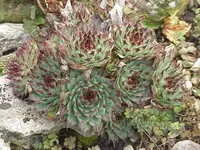
Sempervivum calcareum is a small, hardy succulent forming tight rosettes of fleshy, often blue-green leaves tipped with red. It stays low to the ground and slowly spreads into clumps. Native to rocky, limestone slopes in parts of the Alps, it has evolved to handle strong sun, wind, and poor, shallow soils. This alpine origin makes it well suited to rock gardens, troughs, and shallow containers. The plant is generally easy to grow and tolerates drought, cold, and neglect once established. Good drainage and plenty of light are the main needs when you care for Sempervivum calcareum.

Main Plant Requirements

Care Difficulty

Easy Care

Light Preference

Full Sun

Water Requirements

Low Water

Temperature Preference

Cold Hardy

Hardiness Zone

5–9

Soil Texture

Sandy, Loamy, Rocky

Soil pH

Slightly acidic (6.5–7.0), Slightly alkaline (7.0–7.5)

Soil Drainage

Well-drained

Fertilization

Minimal (feed rarely)

Get Personalized Care Plan

Scan your plant to receive care tips personalized for your specific plant

Available on iOS and Android

How to Care for the houseleek

This alpine succulent thrives in high light and handles full sun in most temperate gardens.

  • Provide 6–8 hours of direct sun daily; morning to early afternoon sun is ideal for compact rosettes and rich color.
  • Tolerates light partial shade, especially in hot climates, but too much shade causes stretched, pale growth and loose leaf spacing.
  • In very intense summer sun, especially in the southern US, give slight afternoon shade or use gravel mulch to reduce leaf scorch and overheating.

This species prefers infrequent, deep watering and very fast‑draining soil.

  • Water only when the top 3–5 cm of soil are completely dry; in most outdoor settings this means after prolonged dry spells, not on a fixed schedule.
  • Use gritty, sharply draining soil or a rock garden setting so water runs through quickly and roots do not sit in soggy conditions.
  • Reduce watering in cool seasons; shriveling lower leaves suggest mild thirst, while mushy, translucent leaves or a sulfur smell indicate overwatering and rot risk.

This hardy rosette succulent tolerates a wide temperature range when kept in dry, free‑draining soil.

  • Best active growth occurs around 60–75°F (16–24°C), with good airflow and low humidity to limit rot and fungal problems.
  • Mature plants tolerate cold down to about 0–5°F (−18 to −15°C) in well‑drained ground; crown and roots must not remain waterlogged in freezing periods.
  • Handles dry summer heat up to about 90–95°F (32–35°C) if soil drains quickly; in hot climates, slight afternoon shade limits stress and leaf scorching for caring for Sempervivum calcareum.

This alpine succulent prefers dry air and rarely suffers from low household humidity.

  • Target 30–50% humidity, similar to a dry, well‑ventilated room environment.
  • Dry, firm leaves are normal; soft, pale, or mushy foliage usually signals excess moisture, not low humidity.
  • Increase air movement with an open, breezy placement rather than adding trays or humidifiers, which can encourage rot.

This species needs very fast-draining, mineral-based soil to prevent root and crown rot.

  • Use a gritty mix such as 50–70% mineral material (pumice, coarse sand, small gravel) with 30–50% lean potting mix or loam.
  • Aim for slightly alkaline to neutral pH around 6.5–7.5, which suits the natural limestone habitats of Sempervivum calcareum.
  • Increase aeration by using large particle sizes (2–6 mm) and avoiding fine peat that compacts and holds excess water.
  • Avoid dense, water-retentive mixes, straight garden soil, or any substrate that stays wet longer than 1–2 days after watering.

This species is very suitable for container growing, especially in shallow, well-drained pots.

  • Choose a broad, shallow container to accommodate offsets spreading sideways rather than deep taproots.
  • Select porous materials like unglazed terracotta to let the mix dry quickly between waterings and reduce rot risk.
  • Elevate the pot on feet or pot risers so drainage holes stay clear and excess water escapes immediately after rain or watering.

This alpine succulent needs very little feeding, and excess nutrients can reduce its compact growth.

  • Use a low-dose, balanced NPK succulent fertilizer or very light compost once in early to mid-spring.
  • Dilute liquid fertilizer to 25–50% strength to avoid soft, weak growth in Sempervivum calcareum.
  • Skip feeding in late fall and winter when growth is minimal or dormant.
  • Always apply fertilizer to slightly moist, well-drained soil to reduce root burn risk.

Pruning focuses on tidying and maintaining healthy rosettes rather than reshaping the plant.

  • In late spring or after flowering, remove dead flower stalks at the base with small scissors or pruners.
  • Gently twist off dried, damaged, or diseased leaves to improve airflow and reduce rot risk around rosettes.
  • Thin out overcrowded offsets, keeping the healthiest rosettes to maintain a neat, open clump of Sempervivum calcareum.
  • Disinfect tools before and after use to limit the spread of fungal or bacterial problems.

Container-grown plants need infrequent repotting, while clumps in the ground benefit from occasional lifting and division.

  • Check for roots circling the pot, soil drying very fast, or reduced vigor as signs repotting is useful.
  • Repot or transplant in spring to early summer so roots can re-establish during active growth.
  • Plan on repotting every 3–4 years into a shallow container with gritty, sharply drained soil or cactus mix.
  • Handle rosettes gently, keep roots intact, and water lightly after transplanting to limit stress and rot risk.

Propagation is typically done from offsets, which form naturally around the mother rosette.

  • In spring or early summer, detach firm, well-formed offsets from the main Sempervivum calcareum rosette.
  • Allow any broken surfaces to dry for 1–2 days to callus, reducing the chance of rot in the new plant.
  • Set offsets on or just into a gritty, free-draining mix in bright light, then water sparingly until rooted.
  • Seed propagation is possible but slower; provide bright light, consistent slight moisture, and cool conditions for germination.

This species is quite cold hardy and usually needs minimal winter care in the ground.

  • Established plants tolerate hard frost and snow if soil is very well drained and not waterlogged.
  • In very wet winters, use a light gravel mulch to keep rosettes drier and reduce crown rot risk for Sempervivum calcareum.
  • Move small containers to a sheltered, unheated spot to prevent repeated freeze–thaw stress on roots.
  • Avoid heavy watering in winter, keeping the substrate only barely moist to prevent root damage.

Care Tips

Offset positioning

When rosettes produce offsets, gently reposition the pups so they sit on the soil surface with their own contact point, which encourages faster rooting and a denser, more even mat.

Grit top-dressing

Apply a thin layer of horticultural grit or small gravel around the rosettes to keep leaf bases dry, reduce crown rot risk, and stabilize plants on shallow or sloped sites.

Winter wet control

In regions with cold, wet winters, place containers under a simple rain shield or on a covered porch so the root zone stays relatively dry while still receiving cold exposure.

Smart division timing

Divide and replant clusters right after flowering rosettes start to decline, removing the spent centers and resetting healthy offsets to maintain a compact, vigorous colony.

Shallow tray culture

Use broad, shallow trays with multiple drainage holes to grow dense colonies and make it easier to rotate, inspect, and clean the plants when caring for Sempervivum calcareum.

Common Pests and Diseases

Vine weevils

This pest feeds on fleshy leaves while larvae chew the roots, causing rosettes to wilt or collapse, especially in containers and rock gardens.

Solution

Hand-pick adult beetles at night, inspect and discard badly damaged rosettes, and repot container plants into fresh, gritty mix while removing any C-shaped grubs from the roots; in moist climates, beneficial nematodes labeled for vine weevil can be applied to the soil in late summer or early fall for longer-term control.

Mealybugs

These insects hide in tight rosette centers and leaf bases, leaving white cottony clusters and causing distorted or weakened growth over time.

Solution

Isolate affected plants, use a strong jet of water or a cotton swab dipped in 70% isopropyl alcohol to remove visible insects, then improve light and airflow; in persistent infestations, apply a light, ready-to-use insecticidal soap to the rosettes, repeating every 7–10 days until no new activity is seen.

Aphids

These insects cluster on young offsets and flower stalks, sucking sap and leaving sticky honeydew that can attract sooty mold.

Solution

Rinse colonies off with a firm stream of water, remove heavily infested flower stalks, and encourage natural predators outdoors; if needed, use insecticidal soap or a light horticultural oil, applied in the early morning and repeated as necessary until the population is controlled.

Leaf spot

This disease causes small brown or black spots on older leaves, which may enlarge and lead to premature leaf death in dense or humid plantings.

Solution

Remove and discard affected leaves, increase spacing and airflow around rosettes, and water at the base rather than overhead; in chronically damp locations, consider relocating the plant to a sunnier, faster-drying position as part of broader Sempervivum calcareum care instructions.

Crown rot

This disease starts at the rosette base, where tissues become soft and brown, leading to rapid collapse in poorly drained or overly wet conditions.

Solution

Promptly remove and discard any mushy rosettes, check and amend the planting site or pot with more mineral grit for sharp drainage, and avoid watering onto the rosette center; propagate from healthy offsets planted in very free-draining soil to re-establish the clump in a drier location.

Interesting Facts

Limestone specialist

Sempervivum calcareum naturally occurs on limestone and other calcareous rocks in the southern Alps, where the soil is alkaline and very shallow. Its roots are adapted to anchor in rock crevices with minimal organic matter.

Rosette color patterns

This species is known for its grey‑green leaves with sharply defined reddish to maroon leaf tips, a pattern particularly strong in high light and cooler weather. The contrasting coloration makes it one of the most distinctive species within the genus for horticultural selection.

Stolon offsets strategy

It produces numerous offset rosettes on short stolons, forming tight mats that help stabilize thin, rocky substrates. This clonal spread allows a single plant to gradually occupy an entire rock pocket or wall joint over time.

Botan icon

Did you know?

The native populations of Sempervivum calcareum are considered geographically restricted to certain limestone massifs in the southwestern Alps, so many garden plants in cultivation today trace back to relatively localized wild origins rather than a broad natural range.

FAQs about houseleek

This species spreads slowly by producing offsets around the mother rosette. It forms tight mats rather than running aggressively. In typical rock gardens or containers, it stays well behaved and is easy to keep within boundaries.

Grow Healthy Plants with Botan Care

Keep your plants happy and healthy with plant identification, disease detection, and easy care guidance.

Botan plant care app — identify plants on mobile

Explore More Plants