


Wind hardening outdoors
If grown outside, expose the plant gradually to stronger wind over 2–3 weeks so the trunk and leaf bases strengthen and are less likely to snap in storms.

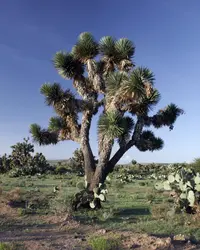
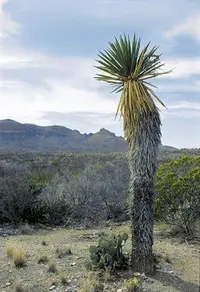
Palm yucca (Yucca decipiens) is a slow-growing, architectural succulent shrub or small tree with stout, upright trunks and dense crowns of narrow, rigid leaves. Its foliage forms a rounded, spiky head, often branching with age, which gives it a striking structural presence in landscapes and large containers.
This species is native to arid and semi-arid regions of central Mexico, where it grows on rocky slopes and open scrub. It is adapted to strong sun, lean, fast-draining soils, and long dry periods, which makes it relatively low-maintenance in similar conditions.
These drought-tolerant traits mean that those who care for palm yucca usually find it forgiving as long as it is not overwatered and receives ample light.

Care Difficulty
Easy Care

Light Preference
Full Sun

Water Requirements
Low Water

Temperature Preference
Warm Climate

Hardiness Zone
8–11

Soil Texture
Sandy, Loamy, Rocky

Soil pH
Slightly acidic (6.5–7.0), Slightly alkaline (7.0–7.5)

Soil Drainage
Well-drained

Fertilization
Minimal (feed rarely)
Scan your plant to receive care tips personalized for your specific plant
Available on iOS and Android
This high-desert species thrives in strong light but benefits from gradual exposure in hot climates.
This drought-adapted shrub prefers infrequent, deep watering and fast-draining soil.
This species tolerates significant temperature swings but has limits to both frost and extreme heat.
Humidity is rarely critical for Yucca decipiens, which is adapted to dry air.
Yucca decipiens prefers very fast-draining, mineral soil that mimics arid, rocky habitats.
This species adapts well to container growing when the pot is chosen for drainage and stability.
Yucca decipiens grows slowly and needs only light, occasional feeding in cultivation.
Yucca decipiens benefits from light, targeted pruning to maintain a clean, safe structure.
Container-grown Yucca decipiens or young landscape plants appreciate infrequent but careful repotting or transplanting.
Yucca decipiens is most commonly propagated from offsets and stem cuttings rather than seeds for home growers.
Mature Yucca decipiens is fairly cold hardy but young or potted plants can need some winter attention in colder regions.

Plant Health Check
Not sure what's wrong with your plant? Check your plant's health inside the app.
This species occurs naturally in highland regions of central Mexico, particularly in the states of Hidalgo and Querétaro, where it grows on rocky slopes and semi-arid scrublands.
Mature plants form stout, tree-like trunks that can branch repeatedly, creating candelabra-shaped crowns that distinguish it from many smaller, single-stemmed yucca relatives.
The long, narrow leaves have tough internal fibers and persistent dead leaf skirts, features that protect the stem from temperature extremes and reduce water loss in its dry native habitat.

Yucca decipiens is considered one of the tallest arborescent yuccas, with old specimens forming multi-branched tree structures that can visually dominate the semi-desert landscapes where they occur.
Brown leaf tips usually come from underwatering, very low humidity, or fertilizer salts building up in the soil. Entire brown leaves often indicate root rot or cold damage. Remove dead foliage and adjust watering before considering repotting.
Keep your plants happy and healthy with plant identification, disease detection, and easy care guidance.

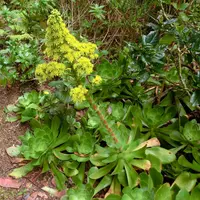
Tenerife Aeonium
Aeonium cuneatum
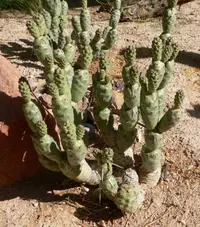
Pine Cone Cactus
Tephrocactus articulatus
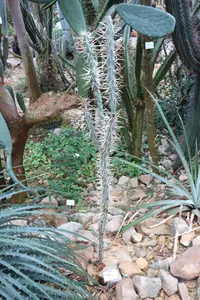
Long-spine Cholla
Cylindropuntia molesta
Bird's Nest Snake Plant
Dracaena trifasciata 'Golden Hahnii'
sticky fagonbush
Zygophyllum pachyacanthum
coastal stonecrop
Lenophyllum texanum
Aeonium castello-paivae
Aeonium castello-paivae
giant Spanish-dagger
Yucca carnerosana