Texas sacahuista Care (Nolina texana)

Also known as: sacahuista, Beargrass
Texas sacahuista

About Texas sacahuista

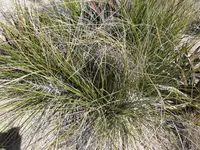
Texas sacahuista, Nolina texana, is a tough, grass-like desert plant forming dense clumps of narrow, arching leaves. It has a shrubby, fountain-shaped habit that adds strong texture to dry landscapes.

This species is native to rocky slopes and arid regions of Texas and northern Mexico, where it tolerates heat, wind, and poor soils. Its fiber-rich leaves and deep root system make it highly drought resistant and long lived.

Nolina texana suits low-maintenance, water-wise gardens and restoration projects, especially in hot, dry climates. It generally prefers full sun, well-drained soil, and infrequent watering, which guides how to care for Texas sacahuista.

Main Plant Requirements

Care Difficulty

Easy Care

Light Preference

Full Sun

Water Requirements

Low Water

Temperature Preference

Cold Hardy

Hardiness Zone

7–10

Soil Texture

Sandy, Loamy, Rocky

Soil pH

Slightly acidic (6.5–7.0), Slightly alkaline (7.0–7.5)

Soil Drainage

Well-drained

Fertilization

Minimal (feed rarely)

Get Personalized Care Plan

Scan your plant to receive care tips personalized for your specific plant

Available on iOS and Android

How to Care for the Texas sacahuista

This sun-loving desert shrub performs best in open, bright conditions with long daily exposure.

  • Provide 6–10 hours of direct sun, with full sun ideal; Texas sacahuista also tolerates light afternoon shade in very hot regions.
  • In partial shade (3–5 hours direct sun), expect slower growth and looser form, but foliage usually remains healthy and green.
  • In summer, monitor for leaf tips scorching in reflected or radiant heat from walls or pavement; in winter, ensure it is not shaded by buildings or trees all day.

This species is highly drought-tolerant and prefers infrequent, deep watering once established.

  • Outdoors in the ground, allow soil to dry completely between waterings; check that the top 5–10 cm feel dry and the planting area is not spongy or cool for long periods.
  • Use sharply draining, gritty or sandy soil so excess water moves away quickly; avoid low spots where water pools after rain to prevent root rot in Nolina texana.
  • During hot, dry spells, watch for limp or inward-curling leaves as a cue to water; yellowing, mushy bases or a sour smell signal chronic overwatering.

This hardy desert plant tolerates a wide temperature range but grows best in warm, dry climates.

  • Optimal growth occurs around 70–90°F (21–32°C), typical of hot, dry seasons in its native range, provided soil drainage is very fast.
  • Mature plants usually survive down to about 10–15°F (-12 to -9°C) when kept dry; young or newly planted specimens are less cold-hardy and benefit from protection.
  • It handles extreme summer heat above 100°F (38°C) if roots are established and soil is not waterlogged, but extended freezing rain or ice can damage leaf tips and crowns.

This species is highly tolerant of dry air and humidity is rarely a concern for Texas sacahuista.

Nolina texana prefers very lean, mineral soils that mimic arid, rocky habitats.

  • Use a sharply draining mix such as 50–70% coarse sand or grit blended with a low-organic cactus or succulent mix.
  • Keep soil structure open and airy; avoid heavy peat-based products that hold water and collapse over time.
  • Aim for slightly alkaline to neutral pH, roughly 7.0–8.0, using crushed granite or limestone chips if needed.
  • Avoid rich, constantly moist substrates, which promote root rot and weak, floppy growth.

This species can grow successfully in containers when planted in a very free-draining setup.

  • Choose a wide, heavy container to counterbalance the top-heavy rosette and prevent tipping in strong winds.
  • Raise the pot slightly on feet or bricks so drainage holes clear surfaces and water runs off quickly after irrigation.
  • Select unglazed clay or similar porous material to let the mix dry faster between waterings and prevent chronic moisture.

This drought-adapted species needs minimal feeding, but light nutrition supports steady growth in containers or poor soil.

  • Use a balanced NPK granular or slow-release fertilizer, or a thin layer of compost, for potted or newly established Texas sacahuista.
  • Feed once at the start of spring and again in midsummer during active growth, skipping very hot, drought-stressed periods.
  • Apply at 25–50% of the label rate for landscape plants, slightly higher for containers, and water in well after application.
  • Stop fertilizing in fall and winter to avoid pushing soft, cold-sensitive growth during dormancy.

Nolina texana needs only light, periodic pruning to stay tidy and healthy.

  • Best time is late winter or early spring before new growth starts, with a secondary light cleanup in late summer if needed.
  • Remove dead, dried, or damaged leaves at the base, cutting close to the stem without nicking living tissue.
  • Thin out badly crowded or crossing leaves to maintain an open rosette shape and good air movement.
  • Use clean, sharp hand pruners and disinfect blades between plants to limit disease spread.

This species is most often grown in open ground, where it dislikes frequent disturbance but tolerates occasional transplanting.

  • Transplant in late winter or early spring when temperatures are mild and soil is workable.
  • Look for slow growth, roots circling the container, or the plant becoming top-heavy as signs a potted specimen needs a larger pot.
  • In containers, move up 1 pot size every 3–5 years, using a very well-drained, gritty mix to protect the root system.
  • Minimize root stress by watering a day before moving, handling the root ball gently, replanting at the same depth, and shading lightly for 1–2 weeks.

Propagation of this species is possible but not fast, so it is usually done on a small scale for landscape use.

  • Seed propagation is the most common method; sow fresh seed in spring in a gritty, well-drained mix.
  • Keep the seed tray at 68–75°F with bright, indirect light and slightly moist, not wet, substrate for several weeks.
  • Some plants form offsets; these can be divided in spring, ensuring each division has roots and a firm growing point.
  • Allow cut surfaces on divisions to dry briefly, then plant in well-drained soil and water sparingly until established.

Mature plants are notably cold hardy and usually need little specific winter care in most temperate, low-rainfall regions.

  • Established plants tolerate light to moderate frost once rooted in well-drained soil.
  • In colder areas, apply a 5–8 cm layer of dry mulch around, but not against, the crown to buffer root temperatures.
  • Container plants in regions below about 10°F benefit from moving to an unheated, bright shelter with soil kept barely moist.

Care Tips

Encourage deep rooting

Water less often but for a longer duration during establishment so moisture penetrates 20–30 cm deep, which trains the plant to form a drought-resilient root system rather than staying shallow near the surface.

Control weed competition

Keep a 30–45 cm weed-free ring around the plant using coarse gravel or rock mulch so grasses and broadleaf weeds do not compete for limited water and nutrients in arid or semi-arid plantings.

Protect crown from debris

Periodically remove fallen leaves, blown soil, and organic debris from the center of the rosette so the crown stays dry and open, which helps prevent rot and insect harborage.

Plan for mature size

Space plants at least 60–90 cm from paths, driveways, and other plants, because the stiff, linear leaves can become a tripping or scratching hazard once the clump reaches full width.

Monitor for mechanical damage

In high-traffic or utility areas, mark planting spots clearly and avoid string trimmer or mower contact with the leaf bases, since repeated mechanical injury can weaken the plant and invite rot; this is especially important when growing Texas sacahuista in public or shared landscapes.

Common Pests and Diseases

Scale insects

This pest feeds on leaf bases and along older foliage, drawing sap and weakening clumps over time. Symptoms include sticky residue, sooty mold growth, and small bump-like shells on leaves and stems.

Solution

Remove heavily infested leaves and physically scrape or wipe off visible scale with a cotton pad dipped in 70% isopropyl alcohol, then rinse the plant thoroughly. For larger clumps, use a horticultural oil or insecticidal soap spray directed into leaf bases, repeating every 7–10 days until new growth appears clean.

Mealybugs

These insects hide in the tight leaf rosettes and at the crown, sucking plant juices and causing yellowing or distorted new leaves. Symptoms include cotton-like tufts deep between leaves and sticky honeydew around the plant base.

Solution

Dislodge mealybugs with a strong stream of water aimed into the rosette and crown, then spot-treat remaining clusters with alcohol on a cotton swab. For ongoing Nolina texana care in containers, use an insecticidal soap or systemic insecticide labeled for ornamental succulents, checking leaf bases regularly until no new pests appear.

Leaf spot

This disease causes tan to dark-brown spots or streaks, often starting at leaf tips or along the edges where moisture lingers. Symptoms include slow-spreading lesions and, in severe cases, premature browning and shredding of the leaf tips.

Solution

Trim off and discard affected leaf sections, cutting into healthy tissue with sterilized tools. Improve air movement, avoid wetting foliage, and if spotting continues, apply a copper-based or other labeled ornamental fungicide, ensuring thorough coverage of both sides of the leaves.

Crown rot

This disease develops when water sits persistently in the leaf rosette or soil stays saturated, leading to a soft, foul-smelling crown and collapsing outer leaves. Symptoms include a mushy base, easy leaf pull-out, and rapid decline of the entire clump.

Solution

Remove and discard any plants with a severely soft or rotted crown, as recovery is rare. For remaining plants, improve drainage, reduce watering frequency, keep irrigation off the crown, and plant or repot so the crown sits slightly above soil level, using a very gravelly, fast-draining mix.

Agave snout weevil

This pest occasionally attacks related desert rosette plants, boring into the base and causing sudden collapse of the foliage. Symptoms include yellowing, wilting, and a hollow or rotting crown filled with larvae and frass (insect waste).

Solution

Remove and destroy any infested plants and surrounding plant debris to reduce the local population. As a preventive step in regions where this weevil is common, keep plants vigorous but not overfertilized, avoid wounding the crown, and consider using a soil-applied systemic insecticide labeled for weevils on high-value landscape specimens if past infestations occurred nearby.

Interesting Facts

Specialist limestone dweller

This species is strongly associated with thin, rocky limestone soils on the Edwards Plateau and nearby regions in Texas, where it helps stabilize very shallow, erosion-prone slopes.

Fire and drought resilient

The plant forms a dense, fibrous root and basal crown system that allows it to resprout after fire and survive prolonged drought typical of semi-arid Texas grasslands.

Wildlife-friendly structure

Its stiff, arching leaves and tufted habit create low cover for small reptiles and invertebrates, and the tall flowering stalks offer structure within open grassland and savanna habitats.

Botan icon

Did you know?

Some botanists consider Nolina texana part of a species complex that closely resembles and potentially intergrades with other Nolina taxa in Texas and northern Mexico, which has led to ongoing taxonomic discussion about how narrowly or broadly to define this species.

FAQs about Texas sacahuista

Brown tips usually result from prolonged drought, reflected heat, or salt buildup from hard water. Deep, infrequent watering, flushing the soil occasionally, and providing a light mulch ring help reduce further tip burn and stress.

Grow Healthy Plants with Botan Care

Keep your plants happy and healthy with plant identification, disease detection, and easy care guidance.

Botan plant care app — identify plants on mobile

Explore More Plants