Uitenhage aloe Care (Aloe africana)

Also known as: African aloe
Uitenhage aloe

About Uitenhage aloe

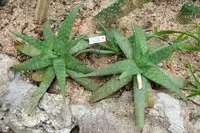
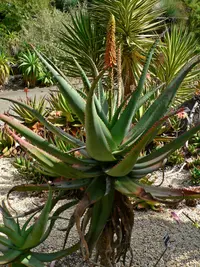
Uitenhage aloe, Aloe africana, is a large, architectural succulent from South Africa’s Eastern and Western Cape regions. It usually forms a single stem topped with a rosette of long, curved, spined leaves.

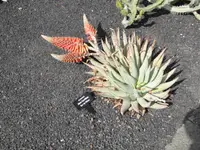
Mature plants produce tall, upright flower spikes with dense clusters of orange to yellow tubular blooms that attract birds and pollinators in mild climates. In suitable conditions it often develops a tree-like shape.

This species is sun-loving, drought-tolerant, and adapted to rocky, fast-draining soils, which makes it relatively straightforward for gardeners who can provide dry, bright conditions. Understanding how to care for Uitenhage aloe mainly involves avoiding excess water and prolonged frost exposure.

Main Plant Requirements

Care Difficulty

Easy Care

Light Preference

Full Sun

Water Requirements

Low Water

Temperature Preference

Tropical / Frost Sensitive

Hardiness Zone

9–11

Soil Texture

Sandy, Loamy, Rocky

Soil pH

Slightly acidic (6.5–7.0), Neutral (7.0)

Soil Drainage

Well-drained

Fertilization

Minimal (feed rarely)

Get Personalized Care Plan

Scan your plant to receive care tips personalized for your specific plant

Available on iOS and Android

How to Care for the Uitenhage aloe

This sun-loving South African aloe thrives in bright, open positions with plenty of direct light.

  • Provide 6–8 hours of direct sun daily; morning sun plus light afternoon exposure suits most climates, while intense late-afternoon summer sun may scorch leaves in very hot regions.
  • Tolerates light or partial shade for a few hours, but prolonged shade causes stretching, weak stems, and dull, olive-green foliage in Uitenhage aloe.
  • In cooler seasons, maximize sun by avoiding shade from buildings or trees; in hot inland areas, use light afternoon shade or filtered sun in midsummer to limit leaf burn.

This drought-tolerant aloe is adapted to infrequent, deep watering and fast-draining soil.

  • Allow the top 5–8 cm of soil to dry fully before watering; in the ground this often means waiting until the soil feels dry and loose rather than cool or sticky.
  • During active growth in warmer months, water thoroughly but infrequently, letting excess drain away; in cooler seasons, reduce frequency sharply to prevent root rot in Aloe africana.
  • Watch for soft, yellowing, or translucent lower leaves as signs of overwatering, and thin, curling, or crisp leaf tips as signs of prolonged dryness or very long gaps between soakings.

This species prefers warm, dry conditions and is sensitive to hard frost and prolonged cold.

  • Optimal growth occurs around 65–80°F (18–27°C), with good tolerance of dry air and typical warm-summer conditions in arid or coastal climates.
  • Short dips to about 30–32°F (-1–0°C) may be survived by established plants if soil is dry, but repeated frost or freezing, especially with wet soil, can damage or kill leaf tissue.
  • In hot weather above 95°F (35°C), growth may slow; provide airflow and avoid reflected heat from walls or paving to reduce leaf stress and prevent sun scorch.

Humidity is rarely critical for Aloe africana, which thrives in dry air typical of heated or air-conditioned homes.

  • Keep humidity around 30–50%, as higher levels combined with cool temperatures increase rot risk.
  • Dry indoor air is usually tolerated; stress appears as soft, pale, waterlogged leaves rather than crisp tips.
  • If air is very humid, increase air movement with a fan and space Uitenhage aloe away from crowded plants to reduce moisture around leaves.

Aloe africana prefers a very fast-draining, mineral-rich soil that mimics arid, sandy habitats.

  • Use a gritty mix such as 50–70% mineral components (pumice, coarse sand, perlite) blended with 30–50% cactus potting mix.
  • Aim for slightly acidic to neutral pH around 6.0–7.0, avoiding strongly acidic or alkaline substrates that reduce nutrient availability.
  • Improve aeration by ensuring visible coarse particles in the mix and avoiding any peat-heavy or compacted potting soil.
  • Avoid water-retentive additives like clay or fine compost, which hold moisture around the roots and promote fungal rot.

This species is suitable for container growing when the pot is chosen to manage its height and heavy rosette.

  • Choose a wide, heavy container to counterbalance the tall, top-heavy leaf rosette and prevent tipping in wind.
  • Select a pot just 5–8 cm wider than the root ball so the mix dries predictably instead of staying wet in unused soil volume.
  • Use unglazed clay if possible, as its porous walls speed evaporation from the mix and reduce the risk of persistent root moisture for growing Uitenhage aloe.

Aloe africana benefits from light, controlled feeding but tolerates lean, sandy soils well.

  • Use a balanced liquid fertilizer (around 10-10-10 or 20-20-20) diluted to 25–50% strength for container plants.
  • Feed every 4–6 weeks during active growth in spring and summer; avoid enriching in very hot, dry spells.
  • Apply slow-release granules or a thin layer of compost to outdoor plants in spring, keeping fertilizer off the stem.
  • Stop feeding in fall and winter when growth slows; this matches natural conditions for caring for Uitenhage aloe.

Pruning needs for Aloe africana are minimal and focus on hygiene and safety.

  • Best time is late winter to early spring, before strong new growth begins.
  • Remove dead, yellowing, or damaged leaves at the base with clean, sharp pruners to limit rot entry points.
  • Cut back spent flower stalks near their base once they dry, which keeps the plant tidy and may direct energy to new growth.
  • Thin out severely crowded or crossing leaves on container plants only if needed to improve airflow and reduce mechanical damage.

Aloe africana is usually landscape-grown, but container plants sometimes need careful repotting or transplanting.

  • Look for roots circling the pot, bulging container sides, or slowed growth as signs it needs more space.
  • Plan repotting or transplanting for late winter to early spring, before the main growth flush and heat of summer.
  • Move up only 1 pot size, using a very free-draining cactus or succulent mix to limit waterlogging and root rot risk.
  • Support the root ball, handle the stem gently, backfill lightly, then keep soil just barely moist for 1–2 weeks to reduce transplant stress.

Aloe africana is most reliably propagated from offsets, with seeds used mainly for larger-scale or specialist growing.

  • Separate basal offsets in late spring or early summer once they have several leaves and a firm root base.
  • Allow cut or broken surfaces to dry and callus for 2–5 days in shade before potting into a gritty succulent mix.
  • Keep newly potted offsets in bright, indirect light with very light, infrequent watering until strong new roots form.
  • Sow fresh seed in a sterile, sandy mix kept lightly moist and warm (70–80°F), with bright but filtered light for steady germination.

Aloe africana is not fully frost hardy and needs thoughtful winter management in cooler regions.

  • In-ground plants cope best in mild climates where temperatures rarely drop below 25–28°F and soil drains well.
  • Mulch lightly with coarse gravel or stones around the root zone to improve drainage rather than retain moisture.
  • Wrap or shield tall stems from hard frost using frost cloth on forecast freezing nights in marginal climates.
  • Move container plants indoors or to a bright, cool, frost-free spot and keep soil almost dry until temperatures rise.

Care Tips

Slope The Plant

When planting in the ground or a large container, set the root ball on a slight slope so excess water runs away from the crown and reduces the risk of rot in heavy seasonal rains.

Wind-Hardening Outdoors

In windy coastal or exposed sites, gradually increase wind exposure over 2–3 weeks to strengthen the leaves and prevent tearing, using temporary windbreaks like mesh or fencing if needed.

Use Mineral Mulch

Apply a 2–5 cm top layer of coarse gravel or small rocks around the base to keep the crown dry, limit weed competition, and reflect light back onto lower leaves.

Pup Management

If offsets crowd the base, remove some with a clean, sharp knife and replant them, which helps keep the main rosette well-ventilated and maintains a strong architectural shape when you grow Aloe africana.

Stabilize Tall Stems

For older plants with tall, leaning stems in containers, anchor the root zone with extra gravel and discretely stake the stem on the leeward side to prevent tipping during storms or when moving the pot.

Common Pests and Diseases

Aloe mite

This pest causes abnormal, warty or horn-like growths on leaves and inflorescences, often starting at the base or leaf margins. Symptoms include distorted tissue, rough corky patches, and clustered swelling that does not rub off.

Solution

Remove and discard all affected leaves or rosettes well below the damaged tissue, using sterilized tools, and do not compost the waste. Isolate the plant, improve spacing and air movement, and treat remaining healthy tissue and nearby aloes with a targeted miticide labeled for eriophyid mites, repeating as directed to prevent reinfestation.

Aloe rust

This disease produces small yellow spots on leaves that turn into dark brown to black pustules, often surrounded by a yellow halo. Symptoms include scattered lesions that can merge and weaken the plant if moisture remains on leaves for long periods.

Solution

Cut off and dispose of heavily spotted leaves, avoid overhead watering, and keep foliage dry with good sun exposure and airflow. In humid regions or persistent cases, apply a sulfur or copper-based fungicide labeled for rust on ornamentals, following label directions and spacing aloes to reduce humidity around the foliage.

Aphids

These insects cluster on young flower stalks and tender leaf bases, feeding on sap and causing curling, distortion, and sticky honeydew that can attract sooty mold. This pest is often most noticeable when flower spikes develop on mature Aloe africana plants outdoors or in bright indoor positions.

Solution

Spray infested areas with a strong stream of water to knock off colonies, then treat remaining insects with insecticidal soap or a light horticultural oil applied to all leaf bases and flower stalks. Encourage or preserve natural predators such as lady beetles outdoors and avoid high nitrogen fertilization that encourages soft, aphid-prone growth.

Scale insects

These insects appear as small, hard, dome-shaped or oval bumps on leaves and stems, often along the lower leaf surfaces and near the base of the rosette. This pest weakens plants over time, causing dull, yellowing leaves and sticky honeydew deposits.

Solution

Gently scrape off individual scales with a cotton swab or soft brush dipped in isopropyl alcohol, then wash the plant with lukewarm water to remove residues. For heavier infestations, apply horticultural oil or insecticidal soap thoroughly to all leaf surfaces, repeat at 7–14 day intervals, and keep the plant in bright, dry conditions to support recovery while following general Aloe africana care instructions.

Interesting Facts

Winter-flowering nectar source

This species produces tall, torch-like spikes of orange tubular flowers in mid to late winter in its native South African range, providing an important nectar source for sunbirds during a season when few other plants bloom.

Coastal dune specialist

Aloe africana is naturally adapted to exposed coastal slopes and dunes in the Eastern and Western Cape, where it tolerates strong winds, salt-laden air, and sandy, nutrient-poor soils better than many other aloes.

Distinct upward-curving rosettes

Mature plants develop a single tall stem topped with a rosette whose long, narrow leaves curve upward and outward, creating a distinctly vase-shaped crown that differs from the more sprawling form of related tree aloes.

Botan icon

Did you know?

In its native habitat, Aloe africana often grows in dense stands on rocky coastal hillsides, and these grouped plants can act as natural firebreaks because their water-storing leaves and spacing can slow the spread of grass and shrub fires compared with surrounding dry vegetation.

FAQs about Uitenhage aloe

Lack of flowers usually comes from insufficient light, a plant that is still immature, or mild winter conditions. This species blooms best with strong sun, cool but frost-free winters, and no heavy feeding that promotes only foliage.

Grow Healthy Plants with Botan Care

Keep your plants happy and healthy with plant identification, disease detection, and easy care guidance.

Botan plant care app — identify plants on mobile

Explore More Plants