Encourage Compact Clumps
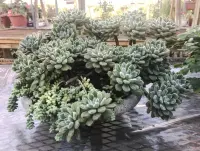
Rotate the pot a quarter turn every 2–3 weeks so all sides receive similar light, which keeps stems upright and the clump dense instead of leaning toward one direction.

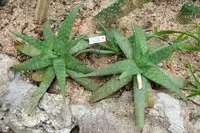
Aloe ellenbeckii is a small, clump-forming succulent from arid regions of East Africa. It grows with narrow, arching leaves arranged in rosettes on short stems. The leaves are usually green to bluish-green with fine teeth along the edges, giving the plant a slightly rugged look. Older clumps can form dense, fountain-like mounds. In suitable conditions it produces tubular flowers on tall stems, which attract pollinators outdoors. This species prefers bright, dry conditions and fast-draining, gritty soil. Its drought tolerance and slow growth make it manageable for containers, especially for those who want to care for Aloe ellenbeckii with minimal watering and attention.

Care Difficulty
Moderate Care

Light Preference
Full Sun

Water Requirements
Low Water

Temperature Preference
Tropical / Frost Sensitive

Hardiness Zone
10–11

Soil Texture
Sandy, Loamy, Rocky

Soil pH
Slightly acidic (6.5–7.0), Neutral (7.0)

Soil Drainage
Well-drained

Fertilization
Minimal (feed rarely)
Scan your plant to receive care tips personalized for your specific plant
Available on iOS and Android
This sun-loving succulent needs strong light to stay compact and well colored.
This species stores water in its leaves and prefers infrequent, thorough watering.
This aloe favors warm, dry conditions with strong seasonal resilience when kept above freezing.
This species prefers dry to moderately dry air and does not need extra humidity indoors.
Soil for Aloe ellenbeckii must drain very quickly to prevent root rot.
This aloe grows well in containers when drainage and pot proportions are carefully managed.
This drought-tolerant succulent needs only light feeding to stay healthy in containers.
This species needs minimal pruning, mainly for cleanliness and to keep rosettes well shaped.
Container-grown plants respond well to infrequent but timely repotting in a fast-draining mix.
Propagation is commonly done from offsets, with seeds used mainly by more advanced growers.
This plant is not frost hardy and needs protection in colder climates, especially in containers.

Plant Health Check
Not sure what's wrong with your plant? Check your plant's health inside the app.
This species is native to arid coastal regions of Somalia, where it grows on rocky slopes and limestone outcrops exposed to strong sun and wind, which helps explain its preference for bright, dry conditions in cultivation.
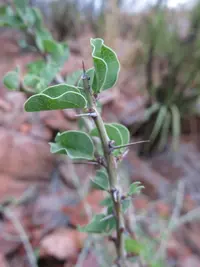
Unlike many compact aloes, it forms elongated, somewhat trailing stems with small, closely set leaves that can create a cascading effect over time when grown in containers.
Its narrow bluish to gray-green leaves bear small, evenly spaced marginal teeth that act as mechanical protection against herbivores in its natural habitat while remaining relatively gentle to the touch compared with more strongly armed aloes.
Brown leaf tips or patches usually result from underwatering, intense direct sun, or salt buildup from fertilizer. Check the root zone, adjust watering, flush the potting mix occasionally, and remove only completely dry, dead tissue.
Keep your plants happy and healthy with plant identification, disease detection, and easy care guidance.