Crystalline ice plant Care (Mesembryanthemum crystallinum)

Also known as: common iceplant, Crystal Icefig, Rosa De Jericho
Crystalline ice plant

About Crystalline ice plant

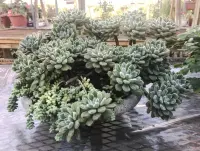
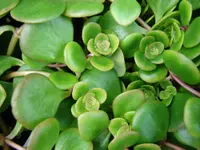
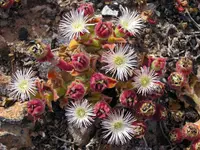
Crystalline ice plant (Mesembryanthemum crystallinum) is a low, spreading succulent grown for its sparkling, crystal-like leaf surface and bright, daisy-style flowers. It often forms dense mats, making it useful as a groundcover in warm, dry climates.

This species is native to coastal and arid regions of southern Africa and has naturalized in parts of the Mediterranean, Australia, and the western United States. Its fleshy leaves store water and tolerate salt and drought, which usually makes it easier to grow in tough, dry sites.

It prefers sunny positions, very well-drained soil, and light to moderate watering. Understanding these natural habits helps guide how to care for Crystalline ice plant in gardens or containers.

Main Plant Requirements

Care Difficulty

Easy Care

Light Preference

Full Sun

Water Requirements

Low Water

Temperature Preference

Tropical / Frost Sensitive

Hardiness Zone

9–11

Soil Texture

Sandy, Loamy, Rocky

Soil pH

Slightly acidic (6.5–7.0), Slightly alkaline (7.0–7.5)

Soil Drainage

Well-drained

Fertilization

Minimal (feed rarely)

Get Personalized Care Plan

Scan your plant to receive care tips personalized for your specific plant

Available on iOS and Android

How to Care for the Crystalline ice plant

This sun-loving succulent needs strong, direct light to develop compact growth and vivid leaf crystals.

  • Provide 6–8 hours of full sun daily; morning to mid-afternoon sun is ideal in cool to warm climates and promotes dense foliage.
  • In very hot regions, give Mesembryanthemum crystallinum light afternoon shade to reduce leaf scorch and bleaching, especially in mid-summer.
  • If stems stretch or leaves lose sparkle, light is too low; move to a more open, south- or west-facing exposure as days lengthen in spring.

This species is drought-tolerant and prefers infrequent, deep watering in sharply drained soil.

  • Allow the top 3–5 cm of soil to dry completely before watering; in hot, dry weather this may mean soaking less often but more thoroughly.
  • Use fast-draining, sandy or gritty soil so water runs through quickly; consistently wet or soggy conditions cause root rot and translucent, mushy leaves.
  • Reduce watering sharply in cooler seasons; shriveling and soft, wrinkled leaves suggest underwatering, while yellowing and collapse at the base point to overwatering.

This coastal succulent thrives in mild, frost-free conditions and tolerates substantial summer heat when soil drains well.

  • Aim for 60–80°F (16–27°C) for strong growth; it continues to grow slowly down to about 50°F (10°C) if soil stays relatively dry.
  • Protect from frost; damage often begins near 32°F (0°C), with severe injury or death below 28°F (-2°C), especially in wet or windy conditions.
  • In hot spells above 90°F (32°C), ensure excellent airflow and avoid reflected heat from walls; brief heat is tolerated if roots remain cool and not waterlogged.

This succulent tolerates very dry air and does not need extra humidity control.

  • Target 30–50% humidity, similar to typical indoor air in heated or air-conditioned homes.
  • Crystalline ice plant shows humidity stress mainly through soft, waterlogged leaves from overly damp, stagnant air rather than dryness.
  • Ensure strong air movement around foliage and avoid clustering plants tightly to limit prolonged leaf wetness and fungal problems.

This species prefers very lean, fast-draining, sandy soil that dries quickly between waterings.

  • Use a cactus or succulent mix amended with 30–50% coarse sand or fine gravel to mimic the naturally poor, mineral soil of Mesembryanthemum crystallinum.
  • Aim for a slightly alkaline to neutral pH around 7.0–8.0; avoid strongly acidic mixes rich in peat.
  • Improve aeration and drainage by adding pumice or perlite instead of water‑retentive materials like clay or heavy compost.
  • Avoid dense, loamy, or clay soils that hold water, as these promote root rot and weak, overly lush growth.

This species is very suitable for container growing due to its shallow roots and spreading habit.

  • Choose a wide, shallow pot to accommodate its mat-forming growth and prevent the center from staying wet longer than the edges.
  • Use unglazed terracotta when possible, as it allows faster evaporation and helps keep the root zone dry between irrigations.
  • Elevate the container slightly on pot feet or bricks so drainage holes never sit in collected water after rain or watering.

Mesembryanthemum crystallinum is adapted to poor, sandy soils and needs only light feeding in cultivation.

  • Use a low-dose balanced NPK fertilizer or very dilute liquid feed at 1⁄4 strength during peak growth in spring–summer.
  • Apply no more than every 4–6 weeks in containers; in-ground plants in reasonably fertile soil usually need no fertilizer.
  • Avoid rich compost or frequent feeding, which encourages weak, overly lush growth and reduces stress tolerance.
  • Stop fertilizing in late summer so growth can harden off before cooler weather and winter dormancy.

Mesembryanthemum crystallinum benefits from minimal, corrective pruning to keep the mat compact and tidy.

  • Best time is late spring to mid-summer, after flowering flushes have faded and growth is active.
  • Pinch or trim back spent flower stems and leggy shoots to maintain a low, even spread and encourage fresh side growth.
  • Remove any dead, damaged, or rotting sections with clean scissors to improve air flow and reduce fungal problems.
  • Avoid heavy cutting into older, woody tissue; focus on soft, current-season growth for quickest recovery.

This shallow-rooted annual or short-lived succulent rarely needs frequent repotting but appreciates careful transplanting when necessary.

  • Transplant seedlings or young Crystalline ice plant in spring once frost risk has passed and roots lightly fill starter cells or pots.
  • Move plants when roots circle the container or growth stalls, using a slightly wider, shallow pot with very free-draining gritty mix.
  • Handle the root ball gently, disturbing roots as little as possible; water lightly after moving to settle soil without waterlogging.
  • Acclimate outdoor transplants over 3–5 days to sun and wind to reduce transplant shock and leaf scorch.

Mesembryanthemum crystallinum is most commonly raised from seed, with simple requirements under warm, bright conditions.

  • Sow fresh seeds in late winter to spring in a shallow tray with sandy, free-draining mix, barely covering them.
  • Maintain 65–75°F, bright light, and lightly moist but not wet substrate for reliable germination.
  • After seedlings form several true leaves, transplant gently into individual pots or the final sunny site.
  • Short stem cuttings can root in dry, gritty mix in warm weather, but seed-based Mesembryanthemum crystallinum plant care is more predictable.

This species is usually grown as a warm-season annual and has low tolerance to freezing conditions.

  • Plants are damaged around 30–32°F and typically die with hard frosts, so treat outdoor stands as seasonal.
  • In mild climates, light sandy soils drain quickly; avoid winter waterlogging that can rot remaining roots.
  • For any container specimens, move under cover before frost and keep cool, bright, and almost dry.
  • Do not mulch heavily, since excess moisture retention around succulent tissues increases rot risk in cold periods.

Care Tips

Encourage Ground Cover

Space plants 20–30 cm apart and lightly pinch back the longest runners once established to promote dense, even coverage rather than a few long, sparse shoots.

Use Reflective Mulch

In very hot, bright sites, place light-colored gravel or small stones around the base to reflect light onto the foliage, improve drainage around the crown, and keep leaves cleaner and drier.

Salt-Tolerant Placement

Position plants where occasional salt exposure is likely, such as near coastal paths or areas with light splash from de-icing salt, since this species tolerates saline conditions better than many ornamentals.

Controlled Self-Seeding

If natural reseeding is desired, leave a few healthy plants to flower and set seed, then gently rake the soil surface in late summer to help seeds make contact with the soil while still limiting unwanted spread.

Monitor Leaf Succulence

Use leaf texture as a quick stress check when caring for Crystalline ice plant; firm, plump leaves indicate adequate water and light, while soft, wrinkled, or dull leaves suggest recent drought stress or root issues that need attention.

Common Pests and Diseases

Aphids

These insects feed on young, succulent growth and flower stalks, sucking sap and causing distortion and sticky honeydew on the foliage and stems.

Solution

Rinse colonies off with a firm stream of water and remove heavily infested shoots; if needed, apply an insecticidal soap or neem oil spray in the early morning, repeating every 5–7 days until populations are reduced, and encourage natural predators like lady beetles by avoiding broad-spectrum insecticides.

Mealybugs

These insects appear as small white cottony clusters in leaf axils and along stems, where they suck sap and can cause stunting and yellowing of the fleshy leaves.

Solution

Isolate affected plants, dab visible insects with cotton swabs dipped in 70% isopropyl alcohol, then follow with a thorough spray of insecticidal soap or neem oil, repeating weekly until no new mealybugs appear and avoiding overfertilizing, which encourages soft, attractive growth.

Spider mites

This pest thrives in hot, dry conditions and causes fine stippling, dulling, and eventual bronzing of the leaves, sometimes with very fine webbing between stems and foliage.

Solution

Increase humidity around the plant, wash foliage with a gentle but thorough spray of water to remove mites, and use insecticidal soap or horticultural oil on both leaf surfaces every 5–7 days for several cycles, while reducing dust and heat buildup around containers to improve Mesembryanthemum crystallinum plant care.

Powdery mildew

This disease causes white, powdery fungal growth on leaves and stems, which can reduce vigor and lead to premature leaf drop in dense, humid plantings.

Solution

Improve air circulation by thinning crowded plants and avoiding overhead watering late in the day, remove and discard affected leaves, and treat remaining foliage with a sulfur, potassium bicarbonate, or neem-based fungicide labeled for ornamental plants, applying at the first sign of infection.

Leaf spot

Symptoms include small water-soaked or brown lesions on leaves that can merge into larger blotches, especially under prolonged moisture or overhead irrigation.

Solution

Remove and dispose of affected leaves, water at soil level in the morning so foliage dries quickly, and if spots continue to spread, apply a copper-based fungicide according to label directions while monitoring irrigation frequency and avoiding constant wetting of the leaf surface.

Interesting Facts

Glittering bladder cells

The leaves and stems are covered with large, transparent epidermal bladder cells that look like beads of ice and store salt and water, giving the plant its crystalline appearance in strong light.

Switches photosynthesis mode

This species can switch from regular C3 photosynthesis to CAM photosynthesis under drought or high salinity, opening stomata mainly at night to reduce water loss while still fixing carbon efficiently.

Salt-tolerant soil colonizer

It thrives on saline and disturbed coastal soils, concentrating absorbed salts in its bladder cells and helping stabilize bare, salty ground where many other plants cannot survive.

Botan icon

Did you know?

Mesembryanthemum crystallinum is a model organism in stress physiology research, frequently used in laboratory studies to understand how plants tolerate high salinity, drought, and changing photosynthetic pathways at the genetic and biochemical levels.

FAQs about Crystalline ice plant

The leaves and young shoots are edible and mildly salty, often used raw in salads or lightly cooked. Always avoid plants exposed to roadside pollution or pesticides, and introduce only small amounts at first to check individual tolerance.

Grow Healthy Plants with Botan Care

Keep your plants happy and healthy with plant identification, disease detection, and easy care guidance.


Botan plant care app — identify plants on mobile

Explore More Plants