Heavier clay pot
Use a wide, heavy clay or terracotta pot to counterbalance the tall succulent pseudobulbs and prevent the plant from toppling in strong air movement or outdoors on a balcony.

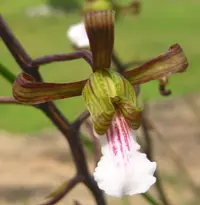
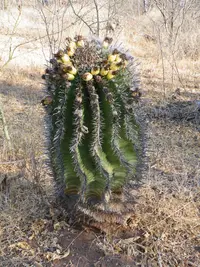
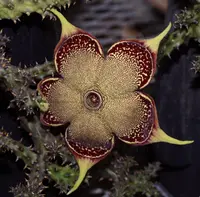
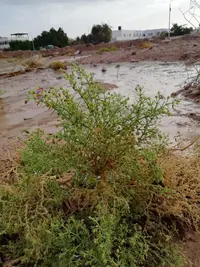
Eulophia petersii is a terrestrial orchid from arid regions of East Africa and the Arabian Peninsula. It grows from thick, succulent pseudobulbs that store water and resist drought. Leaves are often stiff, upright, and sometimes reduced, giving the plant a sculptural, almost aloe-like look. Flower spikes carry pale to greenish flowers with patterned lips, more showy up close than from a distance. This species prefers very bright light, excellent drainage, and careful watering, making it better suited to growers who already understand how to care for Eulophia petersii than to complete beginners.

Care Difficulty
Moderate Care

Light Preference
Full Sun

Water Requirements
Low Water

Temperature Preference
Tropical / Frost Sensitive

Hardiness Zone
10–12

Soil Texture
Sandy, Rocky, Loamy

Soil pH
Slightly acidic (6.5–7.0), Neutral (7.0)

Soil Drainage
Well-drained

Fertilization
Minimal (feed rarely)
Scan your plant to receive care tips personalized for your specific plant
Available on iOS and Android
This drought-adapted orchid prefers bright, intense light that mimics open, arid habitats.
This species stores water in thick pseudobulbs and needs careful, sparing watering.
This orchid thrives in warm, arid conditions but copes with a relatively wide temperature range.
This succulent orchid handles very dry air and rarely needs humidity adjustment indoors.
This species prefers a very open, mineral, fast-draining mix closer to a cactus substrate than a typical orchid potting blend.
This drought-tolerant orchid is well suited to container culture in dry or marginal climates.
This drought-tolerant orchid needs modest feeding to support flowering without pushing soft, weak growth.
Pruning needs are light and focus on hygiene and flower performance rather than shaping this naturally architectural orchid.
This succulent-like orchid prefers to stay slightly pot-bound and dislikes frequent disturbance of its thick roots.
Propagation is usually done by division of mature clumps rather than from seed, which is slow and specialist.
This species is not frost hardy and needs protection in climates with freezing temperatures or prolonged cold, especially in containers.

Plant Health Check
Not sure what's wrong with your plant? Check your plant's health inside the app.
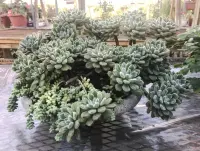
This orchid species often grows with strongly reduced or absent leaves and performs most of its photosynthesis through its thick, grey-green, succulent pseudobulbs and stems, which is unusual among orchids.
Its roots form a superficial, spreading network that quickly absorbs brief desert rains, while the waxy coating on its pseudobulbs helps reduce water loss between rain events.
The plant develops rigid, spine-tipped pseudobulbs that serve both as water-storage organs and as physical protection against herbivores in its arid native habitats of East and southern Africa.

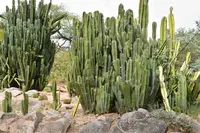
In its native range, this species is sometimes found growing among rocks or on exposed, sun-baked slopes where few other orchids can survive, making it one of the most xerophytic, or drought-adapted, orchids known to horticulture and a reference point for Eulophia petersii care instructions in extreme conditions.
This species performs best outdoors in warm, dry climates where it receives strong light and excellent air movement. Indoors it often grows more slowly and flowers less, so Eulophia petersii indoor care is more challenging long term.
Keep your plants happy and healthy with plant identification, disease detection, and easy care guidance.