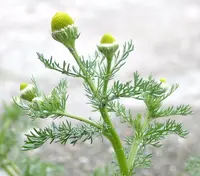
Encourage Bushy Habit
Pinch back soft shoot tips every 3–4 weeks during active growth to keep the plant compact, promote side branching, and increase the number of harvestable sprigs.

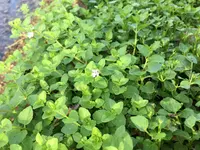
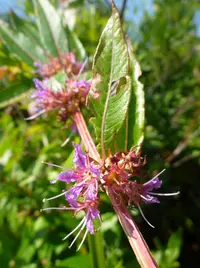
Browne's savory, Clinopodium brownei, is a low, spreading perennial herb in the mint family, often found in wet or seasonally flooded habitats. It typically forms loose mats of small, aromatic green leaves with delicate, tubular flowers that may attract pollinators.
In nature it occurs in the southeastern United States, the Caribbean, Mexico, Central America, and parts of South America, usually along ditches, stream banks, and marshy edges. Plants tend to be vigorous where moisture is consistent and temperatures are warm.
Its fast growth, tolerance of periodic flooding, and general resilience make it relatively easy for gardeners who can provide damp soil and good light. Anyone learning how to care for Browne's savory should focus on steady moisture, non-compacted soil, and protection from hard frost.

Care Difficulty
Moderate Care

Light Preference
Partial Shade

Water Requirements
Keep Soil Moist

Temperature Preference
Tropical / Frost Sensitive

Hardiness Zone
9–11

Soil Texture
Loamy, Silty, Organic-rich

Soil pH
Acidic (5.5–6.5), Slightly acidic (6.5–7.0)

Soil Drainage
Moist but well-drained

Fertilization
Minimal (feed rarely)
Scan your plant to receive care tips personalized for your specific plant
Available on iOS and Android
This sun-loving mint relative thrives with strong light but benefits from some daily shade in hot climates.
This species prefers consistently moist but not saturated soil, similar to conditions along wet ditches or streambanks.
This warm-climate perennial grows best with stable, mild temperatures and no frost exposure.
This species prefers moderate humidity and usually adapts to typical household levels.
This plant grows best in light, well‑drained, moderately fertile soil.
This species adapts well to container growing when root space and drainage are managed carefully.
This aromatic herb grows well in modest soils but benefits from light feeding in containers or poor ground.
Clinopodium brownei responds well to light, timely pruning that keeps plants compact and leafy.
This low herb is often grown in the ground but tolerates container culture with occasional repotting or division.
This species is straightforward to multiply and suits gardeners interested in growing Browne's savory for culinary or ornamental use.
This warm-climate herb lacks strong frost tolerance and needs attention in regions with cold winters.

Plant Health Check
Not sure what's wrong with your plant? Check your plant's health inside the app.
This species often forms dense, floating mats of hollow, creeping stems on the surface of slow-moving water and saturated soils, an adaptation that helps it spread quickly in wetlands and shallow ditches.
As a member of the mint family (Lamiaceae), it has aromatic foliage with a mild minty scent due to essential oils concentrated in tiny leaf glands.
Its small, tubular, pale-lilac to white flowers are shaped for easy access by small bees and other short-tongued pollinators, providing nectar in wet habitats where flowering diversity can be limited.
This species spreads by creeping stems and rooting nodes, forming low mats over time. In suitable climates it can edge into nearby spaces, but it is usually controlled easily by edging, trimming runners, or using physical barriers.
Keep your plants happy and healthy with plant identification, disease detection, and easy care guidance.