Anchor In Substrate
Plant small clumps into fine gravel or sandy sediment and lightly press them down so the roots anchor, which prevents the stems from floating up in moving or filtered water.

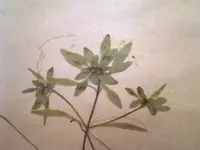
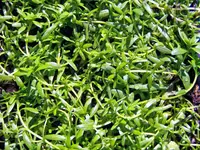
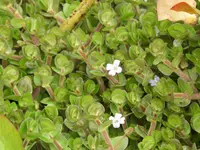
Intermediate water-starwort, Callitriche hamulata, is a small aquatic plant found in clean, cool streams, ponds, and slow-moving rivers. It often forms dense submerged or floating mats with fine, narrow leaves. This species is native to Europe but is also recorded in parts of North America, usually in unpolluted, well-oxygenated water. Its delicate stems and tiny star-like leaf clusters give it a soft, underwater carpet appearance. The plant is generally considered undemanding if water quality is good, but it can decline quickly in warm, stagnant, or polluted conditions. Understanding how to care for Intermediate Water-Starwort mainly involves maintaining stable, cool water and low nutrient levels rather than complex maintenance routines.

Care Difficulty
Moderate Care

Light Preference
Partial Sun

Water Requirements
Aquatic

Temperature Preference
Cool Climate

Hardiness Zone
5–8

Soil Texture
Sandy, Loamy, Silty

Soil pH
Acidic (5.5–6.5), Slightly acidic (6.5–7.0)

Soil Drainage
Waterlogged tolerant

Fertilization
Minimal (feed rarely)
Scan your plant to receive care tips personalized for your specific plant
Available on iOS and Android
This aquatic species prefers bright, gentle light and is naturally adapted to shallow, clear water.
This submerged or marginal plant requires consistently wet conditions rather than cyclical soil drying.
This species is a cool- to mild-water plant that tolerates a broad outdoor temperature range.
This aquatic species prefers constantly high moisture around foliage and water surface rather than specific air humidity control.
This species grows best in fine-textured, mineral-rich aquatic substrate rather than typical potting soil.
This plant is well suited to container culture in outdoor tubs, ponds, and indoor aquaria.
This aquatic species grows in nutrient-poor water and generally needs no additional fertilizer in naturalistic setups.
Pruning helps manage the spread and density of Callitriche hamulata in aquaria or managed ponds.
Transplanting is mainly done in aquatic or bog setups rather than traditional pots.
Propagation of this species is straightforward in aquatic conditions using vegetative spread.
In most temperate climates this aquatic plant is quite cold hardy and needs minimal winter care.

Plant Health Check
Not sure what's wrong with your plant? Check your plant's health inside the app.
This species produces tiny fruits with backward-curved hooks that help them cling to passing animals or debris, aiding dispersal along streams and rivers.
Among European water-starworts, it is particularly associated with cool, well-oxygenated, fast-flowing streams and rivers rather than still ponds or ditches.
Plants often show two leaf forms at once: narrow, submerged leaves in the current and broader, spoon-shaped leaves at the water surface, which helps botanists distinguish it from related species.
This aquatic species grows moderately fast under cool, clean, well-oxygenated water, often extending several centimeters per month. Growth slows in warm, stagnant, or nutrient-poor conditions. Stable water levels and gentle flow usually support steady spread along the substrate.
Keep your plants happy and healthy with plant identification, disease detection, and easy care guidance.