rough tree fern Care (Alsophila australis)

rough tree fern

About rough tree fern

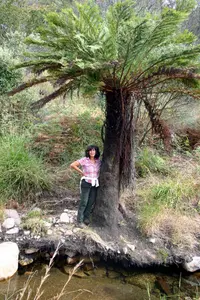
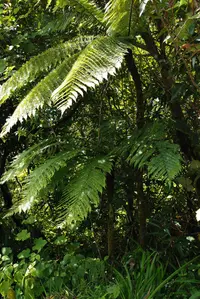
The rough tree fern, Alsophila australis, is an evergreen tree fern native to moist forests of eastern Australia. It forms a woody trunk topped with a symmetrical crown of large, arching fronds.

This species creates a strong vertical accent and a lush, tropical look, but it needs consistent moisture and protection from harsh sun and wind. Its slow to moderate growth and preference for cool, humid conditions can make it more challenging for beginners to care for rough tree fern, especially in dry or very hot climates.

It generally prefers dappled light, evenly moist but well-drained soil, and shelter from extreme temperature swings.

Main Plant Requirements

Care Difficulty

Hard Care

Light Preference

Partial Shade

Water Requirements

Keep Soil Moist

Temperature Preference

Warm Climate

Hardiness Zone

9–11

Soil Texture

Loamy, Peaty, Organic-rich

Soil pH

Acidic (5.5–6.5), Slightly acidic (6.5–7.0)

Soil Drainage

Moist but well-drained

Fertilization

Light (every 4–6 weeks)

Get Personalized Care Plan

Scan your plant to receive care tips personalized for your specific plant

Available on iOS and Android

How to Care for the rough tree fern

This fern prefers bright, gentle light similar to a forest understory.

  • Provide 2–4 hours of soft morning sun with bright, dappled or filtered light for the rest of the day to protect fronds of the rough tree fern from scorch.
  • Allow partial shade, especially in hot climates; avoid harsh midday and afternoon sun that causes bleaching, crisping edges, and pale, stunted fronds.
  • In summer, increase shade or use shade cloth during heatwaves; in winter, give more open sky exposure while still shielding from drying winds.

This species needs consistently moist but never waterlogged soil.

  • Water when the top 2–3 cm of soil or mulch feel just barely dry, aiming to keep the root zone evenly damp around Alsophila australis.
  • Use rich, well-drained soil with organic matter so excess water can drain while still holding moisture; avoid standing water around the trunk and crown.
  • In summer, expect faster drying and check moisture more often; in cooler months, reduce frequency, watching for limp, curling fronds (too dry) or blackening bases (too wet).

This fern thrives in mild, frost-free conditions.

  • Aim for 60–75°F (16–24°C) for best growth, with steady moisture and shelter from drying winds to protect the fronds and growing crown.
  • Tolerates brief drops to about 30°F (-1°C) if protected, but repeated or hard frosts can kill new fronds and damage the crown, so use frost cloth or mulch in cold snaps.
  • Handles short heat spells to about 90°F (32°C) if shade and humidity are high; above this, increase shade and watering, and avoid hot, reflective surfaces nearby.

This fern needs consistently moist air to maintain healthy fronds.

  • Aim for 60–80% humidity; it tolerates brief dips but reacts poorly to prolonged dry indoor air.
  • Crisping frond tips, stalled new fronds, and curling pinnae indicate humidity stress.
  • Use a large pebble tray, room humidifier, or grouped plants to raise humidity around rough tree fern rather than misting lightly.

This species prefers deep, loose, moisture-retentive but free-draining soil rich in organic matter.

  • Use a mix of roughly 50% composted bark or leaf mold, 30% peat-free compost, and 20% perlite or pumice to balance moisture and air spaces.
  • Aim for slightly acidic to neutral pH, around 5.5–7.0, which supports nutrient uptake and root health for Alsophila australis.
  • In heavy native soil, lighten structure by blending in coarse bark chips and grit to prevent waterlogging and compaction around the root base.
  • Avoid sticky clay, shallow compacted beds, or pure sand, which either suffocate roots or dry out too fast for steady growth.

This fern can be grown in large containers if the pot supports its tall, top-heavy growth.

  • Choose a deep, wide, and heavy container to anchor the developing trunk and reduce tipping in wind.
  • Select slightly porous materials like thick-walled terracotta or stone to stabilize moisture while preventing water stagnation.
  • Raise the container on feet or bricks so drainage holes stay clear and excess water escapes quickly during heavy rain.

Alsophila australis benefits from light, consistent nutrition during active growth but is sensitive to overfeeding.

  • Use a balanced NPK fertilizer at 1/4–1/2 strength or a mild slow-release fern formula in spring and summer.
  • Apply every 4–6 weeks during the growing season, on already moist soil to avoid root burn.
  • Reduce feeding to 1 light application in late autumn or stop entirely in winter dormancy.
  • For organic rough tree fern care instructions, use a thin top-dressing of well-rotted compost once each spring.

Pruning Alsophila australis focuses on removing old fronds while preserving the natural architectural form.

  • Best time is late winter to early spring, before strong new growth starts.
  • Cut completely brown, dead, or badly damaged fronds at the base using clean, sharp pruners.
  • Thin only severely crowded inner fronds to improve air flow, avoiding heavy removal in one season.
  • Minimal, careful pruning maintains a symmetrical canopy and prevents stress to the trunk and crown.

Alsophila australis is usually grown in the ground, so focus on careful transplanting rather than frequent repotting.

  • Transplant in early spring when soil is warming and the plant is just resuming growth.
  • Move only if necessary, such as poor site, waterlogging, or severe root crowding in a container.
  • Dig a wide root ball, keep roots shaded and moist, and replant at the same depth to limit shock.
  • Water thoroughly, apply a 5–8 cm mulch ring, and maintain even moisture for several months after transplanting.

Propagation of Alsophila australis is possible but slow and usually done by spores rather than division.

  • Collect mature brown spores from the underside of fronds in late summer.
  • Sow spores on sterile, fine, moist growing medium and keep covered in high humidity at 70–75°F.
  • Provide bright, indirect light and avoid direct sun to prevent drying of the thin gametophyte layer.
  • Maintain patience, as germination and development into transplantable young ferns can take many months.

Alsophila australis prefers mild, frost-free winters and needs protection in colder climates.

  • In regions below about 25–30°F, grow in containers and move indoors or to a cool greenhouse.
  • Mulch the root zone with 5–10 cm of bark or compost to insulate the crown and roots.
  • In marginal climates, wrap the trunk and crown with breathable frost cloth during hard freezes.

Care Tips

Secure Trunk Base

Stake young plants with 2–3 sturdy bamboo canes set just outside the root zone and tied loosely with soft ties, so the developing trunk stays upright and resists wind rock that can damage new roots.

Protect Crozier Tips

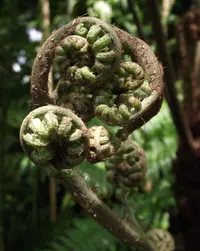
When new fronds (croziers) emerge, avoid handling or brushing past them and, in narrow paths, add a simple barrier or marker so the fragile unfurling tips are not snapped off by foot traffic.

Mulch To Feed Trunk

Maintain a 5–8 cm deep ring of fine, composted leaf litter around the base and regularly tuck a small amount into the fibrous trunk near old frond scars to mimic natural forest litter accumulation and provide slow nutrient release.

Winter Crown Shield

In colder regions, loosely pack dry fern litter or straw around the crown and secure it with breathable horticultural fleece during cold snaps to protect the growing point from frost without trapping excess moisture.

Frond Management Routine

Remove only dead, diseased, or completely exhausted fronds close to the trunk with clean, sharp tools and leave a skirt of healthy lower fronds where space allows, as this helps shade the trunk and stabilizes the plant when growing rough tree fern in exposed sites.

Common Pests and Diseases

Scale insects

This pest often settles along the fibrous trunk and frond midribs, feeding on sap and causing yellowing, weak fronds, and sticky honeydew. Symptoms include sooty mold growth on the honeydew in shaded, humid fern settings.

Solution

Physically remove encrusted adults by gently scraping with a soft brush or cloth, then wash fronds and trunk with a mild insecticidal soap solution, repeating every 7–10 days until new growth is clean. Improve air movement around the crown and avoid overfertilizing, which encourages soft, scale‑prone growth.

Fern aphids

These insects cluster on young croziers and soft frond tips, sucking sap and distorting new growth. Symptoms include curled or stunted fronds and shiny residue that can support sooty mold.

Solution

Rinse affected fronds thoroughly with a firm stream of water, focusing on the undersides and emerging fronds, then follow with insecticidal soap or a neem oil spray labeled for ferns if needed. Monitor flushes of new growth and repeat treatment at 5–7 day intervals until no aphids are visible.

Mealybugs

These insects hide in the fibrous trunk, frond bases, and underside of pinnae, appearing as white cottony clumps. This pest weakens the fern over time, leading to poor frond expansion and general decline, especially in sheltered, indoor or greenhouse conditions.

Solution

Dab visible clusters with cotton swabs dipped in isopropyl alcohol, then rinse the plant and apply an insecticidal soap or neem oil spray, ensuring coverage into crevices around the crown. Isolate affected plants, inspect regularly, and prune heavily infested fronds to reduce reservoirs of pests while maintaining stable, moderate humidity to avoid stressing the fern.

Crown rot

This disease affects the central growing point of the fern, often after prolonged waterlogging or poorly drained planting sites. Symptoms include browning and collapse of new croziers, soft or foul‑smelling tissue at the crown, and eventual loss of the canopy.

Solution

Immediately improve drainage, reduce watering, and keep excess water from sitting in the crown; in containers, ensure the mix is coarse and free‑draining. Carefully cut away soft, rotted tissue with sterile tools, dust the area with a fungicide labeled for crown rots if available, and avoid overhead irrigation that keeps the crown wet for long periods.

Leaf spot fungi

This disease produces brown or black spots on fronds, sometimes with yellow halos, that can coalesce and cause sections of the frond to die back. Symptoms include premature browning of older fronds, especially in humid, stagnant air or where water sits on leaves for long periods.

Solution

Remove and discard heavily spotted fronds to reduce spore sources, and increase air circulation by spacing plants and avoiding crowding around the trunk. Water at the base in the morning so fronds dry quickly, and in persistent cases use a broad‑spectrum fungicide labeled for ferns, applied according to label directions as part of broader rough tree fern care instructions.

Interesting Facts

Australian rainforest specialist

This species is naturally found in moist, sheltered gullies of eastern Australian rainforests, often forming dense stands that help create a cool, shaded understory microclimate for other shade-adapted plants.

Woody trunk fern

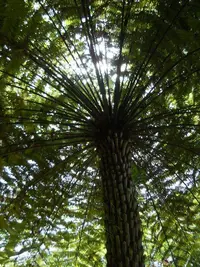
Unlike many ferns, it develops a single upright, woody trunk that can reach several meters in height, built from persistent leaf bases and roots that gradually form a fibrous cylinder strong enough to support a full crown of fronds.

Resprouting after disturbance

In parts of its native range, mature plants can resprout from the crown after damage to the fronds, allowing populations to persist in habitats that occasionally experience storms, falling branches, or light disturbance to the canopy.

FAQs about rough tree fern

Growth is moderate. In good outdoor conditions, it may add 10–30 cm of trunk per year. Young plants often focus on frond size first, then gradually form a visible trunk over several years.

Grow Healthy Plants with Botan Care

Keep your plants happy and healthy with plant identification, disease detection, and easy care guidance.

Botan plant care app — identify plants on mobile

Explore More Plants