Early trunk training
Stake young plants in windy sites for the first 2–3 years to keep the trunk growing straight and to prevent root rock that can slow establishment.

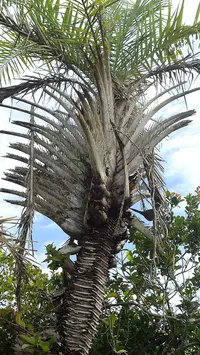
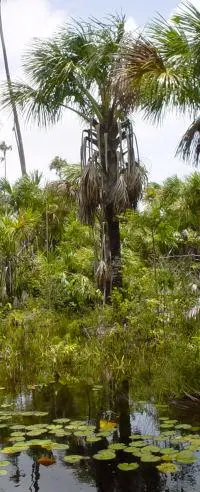
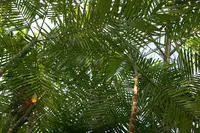
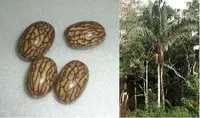
Ouricury palm, Syagrus coronata, is a single-stemmed palm known for its dense crown of arching, feathery fronds and a trunk often covered in old leaf bases. It forms a striking vertical accent and eventually reaches tree-like proportions in suitable climates.
This species is native to dry regions of northeastern Brazil, where it tolerates heat, wind, and periods of limited rainfall. Its natural toughness means it can adapt to warm, sunny gardens and is considered moderate in difficulty to grow.
Those learning how to care for Ouricury palm should note that it prefers bright light, well-drained soil, and steady but not excessive moisture once established.

Care Difficulty
Moderate Care

Light Preference
Full Sun

Water Requirements
Moderate Water

Temperature Preference
Warm Climate

Hardiness Zone
10–11

Soil Texture
Sandy, Loamy, Rocky

Soil pH
Acidic (5.5–6.5), Slightly acidic (6.5–7.0)

Soil Drainage
Well-drained

Fertilization
Minimal (feed rarely)
Scan your plant to receive care tips personalized for your specific plant
Available on iOS and Android
Syagrus coronata prefers bright, direct sun but adapts to some light variation once established.
Watering for this palm focuses on deep soaking followed by partial drying of the soil surface.
This palm thrives in consistently warm conditions with only brief exposure to cooler temperatures.
This palm tolerates a wide humidity range but prefers moderately humid air.
Syagrus coronata prefers sharply drained, sandy to loamy substrates that do not stay wet.
This species can be grown in containers, especially in its juvenile stages.
Syagrus coronata benefits from modest, consistent feeding during its warm growing season, especially in containers.
Pruning Syagrus coronata is mainly hygienic, keeping the crown tidy while preserving healthy fronds for photosynthesis.
Transplanting or shifting Syagrus coronata is infrequent and should be planned carefully to limit root disturbance.
New Syagrus coronata plants are produced almost exclusively from seed, which requires patience and warm, stable conditions.
Cold sensitivity means Syagrus coronata needs protection in climates with freezing winters, especially when young or container grown.

Plant Health Check
Not sure what's wrong with your plant? Check your plant's health inside the app.
This palm is naturally restricted to Brazil’s Caatinga and adjacent dry forests, where it endures long seasonal droughts and shallow, rocky soils that many other palms cannot tolerate.
Local communities traditionally extract strong fibers from the leaf bases to make ropes, brooms, and rustic crafts, reflecting a long history of practical use in Brazil’s semiarid countryside.
Its oily fruits are eaten by birds and mammals, which help disperse the seeds across the landscape and support regeneration of sparse dryland vegetation.

The popular name licuri is so culturally important in parts of northeastern Brazil that it appears in regional music, folklore, and festivals, where the palm’s fruits, leaves, and even its silhouette are used as symbols of the Caatinga landscape.
Growth is moderate. In warm outdoor climates, it commonly adds 15–30 cm of trunk per year once established. Reaching a noticeable landscape size can take 8–12 years, with full maturity often requiring several decades.
Keep your plants happy and healthy with plant identification, disease detection, and easy care guidance.