fishbone cactus Care (Disocactus anguliger)

fishbone cactus

About fishbone cactus

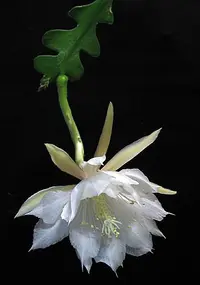
Disocactus anguliger, commonly called fishbone cactus or zig-zag cactus, is an epiphytic cactus native to the tropical forests of Mexico. It naturally grows on trees rather than in desert soil. The plant is known for its flattened, deeply lobed stems that resemble a fishbone pattern and can trail attractively from hanging containers. It usually has a relaxed, cascading growth habit and can produce large, fragrant, night-opening flowers under good conditions. Compared with many desert cacti, it prefers moderate light, slightly moist but airy soil, and good humidity. These traits make it relatively forgiving and suitable for indoor growers who want to learn how to care for fishbone cactus without complex routines.

Main Plant Requirements

Care Difficulty

Moderate Care

Light Preference

Bright Indirect Light

Water Requirements

Moderate Water

Temperature Preference

Tropical / Frost Sensitive

Hardiness Zone

11–12

Soil Texture

Sandy, Loamy, Organic-rich

Soil pH

Acidic (5.5–6.5), Slightly acidic (6.5–7.0)

Soil Drainage

Well-drained

Fertilization

Light (every 4–6 weeks)

Get Personalized Care Plan

Scan your plant to receive care tips personalized for your specific plant

Available on iOS and Android

How to Care for the fishbone cactus

This epiphytic cactus prefers bright, indirect light with brief gentle sun exposure.

  • Provide 6–8 hours of bright, filtered light daily, such as near an east-facing window or under light shade outdoors.
  • Morning sun with afternoon shade suits a fishbone cactus; strong midday or west sun can scorch the flattened stems, causing yellow or brown patches.
  • In winter, move the plant to the brightest spot available to compensate for shorter days, but still avoid direct harsh midday rays.

Watering should mimic a humid forest canopy, not a desert climate.

  • Allow the top 2–4 cm of soil to dry before watering, then water thoroughly so excess drains away; the root zone should not stay soggy.
  • Increase watering slightly in spring and summer when growth is active, and reduce frequency in fall and winter while still preventing the mix from drying rock hard.
  • Watch for wrinkles and limp stems as a sign of underwatering, and for blackened, mushy roots or a sour smell as signs of overwatering in Disocactus anguliger.

This cactus prefers mild, stable temperatures typical of warm, frost-free climates.

  • Aim for 65–80°F (18–27°C) as the main growing range, which supports steady leaf and root development without stress.
  • Protect the plant from cold below 50°F (10°C); short dips to 45°F (7°C) may be tolerated, but frost can damage or kill stems and roots.
  • In hot periods above 90°F (32°C), provide shade and good air movement to prevent overheating, especially around dark containers or sun-exposed walls.

This epiphytic cactus prefers moderate household humidity but benefits from slight increases in very dry homes.

  • Aim for 40–60% humidity, as very dry air can slow growth and cause shriveling along the leaf margins.
  • The fishbone cactus tolerates short periods at 30–35% humidity but may develop brown, crispy edges and limp segments if kept this dry long term.
  • Increase humidity locally with a pebble tray, nearby humidifier, or grouping plants, rather than misting heavily.

This cactus needs a fast-draining, airy mix that holds some moisture but never stays soggy.

  • Use a loose, chunky mix such as 50% cactus mix with 25% fine orchid bark and 25% perlite or pumice to mimic epiphytic conditions.
  • Ensure strong drainage so water flows through in seconds; the mix should feel light, not compact, when squeezed slightly damp.
  • Keep pH slightly acidic to neutral (pH 6.0–7.0), which supports nutrient uptake and prevents micronutrient lockout.
  • Avoid dense garden soil, high clay content, or heavy peat-only mixes that collapse, limit aeration, and promote root rot in Disocactus anguliger.

This species suits container growing very well, especially in hanging baskets or stable pots.

  • Choose a wide, shallow container that lets roots spread laterally and supports arching stems without crowding the crown area.
  • Select a pot material that matches your watering style, using terracotta to dry faster or plastic/ceramic to retain moisture a bit longer.
  • Stabilize trailing or top-heavy growth by using a heavier pot or adding weight at the base to prevent tipping when stems elongate.

Disocactus anguliger benefits from light, consistent feeding during its active growing season.

  • Use a balanced liquid cactus or houseplant fertilizer (around 10-10-10 or 20-20-20) diluted to 1/4–1/2 strength.
  • Feed every 4–6 weeks in spring and summer when the fishbone cactus is actively growing.
  • Stop or reduce feeding to 1 light application in fall and none in winter dormancy.
  • Organic options like dilute compost tea can replace synthetic products if the potting mix drains very well.

Disocactus anguliger responds well to light pruning to manage size and encourage branching.

  • Carry out pruning in late winter or early spring before strong new growth starts.
  • Remove dead, shriveled, or damaged stems first, then thin very crowded or tangled segments.
  • Shortening overly long stems promotes a fuller, more balanced hanging form and can improve light penetration.
  • Use clean, sharp scissors or pruning shears, disinfecting blades between plants to limit disease spread.

Fishbone cactus grows well in containers and needs only periodic repotting in fresh, airy mix.

  • Repot every 2–3 years or when roots circle the pot, drainage slows, or growth stalls.
  • Choose late winter to early spring so Disocactus anguliger can recover as growth resumes.
  • Step up only 2–5 cm in pot diameter, using a chunky cactus or orchid-style mix to keep roots aerated.
  • Gently loosen circling roots, remove old compacted soil, and water lightly after repotting to limit stress and rot risk.

This cactus is commonly propagated from stem cuttings, which root reliably in warm, bright conditions.

  • Take healthy, mature stem segments in late spring or early summer for best success.
  • Allow cut ends to callus for 2–3 days before planting to reduce rot risk.
  • Insert cuttings upright into a slightly moist, well-draining cactus or succulent mix.
  • Provide bright, indirect light, 70–80°F warmth, and minimal watering until firm roots form in a few weeks.

Disocactus anguliger is frost-sensitive and needs mild, dry winter conditions, especially in containers.

  • Keep plants above 50°F, ideally 55–65°F, as prolonged cold damages stems and roots.
  • Move outdoor containers indoors before frost, placing them in bright, indirect light.
  • Reduce watering significantly in winter so the potting mix dries almost completely between light waterings.
  • Avoid cold drafts and keep the plant away from single-pane windows where night temperatures drop sharply.

Care Tips

Support trailing stems

Install a sturdy hanging basket or wall-mounted support and gently drape or clip stems over the edge so the segmented growth can hang freely without creasing or breaking at the base.

Rotate for even form

Turn the pot 1/4 turn every 2–3 weeks so stems grow in a balanced way and do not stack on one side, which reduces the risk of the plant becoming lopsided and top-heavy.

Encourage branching

If long stems become bare near the base, lightly pinch or cut the tip just above a segment notch in spring or early summer to stimulate new side shoots and create a fuller plant.

Flowering rest period

After flowering, reduce fertilizing and keep conditions steady for 4–6 weeks to allow the plant to recover and set up energy reserves for the next bloom cycle instead of forcing constant growth.

Clean foliage maintenance

Periodically wipe segments with a damp, soft cloth or rinse gently in lukewarm water to remove dust, which helps prevent pests and allows more efficient photosynthesis when caring for fishbone cactus.

Common Pests and Diseases

Mealybugs

This pest feeds on the soft, segmented stems and hides in the notches of the fishbone-like lobes, often appearing as white cottony clumps. Symptoms include sticky honeydew, sooty mold growth, and slowed, distorted new growth.

Solution

Isolate the plant, then dab visible insects with cotton swabs dipped in 70% isopropyl alcohol and rinse the stems with a gentle shower of lukewarm water. For heavier infestations, repeat alcohol spot-treatments weekly and use a horticultural soap or neem oil spray, ensuring all stem grooves and areoles are covered while improving light and airflow to support recovery.

Soft scale

These insects attach firmly to stems and ribs, forming flat, brown or tan bumps that excrete honeydew. Symptoms include a sticky film on the plant or nearby surfaces, dark sooty mold, and gradual yellowing or weakening of segments.

Solution

Gently scrape or wipe off individual scales with a soft cloth or toothbrush, then wash stems with diluted horticultural soap. Repeat inspections weekly, treating any remaining insects, and keep nearby plants monitored, as scale often spreads between epiphytic cacti grown in close proximity.

Spider mites

These insects thrive in warm, dry indoor air and puncture the thin, flattened stems, causing fine speckling, dull color, and sometimes delicate webbing between lobes. Symptoms include a dusty appearance and segments that feel dry or rough to the touch.

Solution

Increase humidity around the plant, then rinse stems thoroughly under a soft stream of water to remove mites and webbing. Follow with repeated applications of insecticidal soap or neem oil on both sides of each segment every 5–7 days until no new damage appears, while avoiding very hot or very bright conditions immediately after spraying.

Stem rot

This disease often develops when the plant sits in a waterlogged, dense mix or stays cold and wet, leading to dark, mushy areas at the base or along segments. Symptoms include soft, collapsing tissue that may smell sour and can spread quickly along a stem section.

Solution

Remove the plant from its pot, cut away all affected tissue back to firm, healthy green, and discard the infected parts. Repot in a fresh, fast-draining cactus or epiphyte mix, water lightly after replanting, and maintain warm temperatures, bright filtered light, and a wet-dry watering cycle to stabilize the plant and prevent recurrence.

Edema

Symptoms include corky, blister-like spots or rough patches on the flattened stems, usually after sudden overwatering or a rapid shift from dry to very wet conditions. This physiological disorder reflects an imbalance between water uptake by roots and water loss through transpiration.

Solution

Allow the potting mix to dry more thoroughly between waterings and avoid large, sudden increases in watering volume. Provide bright, indirect light, moderate humidity, and a well-draining epiphytic cactus mix to keep future growth smooth, as existing scars will not disappear but new segments can develop with normal texture when following consistent fishbone cactus care instructions.

Interesting Facts

Epiphytic rainforest cactus

This species is native to humid oak and tropical forests of central and southern Mexico, where it grows as an epiphyte on tree trunks and branches rather than rooted in soil on the ground.

Night-blooming scented flowers

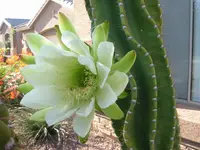
It produces large, creamy-white, funnel-shaped flowers that open at night and are strongly fragrant, an adaptation to attract nocturnal pollinators such as moths.

Flattened zigzag stems

Its photosynthetic organs are flattened, leaf-like stems with deep, alternating lobes, an adaptation that increases surface area for light capture in the shaded forest canopy.

Botan icon

Did you know?

In its native range this cactus often forms loose, hanging colonies high in the canopy, where fallen leaves and organic debris collect around its roots, creating a natural, mossy basket that supplies moisture and nutrients without typical soil.

FAQs about fishbone cactus

Flowering usually needs maturity, stable warm temperatures, and a short daylength period. Cool, slightly drier rest in late summer–fall can trigger buds. Avoid frequent moving once buds form, since changes in light or drafts may cause bud drop.

Grow Healthy Plants with Botan Care

Keep your plants happy and healthy with plant identification, disease detection, and easy care guidance.

Botan plant care app — identify plants on mobile

Explore More Plants