Rotate for symmetry
Turn the pot 90° every 2–3 weeks so all sides receive similar light, which helps keep the cascading stems evenly full and prevents bare, shaded sections over time.

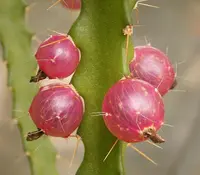
Pfeiffera ianthothele is an epiphytic cactus with thin, trailing stems and small spines, often grown in hanging containers for its cascading habit. It typically produces tubular flowers followed by small ornamental fruits, giving the plant a delicate yet structured look.
This species is native to higher-altitude forest regions of Bolivia and nearby areas, where it grows on trees and rocks rather than in open desert. Its epiphytic background makes it more tolerant of cooler temperatures and irregular moisture than many desert cacti.
Light, well-drained substrate and bright, indirect light generally suit this plant, and moderate watering helps avoid root problems. Understanding these traits makes it easier to care for Pfeiffera ianthothele in typical indoor conditions.

Care Difficulty
Moderate Care

Light Preference
Partial Shade

Water Requirements
Moderate Water

Temperature Preference
Tropical / Frost Sensitive

Hardiness Zone
11–12

Soil Texture
Sandy, Loamy, Organic-rich

Soil pH
Acidic (5.5–6.5), Slightly acidic (6.5–7.0)

Soil Drainage
Well-drained

Fertilization
Light (every 4–6 weeks)
Scan your plant to receive care tips personalized for your specific plant
Available on iOS and Android
This epiphytic cactus prefers bright, indirect light that mimics dappled forest conditions.
This species needs moisture balance similar to other epiphytic cacti, avoiding both soggy and bone-dry conditions.
This cactus prefers mild, stable temperatures without frost or extreme heat.
This epiphytic cactus handles typical indoor humidity but benefits from slightly moist air.
Use a very free-draining, airy mix that mimics an epiphytic cactus habitat for Pfeiffera ianthothele.
This species is well suited to container culture, especially hanging baskets or tall pots.
Feeding supports compact growth and flowering in Pfeiffera ianthothele grown in containers.
Light pruning keeps Pfeiffera ianthothele tidy and encourages branching and flowering.
Container-grown Pfeiffera ianthothele prefers slightly snug pots and does not need frequent repotting.
Stem cuttings are the most practical method for multiplying Pfeiffera ianthothele.
This epiphytic cactus is frost sensitive and needs protection in regions with cold winters.

Plant Health Check
Not sure what's wrong with your plant? Check your plant's health inside the app.
This species naturally grows on trees and rocks in Andean cloud forests of Bolivia and northern Argentina, anchoring to bark or stone instead of rooting in deep soil.
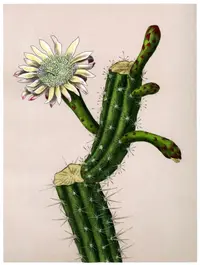
Its long, cylindrical stems form segmented, hanging chains that can branch repeatedly, creating dense curtains when mature.
Areoles on the stems carry short, often purplish bristles rather than large spines, a feature that helps distinguish it from many other epiphytic cacti.

In habitat, this species often grows in cool, humid, high-elevation environments that can experience significant temperature swings between day and night, an adaptation that makes Pfeiffera ianthothele indoor care quite different from that of typical desert cacti.
This species usually flowers from late winter into spring. It produces tubular pink to magenta blooms along the hanging stems. In good conditions, flowering is quite abundant, creating a dense display around the stem joints.
Keep your plants happy and healthy with plant identification, disease detection, and easy care guidance.