Stabilize Tall Stems
Install a slim, sturdy stake or discreet wall hook and loosely tie the columnar stems with soft ties in a figure‑8 loop to prevent wind snap or toppling as they gain height.

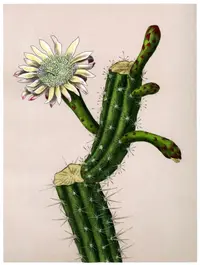
Praecereus euchlorus is a columnar cactus native to dry regions of South America. It typically forms tall, slender, many-ribbed stems with short spines along the ridges. Mature plants can branch and create an upright, architectural clump. At night it may produce large, pale flowers followed by decorative fruits, though flowering is less common indoors. This species is adapted to strong light, low rainfall, and very free-draining, mineral soils. Its drought tolerance and slow to moderate growth make it relatively straightforward for patient growers. Understanding how to care for Praecereus euchlorus mainly involves avoiding excess moisture and providing as much light as possible without scorching.

Care Difficulty
Easy Care

Light Preference
Full Sun

Water Requirements
Low Water

Temperature Preference
Tropical / Frost Sensitive

Hardiness Zone
10–12

Soil Texture
Sandy, Loamy, Rocky

Soil pH
Slightly acidic (6.5–7.0), Neutral (7.0)

Soil Drainage
Well-drained

Fertilization
Minimal (feed rarely)
Scan your plant to receive care tips personalized for your specific plant
Available on iOS and Android
This columnar cactus thrives in bright, open conditions that mimic high-desert sun exposure.
Watering should follow soil dryness and weather rather than a fixed calendar.
This species prefers warm, dry conditions and has limited tolerance for frost.
This cactus handles typical indoor humidity well and rarely needs special humidity management.
Praecereus euchlorus prefers a very fast-draining, mineral-rich cactus substrate that prevents waterlogging around the roots.
This species is well suited to container growing when the pot supports its tall, columnar form.
During active growth, Praecereus euchlorus responds well to light, consistent feeding in poor soils or containers.
Pruning is mainly corrective and hygienic for Praecereus euchlorus, rather than a frequent shaping task.
Container-grown Praecereus euchlorus benefits from infrequent but careful repotting to refresh soil and manage roots.
New plants of Praecereus euchlorus are most often produced from stem cuttings rather than from seed.
Winter care focuses on keeping Praecereus euchlorus cool, bright, and dry enough to avoid rot in cold conditions.

Plant Health Check
Not sure what's wrong with your plant? Check your plant's health inside the app.
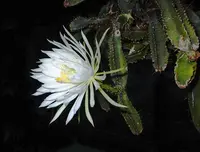
This cactus opens its tubular white flowers at night, releasing a strong fragrance that attracts nocturnal pollinators such as moths and possibly bats in its native South American range.
Unlike many tall, solitary columnar cacti, it often forms branched, shrub-like clumps with many upright stems, creating a dense, multi-stemmed structure over time.
Its stems show a characteristic bluish-green tone with 8–10 ribs, which helps reduce light absorption and heat load in intense sun, an adaptation that limits water loss in arid habitats.
Growth is usually moderate. Young plants may add 10–20 cm per year, sometimes more in warm, bright, dry climates. Container culture, cool temperatures, cramped roots, and low light all slow extension significantly compared with plants grown in the ground.
Keep your plants happy and healthy with plant identification, disease detection, and easy care guidance.