


Support Hanging Stems
Install a sturdy hanging basket or wall-mounted trellis and gently guide new stems over the edge or along supports so long segments do not kink, crease, or break under their own weight.

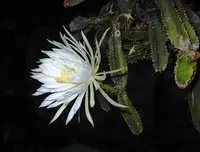
Dog-tail cactus, Deamia testudo, is an epiphytic cactus with long, trailing stems that resemble a flexible, spiny rope. It often hangs or climbs, making it suitable for baskets or tall containers.
In nature, it occurs in tropical forests of Central America, where it grows on trees or rocks rather than in open desert. This background explains its preference for bright, filtered light, airy soil, and light but regular moisture.
Its growth habit is vigorous under the right conditions, but it dislikes cold, heavy soil, and chronic overwatering. With a basic understanding of how to care for dog-tail cactus, most plant owners find it manageable over time.

Care Difficulty
Moderate Care

Light Preference
Partial Shade

Water Requirements
Moderate Water

Temperature Preference
Tropical / Frost Sensitive

Hardiness Zone
10–11

Soil Texture
Sandy, Loamy, Organic-rich

Soil pH
Acidic (5.5–6.5), Slightly acidic (6.5–7.0)

Soil Drainage
Well-drained

Fertilization
Light (every 4–6 weeks)
Scan your plant to receive care tips personalized for your specific plant
Available on iOS and Android
This climbing cactus prefers bright, indirect light that mimics dappled forest sun.
Watering for this epiphytic cactus should mimic brief, thorough rains followed by drying.
This species prefers warm, frost-free conditions with mild temperature swings.
This epiphytic cactus handles typical indoor humidity but prefers slightly drier air than most tropical houseplants.
Deamia testudo needs a fast-draining, airy mix that mimics a loose, rocky forest substrate.
This species is well suited to container growing, especially in hanging baskets or elevated pots.
Deamia testudo benefits from light, controlled feeding during its active growing season.
Pruning Deamia testudo is mainly done to manage length and remove unhealthy growth.
Container-grown Deamia testudo needs occasional repotting to maintain root health and support long trailing growth.
Deamia testudo is commonly propagated from stem cuttings under warm, bright, and dry-leaning conditions.
Deamia testudo is frost-sensitive and needs protection in regions with cold winters.

Plant Health Check
Not sure what's wrong with your plant? Check your plant's health inside the app.
This species naturally grows as a climbing or sprawling cactus in tropical forests of southern Mexico and Central America, using trees and rocks for support rather than standing upright on its own.
It produces large, fragrant, white to cream flowers that open at night and are adapted for pollination by nocturnal animals such as bats and moths.
Its long, flattened stems are divided into distinct ribbed segments with spines along the edges, an adaptation that helps reduce water loss while still allowing efficient photosynthesis in a humid but seasonally dry habitat.

Molecular studies have shown that this species was long misclassified in other cactus genera (such as Selenicereus and Strophocactus) before DNA evidence clarified its relationships and led to its placement in the genus Deamia.
Flowering often needs several years of maturity, strong light, and a noticeable temperature drop between day and night. Avoid frequent repotting, keep it slightly rootbound, and provide a short dry rest before the expected blooming season.
Keep your plants happy and healthy with plant identification, disease detection, and easy care guidance.


Austrocylindropuntia shaferi
Austrocylindropuntia shaferi
foolproofplant
Billbergia pyramidalis
Fancy-leaf Caladium
Caladium 'Aaron'
Blue Anise Sage
Salvia guaranitica
Old man cactus
Cephalocereus senilis
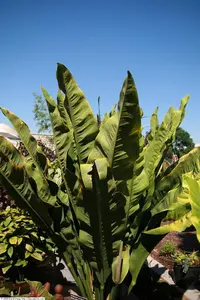
Anthurium coriaceum
Anthurium coriaceum
Dumbcane
Dieffenbachia 'Tropic Marianne'
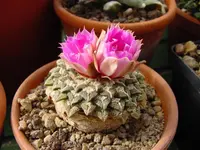
star rock
Ariocarpus kotschoubeyanus