


Rotate For Symmetry
Turn the pot 90° every 2–3 weeks so new leaves orient evenly toward the light and the plant maintains a compact, upright form instead of leaning to one side.

Alocasia 'Maharani', often called jewel alocasia, is a compact tropical aroid grown mainly as an indoor foliage plant. It is prized for its thick, sculpted leaves with a matte, stone-like texture and deep gray-green color. Leaves form a low clump on short stems, giving the plant a dense, architectural look rather than a tall, upright habit.
This cultivar comes from breeding work with Bornean Alocasia species, which naturally grow in warm, shaded forest understories. Its slow growth, preference for stable warmth, and sensitivity to overwatering or dry air make it moderately demanding. Those who learn how to care for Jewel Alocasia find it manageable in bright, indirect light with evenly moist, airy soil.

Care Difficulty
Moderate Care

Light Preference
Bright Indirect Light

Water Requirements
Keep Soil Moist

Temperature Preference
Tropical / Frost Sensitive

Hardiness Zone
10–11

Soil Texture
Loamy, Peaty, Organic-rich

Soil pH
Acidic (5.5–6.5), Slightly acidic (6.5–7.0)

Soil Drainage
Moist but well-drained

Fertilization
Light (every 4–6 weeks)
Scan your plant to receive care tips personalized for your specific plant
Available on iOS and Android
This compact aroid prefers bright, filtered light that mimics understory forest conditions.
This species prefers evenly moist but never soggy soil around its thick roots and corm.
This plant grows best in stable, warm conditions with no sudden drafts or temperature swings.
This compact Alocasia thrives in consistently high humidity and reacts quickly to dry air.
Alocasia 'Maharani' prefers a loose, airy, organic-rich mix that drains fast yet holds steady moisture.
This species is well suited to container growing when the pot supports stable moisture and root health.
Alocasia 'Maharani' benefits from light, consistent feeding during active growth for compact, healthy foliage.
Alocasia 'Maharani' needs only light pruning to maintain cleanliness and leaf quality.
This compact Alocasia prefers slightly snug pots and only needs repotting when clearly root-bound.
Division is the standard method for increasing Alocasia 'Maharani', using naturally formed offsets around the main plant.
This tropical Alocasia needs warm, frost-free conditions and stable indoor care through winter.

Plant Health Check
Not sure what's wrong with your plant? Check your plant's health inside the app.
This hybrid stays unusually small for an Alocasia, forming a tight rosette rather than tall, upright stems, which reflects its breeding for compact indoor growth rather than large landscape use.
Its leaves are functionally peltate, meaning the petiole (leaf stalk) attaches from the underside rather than the true edge, contributing to the shield-like shape with a strongly cupped surface.
The foliage has a distinctly leathery, almost stone-like surface and thicker leaf tissue than many related species, an adaptation that helps reduce water loss and resist minor mechanical damage under warm, humid conditions.

This cultivar is a man-made hybrid with a complex parentage that includes Alocasia reginula, which contributes to its dark coloration and compact stature, and it is not known from any wild population in nature.
Brown leaf edges usually come from low humidity, fertilizer buildup, or past underwatering. Check for crispy margins, flush the pot occasionally, increase humidity to 50–60%, and avoid letting the potting mix dry out completely between waterings.
Keep your plants happy and healthy with plant identification, disease detection, and easy care guidance.

 POPULAR
Cabbage tree
Cordyline australis
Laelia autumnalis
Laelia autumnalis
Guarianthe bowringiana
Guarianthe bowringiana
 POPULAR
Flaming Katy
Kalanchoe blossfeldiana
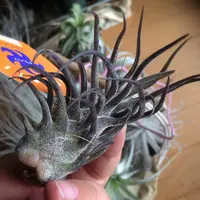
fuzzywuzzy airplant
Tillandsia pruinosa
 POPULAR
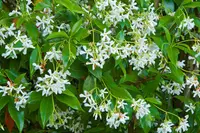
Star jasmine
Trachelospermum jasminoides
 POPULAR
Money Tree
Pachira aquatica
 POPULAR
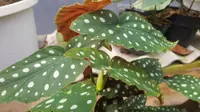
Polka Dot Begonia
Begonia maculata