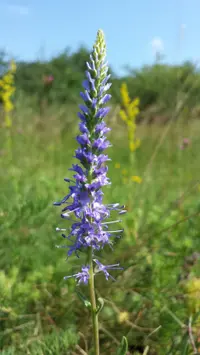
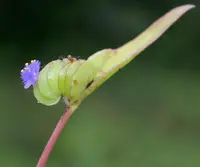
Coral orchid Care (Rodriguezia lanceolata)

Coral orchid

About Coral orchid

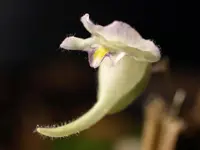
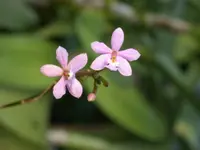
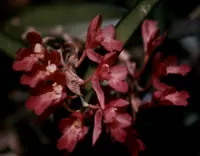
The coral orchid, Rodriguezia lanceolata, is a small epiphytic orchid that naturally grows on trees in warm, humid forests of Central and South America. It forms compact clumps with slender pseudobulbs and narrow leaves. Arching stems carry many small, bright flowers that create a cloud of color when in bloom. This species prefers consistently moist air, regular but gentle watering, and good air movement around the roots. It is considered moderately easy for growers who can provide stable humidity and bright, filtered light. Understanding how to care for Coral orchid helps keep its fine roots healthy and flowering reliable over time.

Main Plant Requirements

Care Difficulty

Moderate Care

Light Preference

Partial Shade

Water Requirements

Moderate Water

Temperature Preference

Tropical / Frost Sensitive

Hardiness Zone

11–12

Soil Texture

Sandy, Organic-rich

Soil pH

Acidic (5.5–6.5)

Soil Drainage

Moist but well-drained

Fertilization

Light (every 4–6 weeks)

Get Personalized Care Plan

Scan your plant to receive care tips personalized for your specific plant

Available on iOS and Android

How to Care for the Coral orchid

This epiphytic orchid prefers bright, filtered light that mimics dappled forest canopy conditions.

  • Provide 6–8 hours of bright, indirect light daily, with gentle morning sun and protection from strong midday and afternoon rays.
  • Allow light shade; leaves should stay medium green, as yellowing or scorched patches indicate excessive direct sun exposure.
  • Increase light slightly in winter with an east-facing window or shaded greenhouse, since caring for Coral orchid in too dim conditions leads to dark, floppy growth and reduced flowering.

Rodriguezia lanceolata prefers frequent moisture around the roots but not prolonged saturation.

  • Water when the growing medium surface just begins to dry, avoiding bone-dry conditions but not allowing it to stay soggy or swampy.
  • Use a very free-draining orchid mix so water runs through in seconds; roots should appear firm and silvery-white when dry, green shortly after watering.
  • Reduce watering slightly in cooler months, watching for wrinkled pseudobulbs as a sign of underwatering and black, mushy roots as evidence of overwatering.

This orchid thrives in warm to intermediate temperatures with mild seasonal variation.

  • Aim for 65–80°F (18–27°C) during active growth, with nights about 5–10°F (3–5°C) cooler to support healthy metabolism.
  • Protect from cold; growth slows below 60°F (16°C), and damage can occur under 50°F (10°C), especially with prolonged exposure or drafts.
  • Tolerate short spikes up to 85–90°F (29–32°C) only with higher humidity and good air movement, since sustained heat stress can desiccate leaves and roots.

This species prefers consistently moist air and reacts quickly to dry conditions.

  • Aim for 60–80% humidity, as Coral orchid naturally grows in humid forest canopies.
  • Leaf tips browning, pleated new growth, and buds blasting indicate humidity stress rather than underwatering.
  • Use a pebble tray under the pot, group plants, or run a small humidifier near the plant to raise humidity.

Rodriguezia lanceolata grows best mounted or in a very open, airy orchid mix rather than dense potting soil.

  • Use a fine- to medium-grade bark mix with added sphagnum moss and perlite to balance moisture retention and airflow.
  • Ensure extremely fast drainage so water runs through in seconds, preventing roots from sitting in a soggy medium.
  • Keep pH slightly acidic, around 5.5–6.5, which supports nutrient uptake and healthy root growth.
  • Avoid compact peat-heavy mixes or garden soil, which restrict air around the roots and encourage rot.

This orchid adapts well to container culture when mounted or potted in small, very free-draining setups.

  • Choose a shallow, narrow container or basket that keeps the root zone snug and dries evenly between waterings.
  • Use slatted or mesh-sided baskets to increase air movement around the roots while still holding the orchid mix.
  • Secure the plant firmly so the root system does not wobble, which helps new roots attach and reduces stress.

This epiphytic orchid benefits from light, consistent nutrition during active growth.

  • Use a balanced 20-20-20 orchid fertilizer or similar, formulated for epiphytes, rather than compost or heavy slow-release products.
  • Feed every 2 weeks in spring–summer at 1/4–1/2 strength, applied after a thorough watering.
  • Reduce to monthly, very dilute feeding in fall–winter when growth slows, supporting Coral orchid without forcing soft growth.
  • Flush the pot or mount with plain water monthly to limit salt buildup on roots and medium.

Pruning needs for Rodriguezia lanceolata are minimal and mainly hygienic.

  • Carry out light pruning after flowering, when spent flower spikes have clearly finished.
  • Remove only dead, damaged, or desiccated leaves and pseudobulbs, cutting close to the base without injuring healthy tissue.
  • Use sharp, sterilized scissors or snips to reduce infection risk on the compact root system.
  • Avoid heavy thinning, which can reduce future flowering and stress the plant’s naturally clumping habit.

This orchid prefers stable conditions and dislikes frequent disturbance of its roots and mounting surface.

  • Repot or remount every 2–3 years, or when roots circle tightly, medium decomposes, or growth becomes noticeably slow.
  • Choose late spring, just as new roots emerge, so the plant can anchor quickly into fresh bark or a new mount.
  • Gently remove old medium, keeping as many healthy roots as possible intact to limit transplant shock.
  • After repotting, keep humidity high, light bright but indirect, and watering slightly reduced for 1–2 weeks to allow recovery.

Propagation of this species is usually done by careful division of mature clumps rather than seed.

  • Divide in late spring when new growths and roots are starting, so divisions can establish promptly.
  • Select a healthy plant with multiple pseudobulbs; each division should keep at least 3–4 connected bulbs.
  • Use sterilized cutting tools, separate the rhizome gently, and keep attached roots intact wherever possible.
  • Mount or pot divisions in a fine orchid bark mix, then maintain high humidity, bright filtered light, and gentle air movement for rooting.

This orchid is frost-sensitive and needs sheltered winter conditions in most temperate climates.

  • Keep temperatures above 55°F, with an ideal range of 60–70°F during winter nights and days.
  • Grow indoor or in a heated greenhouse; outdoor plants in containers should move indoors before the first frost.
  • Maintain bright, indirect light and slightly drier roots while avoiding complete dehydration in low light.
  • Ensure gentle air movement to prevent fungal problems in cool, humid conditions, without exposing the plant to cold drafts.

Care Tips

Mounting strategy

Mount plants on cork or hardwood with a thin pad of long-fiber sphagnum only under the roots’ center so the rest of the roots can dry quickly and cling firmly to the mount.

Air-movement tuning

Use a small, continuously running fan set to a gentle flow across but not directly at the plant to keep roots oxygenated and reduce fungal issues without desiccating the leaves.

Hydration timing

On mounts, water early in the day and briefly mist again in late afternoon during hottest months so roots experience fast wet–dry cycles rather than staying uniformly damp.

Fertilizer flushing

Once every 2–3 weeks, rinse the mount thoroughly with plain water to flush built-up fertilizer salts that can burn the fine roots of this species.

Transport and mounting

When receiving a new plant, keep it in its original mount or basket for at least 4–6 weeks before remounting to reduce transplant stress, which is one of the most overlooked aspects of caring for Coral orchid.

Common Pests and Diseases

Scale insects

This pest attaches to thin pseudobulbs and leaf bases, sucking sap and causing yellowing, shriveling, and sticky honeydew on the plant and mounting material.

Solution

Remove visible scales with a cotton swab dipped in isopropyl alcohol, then rinse the plant thoroughly and increase air movement; for larger infestations, apply a light horticultural oil or insecticidal soap to all plant surfaces and repeat at 7–10 day intervals while monitoring new growth closely as part of general Rodriguezia lanceolata plant care.

Spider mites

These insects thrive in the warm, dry air often used for mounted Rodriguezia, causing stippled, dull leaves, fine webbing under leaves, and gradual leaf drop.

Solution

Increase humidity to around 60–70%, hose or shower the plant to physically remove mites, and treat leaf undersides with insecticidal soap or a labeled miticide, repeating several times while avoiding direct hot sun on wet foliage.

Mealybugs

This pest hides in leaf axils, between clustered pseudobulbs, and in the roots on mounts, leaving cottony masses, honeydew, and distorted new growth.

Solution

Isolate the plant, remove cottony clumps with alcohol-soaked swabs, soak or rinse the root zone to dislodge hidden insects, and follow up with a systemic insecticide or repeated insecticidal soap sprays, paying special attention to tight crevices around the rhizome.

Bacterial brown spot

This disease causes rapidly enlarging, water-soaked patches on leaves and pseudobulbs that turn brown or black and may emit a foul odor under warm, wet conditions.

Solution

Immediately cut out affected tissue with a sterile blade, keep foliage dry, improve air circulation, and avoid overhead watering; disinfect tools and, if the spread continues, use a copper-based bactericide labeled for orchids while maintaining lower humidity around the plant until new growth is clean.

Fungal leaf spot

Symptoms include small, round to irregular dark lesions on the thin leaves, often with yellow halos, that appear after periods of prolonged leaf wetness or overcrowding on the mount or slab.

Solution

Remove spotted leaves if heavily affected, space plants to improve airflow, water early in the day so foliage dries quickly, and apply a broad-spectrum fungicide labeled for orchids in 2–3 applications, allowing the plant to dry between treatments and avoiding constant misting of the foliage.

Interesting Facts

Miniature cloud forest epiphyte

This species is a small epiphytic orchid native to humid montane forests in Brazil, often growing on tree branches where cool air, high humidity, and good air movement are constant.

Lance-shaped leaf adaptation

Its narrow, lance-shaped leaves help shed excess water quickly in frequent mist and rain, which reduces the risk of fungal problems in its naturally damp habitat.

Short-lived but frequent blooms

The small white to pale cream flowers are relatively short-lived individually, but the plant compensates by producing multiple blooms on its inflorescences when conditions are favorable, which is useful knowledge for Rodriguezia lanceolata care.

FAQs about Coral orchid

Lack of blooms usually comes from insufficient light, overly warm nights, or too much nitrogen fertilizer. Provide bright filtered light, cooler nights around 60–65°F, and use a balanced orchid fertilizer at weak strength during the growing season.

Grow Healthy Plants with Botan Care

Keep your plants happy and healthy with plant identification, disease detection, and easy care guidance.


Botan plant care app — identify plants on mobile

Explore More Plants