


Rubber Tree Care (Ficus elastica Chroma™ Abidjan)

Rubber Tree

About Rubber Tree

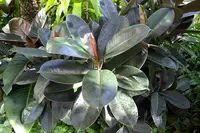
The rubber tree Ficus elastica Chroma™ Abidjan is an upright tropical shrub or small tree grown mainly as a decorative indoor foliage plant. It is valued for its thick, glossy leaves in deep burgundy to nearly black tones, sometimes with subtle green shading.

In nature, Ficus elastica occurs in parts of South and Southeast Asia, where it can grow into a tall canopy tree. Indoors, it usually stays compact and forms a strong central trunk with side branches.

This plant is generally considered sturdy and forgiving if its basic needs are met, so it suits many homes and offices. It prefers bright, indirect light, moderate watering, and a well-drained potting mix, which makes it relatively straightforward to care for Rubber Tree.

Main Plant Requirements

Care Difficulty

Easy Care

Light Preference

Bright Indirect Light

Water Requirements

Moderate Water

Temperature Preference

Tropical / Frost Sensitive

Hardiness Zone

10–12

Soil Texture

Loamy, Sandy, Organic-rich

Soil pH

Acidic (5.5–6.5), Slightly acidic (6.5–7.0)

Soil Drainage

Moist but well-drained

Fertilization

Light (every 4–6 weeks)

Get Personalized Care Plan

Scan your plant to receive care tips personalized for your specific plant

Available on iOS and Android

How to Care for the Rubber Tree

This cultivar prefers bright, indirect light for steady growth and strong leaf color.

  • Provide 6–8 hours of bright, filtered light each day, such as near an east or north window or under light shade outdoors.
  • Tolerates light to medium shade, but new leaves may be smaller and darker; avoid direct midday and afternoon sun, which can scorch foliage.
  • In winter, move the Rubber Tree closer to the brightest window or supplement with grow lights to compensate for shorter days and weaker sun.

Watering should balance evenly moist soil with good air flow around the roots.

  • Allow the top 3–5 cm of soil to dry before watering, then water thoroughly so excess drains away from the root zone.
  • Reduce watering in fall and winter when growth slows, checking soil by touch instead of following a fixed schedule for Ficus elastica Chroma™ Abidjan.
  • Watch for yellowing, soft leaves or a sour soil smell as signs of overwatering, and limp, curling, or dull leaves as signs of underwatering.

Stable, warm conditions support healthy growth and leaf retention.

  • Aim for 65–80°F (18–27°C) for best growth, avoiding sudden swings of more than about 10°F (6°C) in a short time.
  • Keep above 55°F (13°C); brief drops to 50°F (10°C) may be tolerated but can slow growth and increase leaf drop risk.
  • Protect from frost and cold drafts, and in hot spells above 90°F (32°C) provide shade and good air movement to prevent heat stress and leaf scorch.

This cultivar prefers moderate household humidity but benefits from slightly elevated levels in very dry homes.

  • Aim for 40–60% humidity; it tolerates short dips lower, but prolonged very dry air slows growth.
  • Watch for crispy leaf edges, curling, and dull, dusty-looking foliage as signs humidity is too low.
  • Increase humidity with a nearby tray of water and stones, grouping plants together, or a small room humidifier near the Rubber Tree.

This plant prefers a loose, airy, well-draining potting mix that holds some moisture but never stays soggy.

  • Use a peat- or coco-based houseplant mix amended with 20–30% perlite and 10–20% fine bark for structure and aeration.
  • Aim for slightly acidic to neutral pH around 6.0–7.0, which supports balanced nutrient availability for Ficus elastica Chroma™ Abidjan.
  • Ensure water drains freely from the pot; avoid mixes heavy in clay or unamended garden soil that stay wet and compact.
  • If existing mix feels dense, blend in extra perlite or coarse pumice to reduce waterlogging and increase oxygen around the roots.

This species is very suitable for container growing due to its manageable yet upright, tree-like habit.

  • Choose a pot with a wide, weighty base to counterbalance the tall, top-heavy stem and reduce tipping risk.
  • Select a container depth that allows a broad root plate to spread, not a narrow, tall cylinder that forces roots to spiral tightly.
  • Use a slightly porous material like unglazed clay if the plant sits in a dimmer spot, as it helps excess moisture evaporate faster.

Ficus elastica Chroma™ Abidjan benefits from moderate feeding during its active growing season to support foliage density and color.

  • Use a balanced liquid fertilizer (e.g., 10-10-10 or 20-20-20) diluted to 1/2 strength every 4–6 weeks in spring and summer.
  • Alternatively, apply a slow-release balanced fertilizer at the start of spring following label rates.
  • Skip compost-heavy mixes in small indoor pots, which can stay too wet and lead to root issues.
  • Reduce feeding to 1 light application or none in fall and winter, when growth slows.

Pruning Ficus elastica Chroma™ Abidjan helps manage size, encourage branching, and remove weak growth.

  • Plan structural pruning for late winter to early spring, just before vigorous new growth starts.
  • Use clean, sharp pruners to remove dead, damaged, crossing, or crowded stems back to a node.
  • Shorten tall, single stems above a leaf node to encourage side shoots and a fuller, bushier shape.
  • Wipe off latex sap with a damp cloth and avoid heavy pruning in low light or during midwinter.

This rubber tree prefers slightly snug containers but benefits from occasional repotting to refresh soil and support steady growth.

  • Check for roots circling the pot, growing from drainage holes, or very slow growth as signs it needs repotting.
  • Plan to repot every 2–3 years in spring, moving only 1 pot size up with a well-draining indoor tree mix.
  • Water the plant 1–2 days before, gently loosen circling roots, and prune only thick, girdling roots to limit stress.
  • After repotting, water thoroughly once, then keep in bright, indirect light and avoid fertilizing for 4–6 weeks.

Ficus elastica Chroma™ Abidjan is usually propagated from stem cuttings taken during the active growing season.

  • Take 10–15 cm semi-woody tip cuttings in late spring or summer, each with 2–3 leaves and at least 1 node.
  • Let latex sap dry, then dip the cut end in rooting hormone to improve root formation.
  • Place cuttings in a moist, well-draining mix, keep at 70–80°F, and maintain high humidity with a vented cover.
  • Provide bright, indirect light and keep the medium slightly moist; expect roots to form within 4–8 weeks.

This tropical Rubber Tree is frost-sensitive and needs indoor conditions above 55°F during winter in most climates.

  • Move container plants indoors before nights drop below 55°F, choosing a bright spot away from drafts and heating vents.
  • Reduce watering; allow the top 3–5 cm of soil to dry before rewatering since growth is slower.
  • Avoid cold windowsills where leaves can chill and develop damage or drop.
  • Do not repot or heavily prune in midwinter unless addressing root rot or severe decline.

Care Tips

Rotate For Symmetry

Turn the pot 90° every 2–3 weeks so the plant receives even light on all sides, which keeps the central stem upright and prevents a permanent lean toward the window.

Early Structural Support

Once the main stem reaches 40–60 cm, add a discreet stake and soft plant ties, checking and adjusting them every few months to guide a straight, strong trunk before it becomes woody and harder to correct.

Manage Aerial Roots

If aerial roots appear along the stem, either prune them cleanly or direct them into the potting mix where they can anchor and stabilize the plant, rather than letting them dry and tangle.

Controlled Height Management

To limit vertical growth and encourage a fuller shape, plan a main stem chop 5–10 cm above a leaf node in late spring, then allow only 2–3 of the strongest new shoots to develop while removing weaker ones.

Prevent Sap Issues

When pruning, place the plant on a washable surface, immediately blot the white latex sap with a damp cloth, and avoid contact with skin or pets, which keeps the cuts clean and makes caring for Rubber Tree safer indoors.

Common Pests and Diseases

Scale insects

This pest feeds on leaf sap and stems, often appearing as small brown or tan bumps, and can cause leaf yellowing and sticky honeydew on the glossy foliage.

Solution

Remove heavily infested leaves or stems, then wipe remaining areas with a cotton pad dipped in diluted insecticidal soap or neem oil, repeating every 7–10 days until new growth is clean; improve light and avoid overfertilizing to reduce susceptibility when caring for Rubber Tree.

Spider mites

These insects thrive in warm, dry indoor air, causing stippled, dull leaves, fine webbing, and gradual leaf drop, especially on the upper parts of the plant.

Solution

Rinse foliage thoroughly with lukewarm water, including the undersides of leaves, then apply insecticidal soap or neem oil weekly for several cycles and increase humidity to 40–60% with a pebble tray or humidifier to slow reinfestation.

Mealybugs

This pest appears as white, cottony clusters in leaf axils and along stems, sucking sap and leading to distorted new growth and sticky residue.

Solution

Isolate the plant, dab visible mealybugs with cotton swabs dipped in isopropyl alcohol, then follow with a full-leaf spray of insecticidal soap every 7–10 days and prune severely affected tips to remove hidden clusters.

Bacterial leaf spot

This disease causes water-soaked, translucent or dark spots with yellow halos on leaves, which can spread quickly in warm, humid, poorly ventilated rooms.

Solution

Remove and discard all affected leaves, avoid wetting the foliage when watering, increase air circulation, and allow the top soil layer to dry slightly between waterings; in persistent cases, use a labeled copper-based bactericide according to instructions.

Anthracnose leaf blight

This disease produces irregular tan to dark brown lesions starting at leaf tips or edges, sometimes with a thin yellow margin, leading to premature leaf drop on stressed plants.

Solution

Cut off and discard affected leaves, keep the plant in bright, indirect light with stable temperatures, water at the soil level to keep leaves dry, and, if spread continues, apply a houseplant-safe fungicide labeled for anthracnose while improving airflow around the foliage.

Interesting Facts

Deeply pigmented leaves

The Abidjan cultivar displays unusually dark, burgundy to nearly black foliage due to higher concentrations of anthocyanin pigments, which can help protect the leaves from high light by absorbing excess radiation.

Selected West African lineage

Abidjan was selected from Ficus elastica breeding lines associated with West African material, and its name references Abidjan, a major city in Côte d’Ivoire, highlighting its horticultural origin rather than a distinct wild population.

Stable color under variation

Compared with many variegated Ficus elastica cultivars, Abidjan tends to maintain its dark coloration more consistently across different indoor light levels, though leaf tone can still shift subtly between deep green and rich burgundy.

FAQs about Rubber Tree

This species rarely flowers indoors because it needs specific pollinating wasps and outdoor tropical conditions. Lack of blooms is normal and not a sign of poor health; foliage quality is the best indicator of successful Rubber Tree indoor care.

Grow Healthy Plants with Botan Care

Keep your plants happy and healthy with plant identification, disease detection, and easy care guidance.

Botan plant care app — identify plants on mobile









